
Species Search
 CC
CC
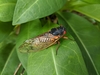
Decim Periodical Cicadas
(Complex Magicicada septendecim)
Info
Magicicada septendecim, sometimes called the Pharaoh cicada or the 17-year locust, is native to Canada and the United States and is the largest and most northern species of periodical cicada with a 17-year lifecycle.
(Wikipedia)
 CC
CC
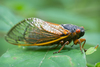
Pharaoh Cicada
(Magicicada septendecim)
Info
Magicicada septendecim, sometimes called the Pharaoh cicada or the 17 year locust, is native to Canada and the United States and is the largest and most northern species of periodical cicada with a 17-year life cycle.
(Wikipedia)
 C
C
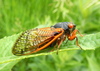
Cassin's 17-year Cicada
(Magicicada cassinii)
Info
Magicicada cassinii, sometimes called the 17-year cicada, Cassin's periodical cicada or the dwarf periodical cicada, is a species of periodical cicada. It is endemic to North America. It has a 17-year lifecycle but is otherwise indistinguishable from the 13-year periodical cicada Magicicada tredecassini. The two species are usually discussed together as "cassini periodical cicadas" or "cassini-type periodical cicadas." Unlike other periodical cicadas, cas
(Wikipedia)
 CC
CC
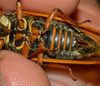
Little 17-year Cicada
(Magicicada septendecula)
Info
Magicicada septendecula is a species of insect in family Cicadidae. It is endemic to the United States.
(Wikipedia)
 CC
CC
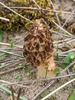
Morchella dunensis
Info
Morchella dunensis, the morel of the dunes, is a species of fungus in the family Morchellaceae (Ascomycota). It was first described as a form of Morchella esculenta by Castañera and colleagues in 1996, but was later recombined as a distinct species by Clowez. In a 2014 study by Richard and colleagues, the authors concluded that the taxon was conspecific to Morchella vulgaris, due to its close phylogenetic proximity to the latter. However, following increa
(Wikipedia)
 CC
CC
 CC
CC






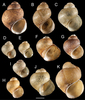
_Figure_3.jpg)