Species Search
 CC
CC
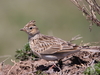
Eurasian Skylark
(Alauda arvensis)
Info
The Eurasian skylark (Alauda arvensis) is a small passerine bird species. It is a wide-spread species found across Europe and Asia with introduced populations in many other parts of the world. The genus name is from the Latin alauda, "lark". Pliny thought the word was originally of Celtic origin. The specific arvensis is also Latin, and means "of the field".
(Wikipedia)
 CC
CC
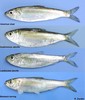
Anadromous Shads
(Genus Alosa)
Info
Alosa is a genus of fish, the river herrings, in the family Clupeidae. Along with other genera in the subgenus Alosinae, they are generally known as shads. They are distinct from other herrings by having a deeper body and spawning in rivers. Several species can be found on both sides of the Atlantic Ocean and Mediterranean Sea. Also, several taxa occur in the brackish-water Caspian Sea and the Black Sea basin. Many are found in fresh...
(Wikipedia)
 C
C
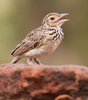
Jerdon's Bushlark
(Plocealauda affinis)
Info
Jerdon's bush lark (Plocealauda affinis) or Jerdon's lark is a species of lark in the family Alaudidae found in south Asia. This was formerly considered as a subspecies of Mirafra assamica and termed as the Madras bushlark. Two other species in the complex include Mirafra marionae and Mirafra microptera. Jerdon's bush lark is typically very pale on the underside
(Wikipedia)
 C
C
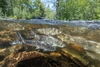
Alewife
(Alosa pseudoharengus)
Info
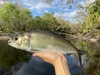
The alewife (Alosa pseudoharengus) is an anadromous species of herring found in North America. It is one of the "typical" North American shads, attributed to the subgenus Pomolobus of the genus Alosa. As an adult it is a marine species found in the northern West Atlantic Ocean, moving into estuaries before swimming upstream to breed in fresh water habitats, but some populations live entirely in fresh water. It is best known for its invasion of the...
(Wikipedia)
 C
C
American Shad
(Alosa sapidissima)
Info
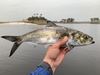
The American shad (Alosa sapidissima), is a species of anadromous clupeid fish naturally distributed on the North American coast of the North Atlantic, from Newfoundland to Florida, and as an introduced species on the North Pacific coast. The American shad is not closely related to the other North American shads. Rather, it seems to form a lineage that diverged from a common ancestor of the European taxa before these diversified...
(Wikipedia)
 C
C
Hickory Shad
(Alosa mediocris)
Info
Hickory shad (Alosa mediocris) is a member of the herring family Clupeidae, ranging along the East Coast of the United States from Florida to the Gulf of Maine. It is an anadromous fish species, meaning that it spawns in freshwater portions of rivers but spends most of its life at sea. It is subject to fishing, both historic and current, but it is often confused with or simply grouped together with catch statistics for American shad...
(Wikipedia)
 CC
CC
Skipjack Shad
(Alosa chrysochloris)
Info
The skipjack shad (Alosa chrysochloris) is a North American, migratory, fresh- and brackish water fish species in the herring family Clupeidae. The name skipjack shad comes from the fact that it is commonly seen leaping out of the water while feeding. Other common names include blue herring, golden shad, river shad, Tennessee tarpon, and McKinley shad. The skipjack shad is restricted to the Gulf of Mexico drainage basins. Skipjack shad are found in clear to moderately...
(Wikipedia)
 C
C
Blueback Shad
(Alosa aestivalis)
Info
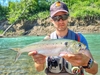
The blueback herring or blueback shad (Alosa aestivalis) is an anadromous species of herring from the east coast of North America, with a range from Nova Scotia to Florida. Blueback herring form schools and are believed to migrate offshore to overwinter near the bottom.
(Wikipedia)
 C
C
Twaite Shad
(Alosa fallax)
Info
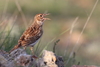
The twait shad or twaite shad (Alosa fallax) is a species of fish in the Clupeidae family. It is found in the eastern Atlantic Ocean and the Mediterranean Sea and is an anadromous fish which lives in the sea but migrates into fresh water to spawn. In appearance it resembles an Atlantic herring but has a row of six to ten distinctive spots on its silvery flanks. They become mature when three or more years old...
(Wikipedia)
 C
C
Dupont's Lark
(Chersophilus duponti)
Info
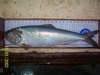
Dupont's lark (Chersophilus duponti) is a species of lark in the family Alaudidae of the monotypic genus Chersophilus. It is found in northern Africa and Spain.
(Wikipedia)
 CC
CC
Allis Shad
(Alosa alosa)
Info
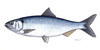
The allis shad (Alosa alosa) is a widespread Northeast Atlantic species of fish in the herring family Clupeidae. It is an anadromous fish which migrates into fresh water to spawn. It is found in the eastern Atlantic Ocean, the western Baltic Sea and the western Mediterranean Sea. In appearance it resembles an Atlantic herring but has a distinctive dark spot behind the gill cover and sometimes a row of up to six spots behind this. It...
(Wikipedia)
 CC
CC
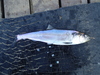
Pontic Shad
(Alosa immaculata)
Info
The Pontic shad (Alosa immaculata, previously Alosa pontica), also referred to as the Black Sea shad or Kerch shad, is a species of clupeid fish in the genus Alosa, native to the Black Sea and Sea of Azov basins.
(Wikipedia)
 CC
CC
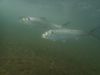
Caspian Anadromous Shad
(Alosa kessleri)
Info
Alosa kessleri, also referred to as the Caspian anadromous shad, the blackback, or the black-spined herring, is a species of clupeid fish. It is one of the several species of shad endemic to the Caspian Sea basin.
(Wikipedia)
 CC
CC
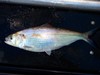
Agone
(Alosa agone)
Info
Alosa agone is a species of ray-finned fish in the genus Alosa. Alosa agone is an endangered species of the Alosa genus.
(Wikipedia)
 CC
CC
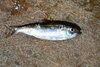
Alabama Shad
(Alosa alabamae)
Info
The Alabama shad (Alosa alabamae) is a species of clupeid fish endemic to the United States where it breeds in medium to large flowing rivers from the Mississippi River drainage to the Suwannee River, Florida, as well as some Gulf coast drainages. The biology and status of this fish is little known but it has become increasingly rare. The International Union for Conservation of Nature has rated it "data deficient" and the United States National Marine...
(Wikipedia)
 CC
CC
Macedonia Shad
(Alosa macedonica)
Info
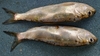
Alosa macedonica, or the Macedonian shad (also known as liparia), is a landlocked species of clupeid fish endemic to Greece. Its single natural occurrence is the freshwater Lake Volvi in northern Greece. It is threatened by habitat loss.
(Wikipedia)
 CC
CC
Paeostom Shad
(Alosa tanaica)
Info
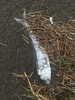
Alosa tanaica, called in English the Azov shad or Black Sea shad, is a species of clupeid fish endemic to the Ponto-Caspian basin. It is an anadromous species, spawning in the lower reaches of rivers. It is widespread in the eastern Black Sea, the Kerch Strait and the Sea of Azov.
(Wikipedia)
 CC
CC
Saposhnikovi Shad
(Alosa saposchnikowii)
Info
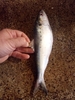
Alosa saposchnikowii, or the saposhnikovi shad, is a species of fish in the clupeid genus Alosa. It is one of the endemic species of this genus in the Caspian Sea area.
(Wikipedia)
 CC
CC
North African Shad
(Alosa algeriensis)
Info
Alosa algeriensis, the North African shad, is a Mediterranean species of clupeid fish in the shad genus Alosa.
(Wikipedia)

Volga Shad
(Alosa volgensis)
Info
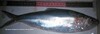
Alosa volgensis, the Volga shad, is a clupeid fish, one of the species of shad endemic to the Caspian Sea region.
(Wikipedia)

 CC
CC
Caspian Marine Shad
(Alosa braschnikowi)
Info
Alosa braschnikowi, the Caspian marine shad or Brazhnikov's shad, is one of the alosid fish species endemic to the Caspian Sea.
(Wikipedia)
Kura Shad
(Alosa curensis)
Info
Alosa curensis, the Kura shad, is one of the species of alosid fish endemic to the Caspian Sea basin. It is found in the southwestern part of the brackish sea-lake, near the mouth of the Kura River, Azerbaijan. But generally this is a poorly known species.
(Wikipedia)
Agrakhan Shad
(Alosa sphaerocephala)
Info
Alosa sphaerocephala, or the Agrakhan shad, is a species of alosid (herring-like) fish, one of the endemic shad species in the Caspian Sea.
(Wikipedia)