Species Search
Taxonomic Groups
Show active and inactive taxa
 C
C
Turnstones
(Genus Arenaria)
Info
Turnstones are two bird species that comprise the genus Arenaria in the family Scolopacidae. They are closely related to calidrid sandpipers and might be considered members of the tribe Calidriini. The genus name arenaria is from Latin arenarius, "inhabiting sand, from arena, "sand".
(Wikipedia)
 C
C
Ruddy Turnstone
(Arenaria interpres)
Info
The ruddy turnstone (Arenaria interpres) is a small wading bird, one of two species of turnstone in the genus Arenaria. The scientific name is from Latin. The genus name arenaria derives from arenarius, "inhabiting sand, from arena, "sand". The specific interpres means "messenger"; when visiting Gotland in 1741, Linnaeus thought that the Swedish word Tolk "interpreter" applied to this species, but in the local dialect the word means "legs" a
(Wikipedia)
 CC
CC
Sandworts
(Genus Arenaria)
Info
Arenaria is a genus of flowering plants, within the family Caryophyllaceae.
(Wikipedia)
 CC
CC
Green Bristle Grass
(Setaria viridis)
Info
Setaria viridis is a species of grass known by many common names, including green foxtail green bristlegrass, and wild foxtail millet. It is sometimes considered a subspecies of Setaria italica. It is native to Eurasia, but it is known on most continents as an introduced species and is closely related to Setaria faberi, a noxious weed. It is a hardy grass which grows in many types of urban, cultivated, and disturbed habitat, including vacant lots,
(Wikipedia)
 CC
CC
 C
C
Carex Arenaria Clade
(Complex Carex arenaria)
Info
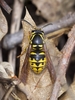
Carex arenaria, or sand sedge, is a species of perennial sedge of the genus Carex which is commonly found growing in dunes and other sandy habitats, as the species epithet suggests (Latin arenarius, "sandy"). It grows by long stolons under the soil surface.
(Wikipedia)
 CC
CC
Common Aerial Yellowjacket
(Dolichovespula arenaria)
Info
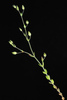
Dolichovespula arenaria, also known as the common aerial yellowjacket, sandhills hornet, and common yellow hornet, is a species of wasps within the Dolichovespula genus widely distributed in the North American continent.
(Wikipedia)
 CC
CC
Complex Arenaria serpyllifolia
Info
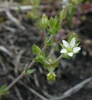
Arenaria serpyllifolia, commonly known as thyme-leaf sandwort, or thyme-leaved sandwort: 32 is an annual or biennial flowering plant in the pink and carnation family Caryophyllaceae.
(Wikipedia)
 C
C
Thyme-leaved Sandwort
(Arenaria serpyllifolia)
Info
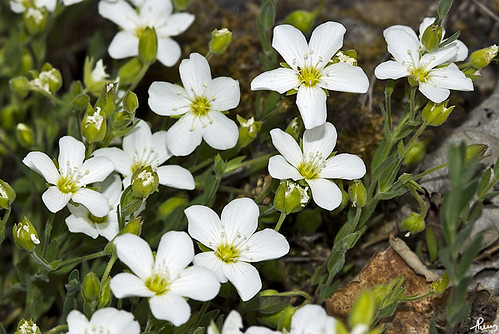
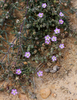
Arenaria serpyllifolia, commonly known as thyme-leaf sandwort, or thyme-leaved sandwort is a plant in the family Caryophyllaceae.
(Wikipedia)
 CC
CC
Red Sand Spurrey
(Spergularia rubra)
Info
Spergularia rubra, the red sandspurry or red sand-spurrey, is a plant species in the pink family. It is native to Europe and Asia, and it is present on other continents, including North and South America and Australia, as an introduced species and in many areas a common weed. It grows in a wide variety of habitat types.
(Wikipedia)
 CC
CC
Black Turnstone
(Arenaria melanocephala)
Info
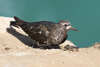
The black turnstone (Arenaria melanocephala) is a species of small wading bird. It is one of two species of turnstone in the genus Arenaria the ruddy turnstone (A. interpres) being the other. It is now classified in the sandpiper family, Scolopacidae, but was formerly sometimes placed in the plover family, Charadriidae. It is native to the west coast of North America and breeds only in Alaska.
(Wikipedia)
 CC
CC
European Marram Grass
(Calamagrostis arenaria)
Info
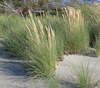
Ammophila arenaria is a species of grass in the family Poaceae. It is known by the common names marram grass and European beachgrass. It is one of two species of the genus Ammophila. It is native to the coastlines of Europe and North Africa where it grows in the sands of beach dunes. It is a perennial grass forming stiff, hardy clumps of erect stems up to 1.2 metres (3.9 ft) in height. It grows from a...
(Wikipedia)
 CC
CC
Three-nerved Sandwort
(Moehringia trinervia)
Info
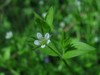
Moehringia trinervia, commonly known as apetalous sandwort or three-nerved sandwort, is a herbaceous annual plant of the family Caryophyllaceae. A native of Eurasia, it has been introduced into North America.
(Wikipedia)
 CC
CC
Red Fescue
(Festuca rubra)
Info
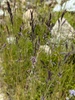
Festuca rubra is a species of grass known by the common name red fescue or creeping red fescue. It is widespread across much of the Northern Hemisphere and can tolerate many habitats and climates. It is best adapted to well-drained soils in cool, temperate climates; it prefers shadier areas and is often planted for its shade tolerance. Wild animals browse it, but it has not been important for domestic forage due to low productivity and palatability....
(Wikipedia)
 CC
CC
Soft-shelled Clam
(Mya arenaria)
Info
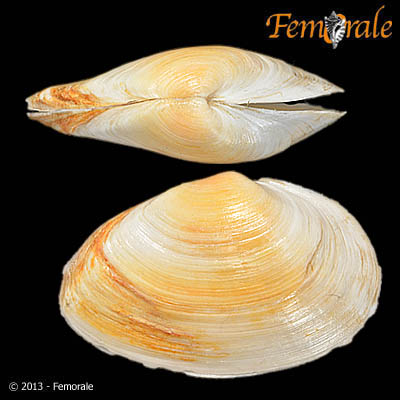
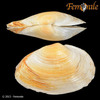
Soft-shell clams (American English) or sand gaper (British English/Europe), scientific name Mya arenaria, popularly called "steamers", "softshells", "longnecks", "piss clams", "Ipswich clams", or "Essex clams" are a species of edible saltwater clam, a marine bivalve mollusk in the family Myidae.
(Wikipedia)
 CC
CC
Bluntleaf Sandwort
(Moehringia lateriflora)
Info
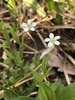
Moehringia lateriflora (bluntleaf sandwort) is a plant species native to Europe, Asia, the northern United States and most of Canada. It has been reported from every province and territory in Canada except the Northwest Territories, as well as every state in the northern half of the US, including Alaska, plus New Mexico and from Saint Pierre & Miquelon. It is also reported from Russia, China, Korea, Mongolia, Japan, Kazakhstan, Finland, Sweden, Norway, Latvia, Estonia, Be
(Wikipedia)
 CC
CC
Saltmarsh Sand Spurry
(Spergularia marina)
Info
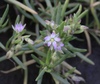
Spergularia marina, also called Spergularia salina, is a species of flowering plant in the family Caryophyllaceae (the pink family). It is known as salt sandspurry or lesser sea-spurrey. S. marina is a sprawling annual or sometimes perennial, with stems up to 35 cm (14 in) long. Like other sea-spurrey species, its flowers have white to pink petals, with sepals usually longer than the petals, at 2.5–4 mm (0.1–0.2 in). Plants are salt-tolerant, being
(Wikipedia)
 CC
CC
 CC
CC
Largeleaf Sandwort
(Moehringia macrophylla)
Info
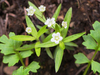
Moehringia macrophylla, commonly known as the largeleaf sandwort, is a species of flowering plant in the pink family. It is native to parts of eastern and western North America, where it can be found in moist, shady habitat types, such as mountain forests. It is a rhizomatous perennial herb growing erect to about 18 centimeters in maximum height. The lance-shaped leaves are up to 5 centimeters long and oppositely arranged about the stem. The inflorescence is...
(Wikipedia)
 CC
CC
Jagged Chickweed
(Holosteum umbellatum)
Info
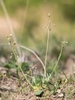
Holosteum umbellatum, the jagged chickweed, is a species of flowering plant in the Caryophyllaceae family. It is native to Europe but has also been introduced to North America.
(Wikipedia)
 CC
CC
Teesdale Violet
(Viola rupestris)
Info
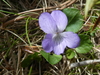
Viola rupestris is a species of flowering plant belonging to the family Violaceae.
(Wikipedia)
 CC
CC
 CC
CC
Mountain Sandwort
(Arenaria montana)
Info
Arenaria montana, the mountain sandwort, is a species of flowering plant in the family Caryophyllaceae, native to mountainous regions of southwestern Europe, from the Pyrenees to Portugal. The Latin specific epithet montana refers to mountains or coming from mountains.
(Wikipedia)
 CC
CC
Alpine Sandwort
(Cherleria obtusiloba)
Info
Cherleria obtusiloba is a perennial alpine herb known by the common names alpine sandwort and twinflower stitchwort. It is native to the mountains of western North America from the High Sierra of California to the Colorado Rockies north to Alaska, and to far northeastern Russia (Magadan, Kamchatka, and Yakutia). This is a low plant forming mats or clumps and bearing small thimble-shaped flowers with curving white petals.
(Wikipedia)