Species Search
 CC
CC
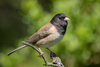
Juncos
(Genus Junco)
Info
A junco /ˈdʒʌŋkoʊ/, genus Junco, is a small North American bird. Junco systematics are still confusing after decades of research, with various authors accepting between three and twelve species. Despite having a name that appears to derive from the Spanish term for the plant genus Juncus (rushes), these birds are seldom found among rush plants, as these prefer wet ground, while juncos like dry soil.
(Wikipedia)
 CC
CC
Grasses, Sedges, Cattails, and Allies
(Order Poales)
Info
The Poales are a large order of flowering plants in the monocotyledons, and includes families of plants such as the grasses, bromeliads, and sedges. Sixteen plant families are currently recognized by botanists to be part of Poales.
(Wikipedia)
 CC
CC
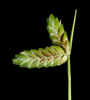
Sedges
(Family Cyperaceae)
Info
The Cyperaceae are a family of monocotyledonous graminoid flowering plants known as sedges, which superficially resemble grasses and rushes. The family is large, with some 5,500 known species described in about 90 genera, the largest being the Carex genus of "true sedges" with over 2,000 species. These species are widely distributed, with the centers of diversity for the group occurring in tropical Asia and tropical South America. While sedges may be found growing in almost a
(Wikipedia)
 CC
CC
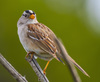
New World Sparrows
(Family Passerellidae)
Info
The Passerellidae (New World sparrows) are a large family of seed-eating passerine birds with distinctively finch-like bills. The American Ornithological Society split the family from Emberizidae (Old World buntings) in 2017.
(Wikipedia)
 CC
CC
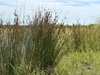
Rushes and Allies
(Family Juncaceae)
Info
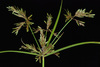
Juncaceae is a family of flowering plants, commonly known as the rush family. It consists of 8 genera and about 464 known species of slow-growing, rhizomatous, herbaceous monocotyledonous plants that may superficially resemble grasses and sedges. They often grow on infertile soils in a wide range of moisture conditions. The best-known and largest genus is Juncus. Most of the Juncus species grow exclusively in wetland habitats. A few rushes, such as Juncus bufonius
(Wikipedia)
 CC
CC
Flatsedges
(Genus Cyperus)
Info
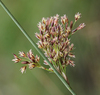
Cyperus is a large genus of about 700 species of sedges, distributed throughout all continents in both tropical and temperate regions.
(Wikipedia)
 CC
CC
Rushes
(Genus Juncus)
Info
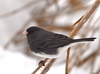
Juncus is a genus of monocotyledonous flowering plants, commonly known as rushes. It is the largest genus in the family Juncaceae, containing around 300 species.
(Wikipedia)
 CC
CC
Dark-eyed Junco
(Junco hyemalis)
Info
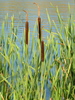
The dark-eyed junco (Junco hyemalis) is a species of the juncos, a genus of small grayish American sparrows. This bird is common across much of temperate North America and in summer ranges far into the Arctic. It is a very variable species, much like the related fox sparrow (Passerella iliaca), and its systematics are still not completely untangled.
(Wikipedia)
 CC
CC
Bulrushes, Cattails, and Allies
(Family Typhaceae)
Info
The Typhaceae /taɪˈfeɪsiː/ are a family of flowering plants. The botanical name for the family has been recognized by most taxonomists.
(Wikipedia)
 CC
CC
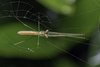
Genus Tetragnatha
Info
Tetragnatha is a genus of spiders containing hundreds of species. They are found all over the world, although most occur in the tropics and subtropics. They are commonly called stretch spiders, referring to their elongated body form. When disturbed they will stretch their front legs forward and the others in the other direction, thus being able to hide on blades of grass or similar elongated substrates. They are able to run over water.
(Wikipedia)
 CC
CC
Spikerushes
(Genus Eleocharis)
Info
Eleocharis is a virtually cosmopolitan genus of 250 or more species of flowering plants in the sedge family, Cyperaceae. The name is derived from the Greek words ἕλειος (heleios), meaning "marsh dweller," and χάρις (charis), meaning "grace." Members of the genus are known commonly as spikerushes or spikesedges. The genus has a geographically cosmopolitan distribution, with centers of diversity in the Amazon Rainforest and adjacent eastern slopes of the So
(Wikipedia)
 CC
CC
Clubrushes and Giant Bulrushes
(Genus Schoenoplectus)
Info
Schoenoplectus (club-rush , bulrush or tule ) is a genus of plants in the sedges with a cosmopolitan distribution. Note that the name bulrush is also applied to species in the unrelated genus Typha as well as to other sedges. The genus Schoenoplectus was formerly considered part of Scirpus, but recent phylogenetic data shows that they are not closely related.
(Wikipedia)
 CC
CC
Soft Rush
(Juncus effusus)
Info
Juncus effusus, with the common names common rush or soft rush, is a perennial herbaceous flowering plant species in the family Juncaceae. In North America, the common name soft rush also refers to Juncus interior.
(Wikipedia)
 CC
CC
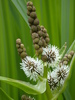
Bur-Reeds
(Genus Sparganium)
Info
Sparganium (bur-reed) is a genus of flowering plants, described as a genus by Linnaeus in 1753. It is widespread in wet areas in temperate regions of both the Northern and Southern Hemispheres. The plants are perennial marsh plants that can grow to 3.5 m (depending on the species), with epicene flowers.
(Wikipedia)
 CC
CC
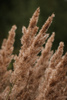
Bushgrass
(Calamagrostis epigejos)
Info
Calamagrostis epigejos, common names wood small-reed or bushgrass, is a species of grass in the Poaceae family which is native to Eurasia and Africa. It is found from average moisture locales to salt marsh and wet habitats.
(Wikipedia)
 CC
CC
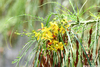
Mexican Palo Verde
(Parkinsonia aculeata)
Info
Parkinsonia aculeata is a species of perennial flowering tree in the pea family, Fabaceae. Common names include palo verde, Mexican palo verde, Parkinsonia, Jerusalem thorn, and jelly bean tree.
(Wikipedia)
 CC
CC
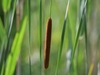
Narrow-leaved Cattail
(Typha angustifolia)
Info
Typha angustifolia L. (also lesser bulrush, narrowleaf cattail or lesser reedmace) is a perennial herbaceous plant of genus Typha. This cattail is an "obligate wetland" species that is commonly found in the northern hemisphere in brackish locations.
(Wikipedia)
 CC
CC
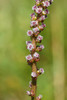
Arrowgrass Family
(Family Juncaginaceae)
Info
Juncaginaceae is a family of flowering plants, recognized by most taxonomists for the past few decades. It is also known as the arrowgrass family. It includes 3 genera with a total of 34 known species (Christenhusz & Byng 2016 ).
(Wikipedia)
 CC
CC
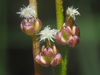
Arrowgrasses
(Genus Triglochin)
Info
Triglochin is a genus in the family Juncaginaceae described as a genus by Linnaeus in 1753. It is very nearly cosmopolitan in distribution, with species on every continent except Antarctica. North America has four accepted species, two of which can also be found in Europe: Triglochin palustris (marsh arrowgrass) and Triglochin maritima (sea arrowgrass). Australia has many more.
(Wikipedia)
 C
C
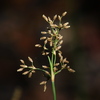
Fringe Rush
(Genus Fimbristylis)
Info
Fimbristylis is a genus of sedges. A plant in this genus may be known commonly as a fimbry, fimbristyle, or fringe-rush. There are 200 to 300 species distributed worldwide. Several continents have native species but many species have been introduced to regions where they are not native. Some are considered weeds. These are typical sedges in appearance, with stiff, ridged stems and cone-shaped terminal panicles of spikelets. They are found in wet environments, an
(Wikipedia)
 CC
CC
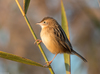
Zitting Cisticola
(Cisticola juncidis)
Info
The zitting cisticola or streaked fantail warbler (Cisticola juncidis), is a widely distributed Old World warbler whose breeding range includes southern Europe, Africa (outside the deserts and rainforest), and southern Asia down to northern Australia. A small bird found mainly in grasslands, it is best identified by its rufous rump; as well, it lacks any gold on the collar and the brownish tail is tipped with white. During the breeding season, males have a zigzagging flight..
(Wikipedia)
 CC
CC
Sedge Warbler
(Acrocephalus schoenobaenus)
Info
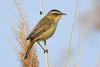
The sedge warbler (Acrocephalus schoenobaenus) is an Old World warbler in the genus Acrocephalus. It is a medium-sized warbler with a brown, streaked back and wings and a distinct pale supercilium. Sedge warblers are migratory, crossing the Sahara to get from their European and Asian breeding grounds to spend winter in Africa. The male's song is composed of random chattering phrases and can include mimicry of other species. The sedge warbler is mostly insectivorous.
(Wikipedia)
 CC
CC
Flowering-Rush
(Butomus umbellatus)
Info
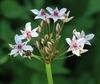
Butomus umbellatus is the Old World Palearctic and Asian plant species in the family Butomaceae. Common names include flowering rush or grass rush.
(Wikipedia)
 CC
CC
Southern Cattail
(Typha domingensis)
Info
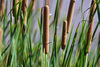
Typha domingensis, known commonly as southern cattail or cumbungi, is a perennial herbaceous plant of the genus Typha.
(Wikipedia)