Species Search
 CC
CC
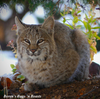
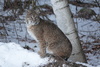
Lynxes
(Genus Lynx)
Info
A lynx (/ˈlɪŋks/; plural lynx or lynxes) is any of the four species within the Lynx genus of medium-sized wild cats, which includes the bobcat. The name "lynx" originated in Middle English via Latin from the Greek word λύγξ, derived from the Indo-European root leuk- ("light, brightness") in reference to the luminescence of its reflective eyes.
(Wikipedia)
 C
C
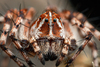
Lynx Spiders
(Family Oxyopidae)
Info
Lynx spider is the common name for any member of the family Oxyopidae. Most species make little use of webs, instead spending their lives as hunting spiders on plants. Many species frequent flowers in particular, ambushing pollinators, much as crab spiders do. They tend to tolerate members of their own species more than most spiders do, and at least one species has been identified as exhibiting social behaviour.
(Wikipedia)
 C
C
Grass Lynx Spiders
(Genus Oxyopes)
Info
Oxyopes is a genus of lynx spiders found worldwide. It includes arounds 300 species and is classified under the lynx spider family Oxyopidae. Like other lynx spiders, they are easily recognizable by the six larger eyes arranged hexagonally on top of the head (prosoma), with the remaining smaller two eyes in front. They are also characterized by long spine-like bristles (setae) on their legs. They are ambush predators, actively hunting prey by sight. Though they produce...
(Wikipedia)
 CC
CC
Green Lynx Spiders
(Genus Peucetia)
Info
Peucetia is a genus of lynx spiders that is found worldwide.
(Wikipedia)
 CC
CC
Bobcat
(Lynx rufus)
Info
The bobcat (Lynx rufus) is a North American cat that appeared during the Irvingtonian stage of around 1.8 million years ago (AEO). Containing 12 recognized subspecies, it ranges from southern Canada to central Mexico, including most of the contiguous United States. The bobcat is an adaptable predator that inhabits wooded areas, as well as semidesert, urban edge, forest edge, and swampland environments. It remains in some of its original range, but populations are vulnerable to local
(Wikipedia)
 C
C
Green Lynx Spider
(Peucetia viridans)
Info
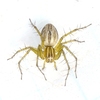
Peucetia viridans, the green lynx spider, is a bright-green lynx spider usually found on green plants. It is the largest North American species in the family Oxyopidae.
(Wikipedia)
 CC
CC
Striped Lynx Spider
(Oxyopes salticus)
Info
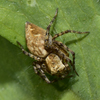
Oxyopes salticus is a species of lynx spider, commonly known as the Striped Lynx Spider, first described by Hentz in 1845. Its habitat tends to be grasses and leafy vegetation; grassy, weedy fields, and row crops.
(Wikipedia)
 CC
CC
Western Lynx Spider
(Oxyopes scalaris)
Info
Oxyopes scalaris, the western lynx spider, is a species of lynx spider in the family Oxyopidae. It is found in North America.
(Wikipedia)
 CC
CC
Lynx Paw Oyster
(Pleurotus levis)
Info
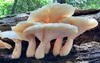
Lentinus levis is a species of edible fungus in the family Polyporaceae. It was described by Miles Joseph Berkeley and Moses Ashley Curtis in 1853 and given its current name in 1915 by William Murrill. As a saprotroph, it can be cultivated. In nature it grows in subtropical to tropical climate. It is recognized and sometimes collected as a food by Huichol people of Mexico, although they prefer eating other, less chewy mushrooms. For a long...
(Wikipedia)
 CC
CC
Lean Lynx Spider
(Oxyopes macilentus)
Info
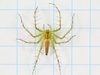
Oxyopes macilentus, sometimes known as the lean lynx spider, is a species of lynx spiders from East Asia, South Asia, Southeast Asia, and northern Australia. They are active predators, hunting invertebrates (including other spiders) among vegetation. They are especially common in grassy areas and rice fields. Their bodies are characteristically long and thin, about four times as long as it is wide. Their body color ranges from pale white to yellow, orange, or green; with a...
(Wikipedia)
 CC
CC
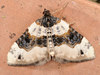
Purple Bar
(Cosmorhoe ocellata)
Info
Cosmorhoe ocellata, the purple bar, is a moth of the family Geometridae.
(Wikipedia)
 CC
CC
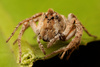
Crowned Lynx Spiders
(Genus Hamataliwa)
Info
Hamataliwa is a genus of spiders in the Oxyopidae family. It was first described in 1887 by Keyserling. As of 2017, it contains 83 species.
(Wikipedia)
 CC
CC
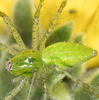
Lesser Green Lynx Spider
(Peucetia longipalpis)
Info
Peucetia longipalpis is a species of lynx spider in the family Oxyopidae. It is found in a range from the United States to Venezuela.
(Wikipedia)
 C
C
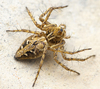
Variegated Lynx Spider
(Oxyopes heterophthalmus)
Info
Oxyopes heterophthalmus is a lynx spider from the family Oxyopidae, it is the type species of the genus Oxyopes and was described by Pierre André Latreille in 1804, it has a Palearctic distribution.
(Wikipedia)
 C
C
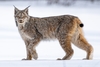
Canada Lynx
(Lynx canadensis)
Info
The Canada lynx (Lynx canadensis) or Canadian lynx is a North American mammal of the cat family, Felidae. With the recognised subspecies, it ranges across Canada and into Alaska as well as some parts of the northern United States and extending down the Rocky Mountains to Colorado, where they were reintroduced in the 1990s.
(Wikipedia)
 CC
CC
Graceful-legs Lynx
(Oxyopes gracilipes)
Info
Oxyopes gracilipes is a species of lynx spider that is native to New Zealand and Australia.
(Wikipedia)
 CC
CC
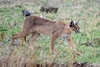
Caracal
(Caracal caracal)
Info
The caracal (Caracal caracal) is a medium-sized wild cat native to Africa, the Middle East, Central Asia and India. The caracal is characterised by a robust build, long legs, a short face, long tufted ears and long canine teeth. Its coat is uniformly reddish tan or sandy, while the ventral parts are lighter with small reddish markings. It reaches 40–50 cm (16–20 in) at the shoulder and weighs 8–18 kg (18–40 lb). It was first scientifically described by German naturalist...
(Wikipedia)
 CC
CC
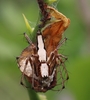
Oxyopes lineatus
Info
Oxyopes lineatus is a species of spider in the family Oxyopidae, the so-called lynx spiders.
(Wikipedia)
 CC
CC
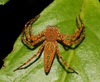
White Lynx Spider
(Oxyopes shweta)
Info
Oxyopes shweta is a species of lynx spider. This spider is distributed in India and China.
(Wikipedia)
 CC
CC
Hieroglyph Fairy Lynx Spider
(Hamadruas hieroglyphica)
Info
Hamadruas hieroglyphica is a species of lynx spider in the family Oxyopidae. It was originally described by Tamerlan Thorell in 1887 as Oxyopes hieroglyphicus.
(Wikipedia)
 CC
CC
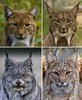
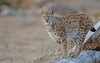
Eurasian Lynx
(Lynx lynx)
Info
The Eurasian lynx (Lynx lynx) is a medium-sized cat native to Siberia, Central, East, and Southern Asia, North, Central and Eastern Europe. It has been listed as Least Concern on the IUCN Red List since 2008 as it is widely distributed, and most populations are considered stable. Eurasian lynx have been re-introduced to several forested mountainous areas in Central and Southeastern Europe; these re-introduced subpopulations are small, less than 200 animals.
(Wikipedia)
 C
C
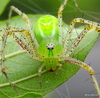
Indian Green Lynx Spider
(Peucetia viridana)
Info
Peucetia viridana is a species of spider found in India and Myanmar.
(Wikipedia)