Species Search
 CC
CC
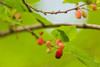
Mulberries
(Genus Morus)
Info
Morus, a genus of flowering plants in the family Moraceae, comprises 10–16 species of deciduous trees commonly known as mulberries, growing wild and under cultivation in many temperate world regions.
(Wikipedia)
 CC
CC
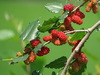
White Mulberry
(Morus alba)
Info
Morus alba, known as white mulberry, is a fast-growing, small to medium-sized mulberry tree which grows to 10–20 m tall. It is generally a short-lived tree with a lifespan comparable to humans, although there are some specimens known to be over 250 years old. The species is native to northern China, and is widely cultivated and naturalized elsewhere (United States, Mexico, Australia, Kyrgyzstan, Argentina, etc.).
(Wikipedia)
 CC
CC
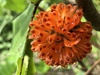
Paper Mulberry
(Broussonetia papyrifera)
Info
The paper mulberry (Broussonetia papyrifera, syn. Morus papyrifera L.) is a species of flowering plant in the family Moraceae. It is native to Asia, where its range includes China, Japan, Korea, Indochina, Burma, and India. It is widely cultivated elsewhere and it grows as an introduced species in parts of Europe, the United States, and Africa. Other common names include tapa cloth tree.
(Wikipedia)
 CC
CC
Gannets
(Genus Morus)
Info
Having a maximum lifespan of up to 35 years,Gannets are seabirds comprising the genus Morus, in the family Sulidae, closely related to boobies. "Gannet" is derived from Old English ganot "strong or masculine", ultimately from the same Old Germanic root as "gander". Morus is derived from Ancient Greek moros, "foolish", due to the lack of fear shown by breeding gannets and boobies allowing them to be easily killed.
(Wikipedia)
 CC
CC
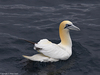
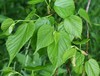
Northern Gannet
(Morus bassanus)
Info
The northern gannet (Morus bassanus) is a seabird and the largest member of the gannet family, Sulidae. "Gannet" is derived from Old English ganot "strong or masculine", ultimately from the same Old Germanic root as "gander". Morus is derived from Ancient Greek moros, "foolish" due to the lack of fear shown by breeding gannets and boobies allowing them to be easily killed. The specific bassanus is from the Bass Rock in the Firth of Forth, which...
(Wikipedia)
 CC
CC
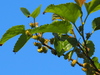
Red Mulberry
(Morus rubra)
Info
Morus rubra, commonly known as the red mulberry, is a species of mulberry native to eastern and central North America. It is found from Ontario, Minnesota, and Vermont south to southern Florida, and west as far as southeastern South Dakota, Nebraska, Kansas, and central Texas. There have been reports of isolated populations (very likely naturalized) in New Mexico, Idaho, and British Columbia.
(Wikipedia)
 CC
CC
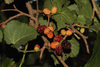
Korean Mulberry
(Morus indica)
Info
Morus indica is a member of the genus Morus, of the family of flowering plants Moraceae, commonly known as the mulberry family. As with other mulberries, Morus indica is a deciduous tree. Morus indica is native to the temperate and sub-tropical Himalayan region. It is currently cultivated in India, China, Japan, and East Africa.
(Wikipedia)
 CC
CC
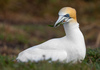
Black Mulberry
(Morus nigra)
Info
Morus nigra, called black mulberry or blackberry (not to be confused with the blackberries which are various species of Rubus), is a species of flowering plant in the family Moraceae, native to southwestern Asia, where it has been cultivated for so long that its precise natural range is unknown. It is known for its large number of chromosomes, as it has 154 pairs (308 individuals). Other mulberry species are sometimes confused with black mulberry, particularly b
(Wikipedia)
 CC
CC
Australasian Gannet
(Morus serrator)
Info
The Australasian gannet (Morus serrator), also known as the Australian gannet or tākapu, is a large seabird of the booby and gannet family, Sulidae. Adults are mostly white, with black flight feathers at the wingtips and lining the trailing edge of the wing. The central tail feathers are also black. The head is tinged buff-yellow, with a pearly grey bill edged in dark grey or black, and blue-rimmed eyes. Young birds have mottled plumage in their...
(Wikipedia)
 C
C
Burnie Vine
(Malaisia scandens)
Info
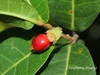
Malaisia scandens (syn. Trophis scandens), the burny vine or crow ash, is a species of large woody vines, constituting part of the fig plant family. They grow naturally in rainforests in Australia and Malesia. It is the only species in the genus Malaisia.
(Wikipedia)
 CC
CC
Texas Mulberry
(Morus microphylla)
Info
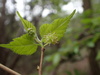
Morus microphylla, the Texas mulberry, is a species of flowering plant in the family Moraceae. It is a shrub or tree native to northern Mexico and to central and west Texas, southwestern Oklahoma, and the southern half of New Mexico and Arizona in the United States. It grows in canyons and on slopes, usually near streams, from 200–2,200 metres (660–7,220 feet) in elevation.
(Wikipedia)
 C
C
Whalebone Tree
(Paratrophis pendulina)
Info
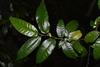
Paratrophis pendulina is a species of flowering plant in the mulberry family, Moraceae. In Australia it is commonly known as whalebone tree, and other common names include the white handlewood, axe-handle wood, grey handlewood and prickly fig. In Hawaii it is known as Hawai'i roughbush or aʻiaʻi in Hawaiian.
(Wikipedia)
 C
C
Dark Acrolophus
(Acrolophus mora)
Info
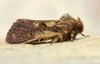
Acrolophus morus, the dark acrolophus, is a moth of the family Acrolophidae. It was described by Augustus Radcliffe Grote in 1881. It is found in North America, including Florida, Georgia, Illinois, Kentucky, Maryland, Massachusetts, Mississippi, New Hampshire, New York, North Carolina, Ohio, Quebec, South Carolina, Tennessee, Virginia and West Virginia.
(Wikipedia)
 CC
CC
Cape Gannet
(Morus capensis)
Info
The Cape gannet (Morus capensis) originally Sula capensis, is a large seabird of the gannet family, Sulidae.
(Wikipedia)
 CC
CC
Mexican Mulberry
(Morus celtidifolia)
Info
Morus celtidifolia, the Texas mulberry, is a plant species native to South America, Central America, Mexico, and the southwestern United States, ranging from Argentina north as far as Arizona and Oklahoma. It the USA, it grows in canyons and on slopes, usually near streams, from 200–2,200 m (660–7,220 ft) elevation. It is very often referred to as "Morus microphylla," including in Flora of North America, but recent studies suggest that these names are synonymous with <
(Wikipedia)
 C
C
 CC
CC
Morus mongolica
Info
Morus mongolica, also described as Morus alba var. mongolica, is a woody plant native to mountain forests in Mongolia, China, Korea, and Japan. Common names include Mongolian mulberry, meng sang (China), and ilama by native people in the namesake region of Mongolia. Similar to M. notabilis, M. mongolica is an uncultivated (wild, undomesticated) mulberry.
(Wikipedia)
 PD
PD
Himalayan Mulberry
(Morus macroura)
Info
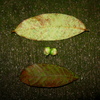
Morus macroura, also known as the king white mulberry, shahtoot mulberry, Tibetan mulberry, or long mulberry is a flowering plant species in the genus Morus found in Tibet, the Himalayas, and rain forests of Indochina. It is a medium-sized tree, with a spreading canopy which grows with a weeping habit. Ripe fruit is white, pink or red, and is described as honey-sweet.
(Wikipedia)
 CC
CC
Sloetia elongata
Info
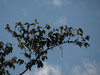
Sloetia is a monotypic genus (i.e. a genus that contains just one species) of plants in the mulberry family, Moraceae. The sole species is Sloetia elongata, a tree native to southeastern Asia, ranging from the Nicobar Islands to Peninsular Malaysia, Sumatra, Borneo, and Sulawesi. It has been described a number of times by different botanists, and thus has several synonyms.
(Wikipedia)
 CC
CC
Paratrophis insignis
Info
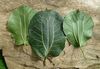
Paratrophis insignis is an evergreen tree native to Central and South America, from Guatemala to Argentina. It grows in wet montane forests at altitudes between 500 and 3,000 metres (1,600 and 9,800 feet).
(Wikipedia)
 CC
CC
African Mulberry
(Morus mesozygia)
Info
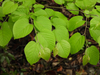
Morus mesozygia, known as black mulberry or African mulberry, is a small to medium sized forest tree of Tropical Africa. Its leaves and fruit provide food for the mantled guereza, a colobus monkey native to much of Tropical Africa, and for the common chimpanzee of West and Central Africa. It is also a commercial hardwood.
(Wikipedia)
 CC
CC
Hua Mulberry
(Morus cathayana)
Info
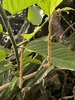
Morus cathayana or hua sang is a deciduous tree in the mulberry family which is native to China, Japan and Korea.
(Wikipedia)
 CC
CC
 C
C