Species Search
Taxonomic Groups
Show active and inactive taxa
 CC
CC
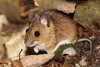
Mice, Rats, and Hamsters
(Suborder Myomorpha)
Info
The suborder Myomorpha contains 1,137 species of mouse-like rodents, nearly a quarter of all mammal species. Included are mice, rats, gerbils, hamsters, lemmings, and voles. They are grouped according to the structure of their jaws and molar teeth. They are characterized by their myomorphous zygomasseteric system, which means that both their medial and lateral masseter muscles are displaced forward, making them adept at gnawing. As in the hystricognathous rodents, the medial masseter muscl
(Wikipedia)
 CC
CC
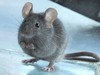
Old World Mice and Rats
(Family Muridae)
Info
The Muridae, or murids, are the largest family of rodents and of mammals, containing over 700 species found naturally throughout Eurasia, Africa, and Australia.
(Wikipedia)
 C
C
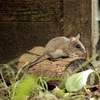
North American Mice and Rats
(Subfamily Neotominae)
Info
The Neotominae are a subfamily of the family Cricetidae. They consist of four tribes, 16 genera, and many species of New World rats and mice, predominantly found in North America. Among them are the well-known deer mice, white-footed mice, packrats, and grasshopper mice.
(Wikipedia)
 CC
CC
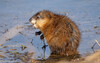
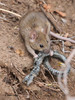
Muskrat
(Ondatra zibethicus)
Info
The muskrat (Ondatra zibethicus), the only species in genus Ondatra and tribe Ondatrini, is a medium-sized semiaquatic rodent native to North America and is an introduced species in parts of Europe, Asia, and South America. The muskrat is found in wetlands over a wide range of climates and habitats. It has important effects on the ecology of wetlands, and is a resource of food and fur for humans.
(Wikipedia)
 C
C
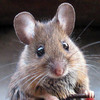
Typical Old World Mice
(Tribe Murini)
Info
The genus Mus or typical mice refers to a specific genus of muroid rodents, all typically called mice (the adjective "muroid" comes from the word "Muroidea", which is a large superfamily of rodents, including mice, rats, voles, hamsters, gerbils, and many other relatives), though the term can be used for other rodents. They are the only members of the tribe Murini. However, the term mouse can also be applied to species outside of this genus.
(Wikipedia)
 CC
CC
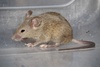
Typical Old World Mice
(Genus Mus)
Info
A mouse (plural: mice) is a small rodent characteristically having a pointed snout, small rounded ears, a body-length scaly tail and a high breeding rate. The best known mouse species is the common house mouse (Mus musculus). It is also a popular pet. In some places, certain kinds of field mice are locally common. They are known to invade homes for food and shelter.
(Wikipedia)
CC
 CC
CC
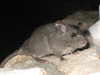
House Mouse
(Mus musculus)
Info
The house mouse (Mus musculus) is a small mammal of the order Rodentia, characteristically having a pointed snout, small rounded ears, and a long naked or almost hairless tail. It is one of the most numerous species of the genus Mus. Although a wild animal, the house mouse mainly lives in association with humans.
(Wikipedia)
 CC
CC
Black Rat
(Rattus rattus)
Info
The black rat (Rattus rattus), also known as the ship rat, roof rat, house rat, is a common long-tailed rodent of the genus Rattus (rats) in the subfamily Murinae. The species originated in tropical Asia and spread through the Near East in Roman times before reaching Europe by the 1st century and spreading with Europeans across the world.
(Wikipedia)
 CC
CC
Vine's Rustic
(Hoplodrina ambigua)
Info
Hoplodrina ambigua, the Vine’s rustic, is a moth of the family Noctuidae. It is found in the west Palearctic ecozone (central Europe, south Europe North Africa, Russia to Urals, south-west Siberia, Tuva, Altai Mountains, Tadjikistan, Turkestan and in the Near East – Iraq, Iran, Afghanistan, Pakistan).
(Wikipedia)
 CC
CC
Italian Sparrow
(Passer italiae)
Info
The Italian sparrow (Passer italiae), also known as the cisalpine sparrow, is a passerine bird of the sparrow family Passeridae, found in Italy and other parts of the Mediterranean region. In appearance, it is intermediate between the house sparrow, and the Spanish sparrow, a species of the Mediterranean and Central Asia closely related to the house sparrow. The Italian sparrow occurs in northern Italy and neighbouring regions, with intermediates with the house sparrow in a v
(Wikipedia)
 CC
CC
South American Mice and Rats
(Subfamily Sigmodontinae)
Info
The rodent subfamily Sigmodontinae is one of the most diverse groups of mammals. It includes New World rats and mice, with at least 376 species. Many authorities include the Neotominae and Tylomyinae as part of a larger definition of Sigmodontinae. When those genera are included, the species count numbers at least 508. Their distribution includes much of the New World, but the genera are predominantly South American, such as brucies. They invaded South America from Central...
(Wikipedia)
 CC
CC
Cape Sparrow
(Passer melanurus)
Info
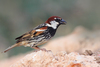
The Cape sparrow or mossie (Passer melanurus) is a bird of the sparrow family Passeridae found in southern Africa. A medium-sized sparrow at 14–16 centimetres (5.5–6.3 in), it has distinctive plumage, including large pale head stripes in both sexes. Its plumage is mostly coloured grey, brown, and chestnut, and the male has some bold black and white markings on its head and neck. The species inhabits semi-arid savannah, cultivated areas, and towns, and ranges from the central.
(Wikipedia)
 C
C
Spanish Sparrow
(Passer hispaniolensis)
Info
The Spanish sparrow or willow sparrow (Passer hispaniolensis) is a passerine bird of the sparrow family Passeridae. It is found in the Mediterranean region and south-west and central Asia. It is very similar to the closely related house sparrow, and the two species show their close relation in a "biological mix-up" of hybridisation in the Mediterranean region, which complicates the taxonomy of this species.
(Wikipedia)
 CC
CC
Southern Flying Squirrel
(Glaucomys volans)
Info
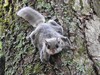
The southern flying squirrel or the assapan (Glaucomys volans) is one of three species of the genus Glaucomys, the only flying squirrels found in North America. It is found in deciduous and mixed woods in the eastern half of North America, from southeastern Canada, to Florida. Disjunct distribution for populations of this species have been recorded in the highlands of Mexico, Guatemala, and Honduras.
(Wikipedia)
 C
C
Australasian Mice and Rats
(Tribe Hydromyini)
Info
Hydromyini is a very large, diverse tribe of muroid rodents in the subfamily Murinae. They are the dominant native rodents in Australasia and one of only two native rodent groups there, the other being the R. fuscipes group of the genus Rattus in the tribe Rattini. They are also found in parts of Southeast Asia.
(Wikipedia)
 CC
CC
Domestic Guinea Pig
(Cavia porcellus)
Info
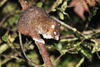
The domestic guinea pig or simply guinea pig (Cavia porcellus), also known as cavy, is a species of rodent belonging to the family Caviidae and the genus Cavia. Despite their common name, these animals are not in the pig family Suidae, nor do they come from Guinea in Africa. They originated in the Andes of South America; studies based on biochemistry and hybridization suggest they are domestic descendants of a closely related species of cavy such...
(Wikipedia)
 C
C
Mottled Rustic
(Caradrina morpheus)
Info
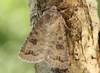
The Mottled Rustic (Caradrina morpheus) is a moth of the family Noctuoidea. It is found across the Palearctic from northern Europe to Siberia, Amur and Korea. Also in Armenia, Turkestan, It was accidentally introduced on both the east and west coasts of Canada and is so far reported in the east from New Brunswick to Ontario, and in the west from British Columbia.
(Wikipedia)
 CC
CC
The Rustic
(Hoplodrina blanda)
Info
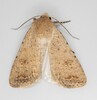
Hoplodrina blanda (the rustic) is a moth of the family Noctuidae. It is found in the Palearctic ecozone (Europe, Morocco, Iran, Russia – south Urals, and south-west Siberia).
(Wikipedia)
 C
C
Civil Rustic Moth
(Caradrina montana)
Info
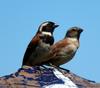
Caradrina montana is a small moth of the family Noctuoidea. It is common to western North America as well as western Asia and Europe. It feeds on alfalfa leaves.
(Wikipedia)
 CC
CC
Common Cape Sparrow
(Passer melanurus ssp. melanurus)
Info
No Wikipedia page for this taxon. Start One Now!
 C
C
 CC
CC
Sprinkled Rustic
(Hoplodrina respersa)
Info
Hoplodrina respersa, the sprinkled rustic, is a moth of the family Noctuidae. It is known from southern and central Europe, the southern part of European Russia, Asia Minor, Turkey and Transcaucasus.
(Wikipedia)
 CC
CC
Caradrina selini
Info
Caradrina selini is a moth of the family Noctuidae. It was described by Jean Baptiste Boisduval in 1840. It is found in most of Europe, North Africa and the Near East.
(Wikipedia)