Species Search
 CC
CC
 CC
CC
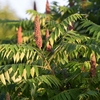
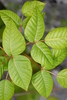
Eastern Poison Ivy
(Toxicodendron radicans)
Info
Toxicodendron radicans, commonly known as eastern poison ivy or poison ivy, is a poisonous Asian and Eastern North American flowering plant that is well-known for causing Urushiol-induced contact dermatitis, an itchy, irritating, and sometimes painful rash in most people who touch it. It is caused by urushiol, a clear liquid compound in the plant's sap. The species is variable in its appearance and habit, and despite its common name it is not a true ivy (Hedera)
(Wikipedia)
 CC
CC
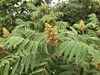
Staghorn Sumac
(Rhus typhina)
Info
Rhus typhina, the staghorn sumac, is a species of flowering plant in the family Anacardiaceae, native to eastern North America. It is primarily found in southeastern Canada, the northeastern and midwestern United States and the Appalachian Mountains, but is widely cultivated as an ornamental throughout the temperate world.
(Wikipedia)
 C
C
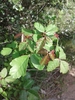
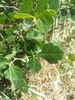
Pacific Poison Oak
(Toxicodendron diversilobum)
Info
Toxicodendron diversilobum (syn. Rhus diversiloba), commonly named Pacific poison oak or western poison oak, is a woody vine or shrub in the Anacardiaceae (sumac) family. It is widely distributed in western North America, inhabiting conifer and mixed broadleaf forests, woodlands, grasslands, and chaparral biomes. Peak flowering occurs in May. Like other members of the Toxicodendron genus, T. diversilobum causes itching and allergic rashes in many h
(Wikipedia)
 CC
CC
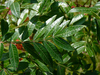
Three-leaf Sumac Complex
(Complex Rhus aromatica)
Info
Rhus aromatica, commonly known as fragrant sumac, aromatic sumac, lemon sumac, polecat bush, polecat sumac, or simply sumac, is a deciduous shrub in the family Anacardiaceae native to North America. It is native to southern and eastern Canada, most of the contiguous United States, and Mexico.
(Wikipedia)
 CC
CC
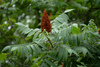
Shining Sumac
(Rhus copallinum)
Info
Rhus copallinum, the winged sumac, shining sumac, dwarf sumac or flameleaf sumac, is a species of flowering plant in the cashew family (Anacardiaceae) that is native to eastern North America. It is a deciduous tree growing to 3.5–5.5 metres (11–18 ft) tall and an equal spread with a rounded crown. A 5-year-old sapling will stand about 2.5 metres (8.2 ft). The name Rhus copallina is also used, but this is not consistent with the rules of the Interna
(Wikipedia)
 CC
CC
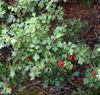
Smooth Sumac
(Rhus glabra)
Info
Rhus glabra, the smooth sumac, (also known as white sumac, upland sumac, or scarlet sumac) is a species of sumac in the family Anacardiaceae, native to North America, from southern Quebec west to southern British Columbia in Canada, and south to northern Florida and Arizona in the United States and Tamaulipas in northeastern Mexico.
(Wikipedia)
 CC
CC
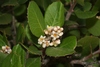
Fragrant Sumac
(Rhus aromatica)
Info
Rhus aromatica, the fragrant sumac, is a deciduous shrub in the family Anacardiaceae native to Canada and the United States from southeast Ontario to Vermont down into central Florida to west Texas up through Nebraska over to southern Wisconsin back to Ontario. It grows in upland open woods, fields, barrens, and rocky cliffs.
(Wikipedia)
 CC
CC
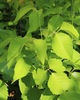
Lemonade Berry
(Rhus integrifolia)
Info
Rhus integrifolia, also known as lemonade sumac, lemonade berry, or lemonadeberry, is a shrub to small tree. It is native to the Transverse and Peninsular Ranges and the South Coast regions of Southern California. This extends from Santa Barbara County and the Channel Islands to San Diego County and extending into north-central Pacific coastal Baja California and its offshore islands such as Cedros Island.
(Wikipedia)
 CC
CC
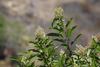
Western Poison Ivy
(Toxicodendron rydbergii)
Info
Toxicodendron rydbergii the western poison ivy, is a species of Toxicodendron in the cashew family. It is native to most of Canada from the Maritimes to British Columbia, and most of the contiguous United States except the southeastern states, New Jersey, Delaware, and California. It can be found growing in forests, and other wooded areas, usually near streams and rivers.
(Wikipedia)
 CC
CC
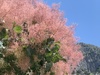
Laurel Sumac
(Malosma laurina)
Info
Malosma is a plant genus which contains only a single species, Malosma laurina, with the common names laurel sumac and lentisco (Spanish). Malosma laurina is found along the Southern California and Baja California Peninsula coasts of the Pacific Ocean.
(Wikipedia)
 CC
CC
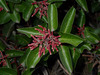
Smokebush
(Cotinus coggygria)
Info
Cotinus coggygria, syn. Rhus cotinus, the European smoketree, Eurasian smoketree, smoke tree, smoke bush, or dyer's sumach is a species of flowering plant in the family Anacardiaceae, native to a large area from southern Europe, east across central Asia and the Himalayas to northern China.
(Wikipedia)
 CC
CC
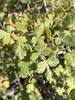
Sugar Bush
(Rhus ovata)
Info
Rhus ovata, also known as sugar sumac or sugar bush, is an evergreen shrub to small tree that grows in chaparral in dry canyons and south-facing slopes below 1300 m in Southern California, Arizona and Baja California.
(Wikipedia)
 CC
CC
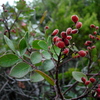
Skunkbush Sumac
(Rhus trilobata)
Info
Rhus trilobata is a shrub in the sumac genus (Rhus) with the common names skunkbush sumac, sourberry, skunkbush, and three-leaf sumac. It is native to the western half of Canada and the Western United States, from the Great Plains to California and south through Arizona extending into northern Mexico. It can be found from deserts to mountain peaks up to about 7,000 feet (2,100 m) in elevation.
(Wikipedia)
 CC
CC
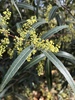
Evergreen Sumac
(Rhus virens)
Info
Rhus virens is a species of flowering plant in the mango family, Anacardiaceae, that is native to Arizona, southern New Mexico, and Texas in the United States as well as northern and central Mexico as far south as Oaxaca. It is commonly known as the evergreen sumac or tobacco sumac.
(Wikipedia)
 C
C
African Sumac
(Searsia lancea)
Info
Searsia lancea commonly known as karee, "karree" (Afrikaans), "hlokoshiyne" (isiZulu), "umhlakotshane" (amaXhosa), or "mokalaabata" (Northern Sotho), is an evergreen, frost hardy, drought resistant tree, which can reach up to 8 metres in height with a 5 metre spread. In North America, where it is naturalized, it is known as African sumac and willow rhus. It is one of the most common trees on the Highveld and in the Bushveld in South Africa, but not found in...
(Wikipedia)
 CC
CC
Chinese Sumac
(Rhus chinensis)
Info
Rhus chinensis, the Chinese sumac, or nutgall tree, is a plant species in the genus Rhus.
(Wikipedia)
 CC
CC
Poison Sumac
(Toxicodendron vernix)
Info
Toxicodendron vernix, commonly known as poison sumac, is a woody shrub or small tree growing to 9 m (30 ft) tall. It was previously known as Rhus vernix. This plant is also known as thunderwood, particularly where it occurs in the southern United States. All parts of the plant contain a resin called urushiol that causes skin and mucous membrane irritation to humans. When the plant is burned, inhalation of the smoke may cause the rash to appear...
(Wikipedia)
 CC
CC
Prairie Flameleaf Sumac
(Rhus lanceolata)
Info
Rhus lanceolata, the prairie sumac, is a plant species native to Texas, Oklahoma, Arizona, New Mexico, and the Mexican states of Coahuila, Nuevo León and Tamaulipas.
(Wikipedia)
 CC
CC
Glossy Currantrhus
(Searsia lucida)
Info
Searsia lucida, previously known as Rhus lucida, and other names varnished kuni-rhus (English) blinktaaibos (Afrikaans). This small tree has a distribution along the West Coast of South Africa from Saldanha Bay around the Cape and up the East Coast almost until the Mozambique border. Its distribution area also encompasses the whole of Kwazulu-Natal and stretches in an arm past Swaziland, right up the Lowveld areas of Mpumalanga and into Limpopo Province, almost
(Wikipedia)
 CC
CC
Little Leaf Sumac
(Rhus microphylla)
Info
Rhus microphylla, the littleleaf sumac, desert sumac, correosa, or agritos, is a species of sumac in the family Anacardiaceae, native to North America, in the southwestern United States and northern and central Mexico, from central and western Texas, southern New Mexico, central and northern regions of the Mexican Altiplano-(Mexican Plateau), and extreme southeastern Arizona of the Madrean Sky Islands.
(Wikipedia)
 CC
CC
Common Currant-Rhus
(Searsia pyroides)
Info
Searsia pyroides, previously known as Rhus pyroides, (common currant-rhus English, gewone taaibos Afrikaans, nhlokoshiyane isiZulu) is a species of Searsia, native to southern Africa. This tree occurs throughout the whole of South Africa, a part of Botswana, Zimbabwe and Tanzania and in some areas of Namibia near Windhoek.
(Wikipedia)
 CC
CC
 CC
CC
Blue Kunibush
(Searsia glauca)
Info
Searsia glauca (or the blue kuni-rhus) is a small, compact tree or bush native to the Cape Provinces of South Africa. Although commonest near the coast, it is also found inland among fynbos vegetation. Searsia glauca has potential medicinal effects and antioxidant properties that can aid in the prevention of cell injury or death.
(Wikipedia)