Species Search
 CC
CC
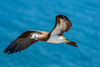
Typical Boobies
(Genus Sula)
Info
A booby is a seabird in the genus Sula, part of the Sulidae family. Boobies are closely related to the gannets (Morus), which were formerly included in Sula.
(Wikipedia)
 CC
CC
Gannets
(Genus Morus)
Info
Having a maximum lifespan of up to 35 years,Gannets are seabirds comprising the genus Morus, in the family Sulidae, closely related to boobies. "Gannet" is derived from Old English ganot "strong or masculine", ultimately from the same Old Germanic root as "gander". Morus is derived from Ancient Greek moros, "foolish", due to the lack of fear shown by breeding gannets and boobies allowing them to be easily killed.
(Wikipedia)
 CC
CC
Northern Gannet
(Morus bassanus)
Info
The northern gannet (Morus bassanus) is a seabird and the largest member of the gannet family, Sulidae. "Gannet" is derived from Old English ganot "strong or masculine", ultimately from the same Old Germanic root as "gander". Morus is derived from Ancient Greek moros, "foolish" due to the lack of fear shown by breeding gannets and boobies allowing them to be easily killed. The specific bassanus is from the Bass Rock in the Firth of Forth, which...
(Wikipedia)
 CC
CC
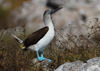
Blue-footed Booby
(Sula nebouxii)
Info
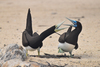
The blue-footed booby (Sula nebouxii) is a marine bird native to subtropical and tropical regions of the eastern Pacific Ocean. It is one of six species of the genus Sula – known as boobies. It is easily recognizable by its distinctive bright blue feet, which is a sexually selected trait. Males display their feet in an elaborate mating ritual by lifting them up and down while strutting before the female. The female is slightly larger than...
(Wikipedia)
 C
C
Brown Booby
(Sula leucogaster)
Info
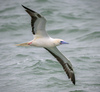
The brown booby (Sula leucogaster) is a large seabird of the booby family, Sulidae. They present sexual dimorphism. The female booby reaches about 80 centimetres (31 in) in length, its wingspan measures up to 150 cm (4.9 ft), and they can weigh up to 1,300 g (2.9 lb). The male booby reaches about 75 centimetres (30 in) in length, its wingspan measures up to 140 cm (4.6 ft), and they can weigh up to 1,000 g (2.2 lb).
(Wikipedia)
 C
C
Red-footed Booby
(Sula sula)
Info
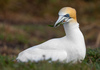
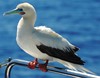
The red-footed booby (Sula sula) is a large seabird of the booby family, Sulidae. As suggested by the name, adults always have red feet, but the colour of the plumage varies. They are powerful and agile fliers, but they are clumsy in takeoffs and landings. They are found widely in the tropics, and breed colonially in coastal regions, especially islands.
(Wikipedia)
 CC
CC
Australasian Gannet
(Morus serrator)
Info
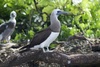
The Australasian gannet (Morus serrator), also known as the Australian gannet or tākapu, is a large seabird of the booby and gannet family, Sulidae. Adults are mostly white, with black flight feathers at the wingtips and lining the trailing edge of the wing. The central tail feathers are also black. The head is tinged buff-yellow, with a pearly grey bill edged in dark grey or black, and blue-rimmed eyes. Young birds have mottled plumage in their...
(Wikipedia)
 CC
CC
Cocos Booby
(Sula brewsteri)
Info
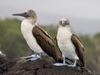
The Cocos booby (Sula brewsteri), formerly known as Brewster's booby, is a species of booby in the family Sulidae. It was formerly considered a subspecies of Brown booby, but it was split by the American Ornithological Society in 2024 due to morphological and behavioural differences. It is native to the east and central Pacific Ocean.
(Wikipedia)
 C
C
Galápagos Blue-footed Booby
(Sula nebouxii ssp. excisa)
Info
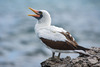
No Wikipedia page for this taxon. Start One Now!
 C
C
Nazca Booby
(Sula granti)
Info
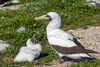
The Nazca booby (Sula granti) is a colonial seabird in the family Sulidae, native to the eastern Pacific.
(Wikipedia)
 CC
CC
Masked Booby
(Sula dactylatra)
Info
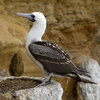
The masked booby (Sula dactylatra), also called the masked gannet or the blue-faced booby, is a large seabird of the booby and gannet family, Sulidae. First described by the French naturalist René-Primevère Lesson in 1831, the masked booby is one of six species of booby in the genus Sula. It has a typical sulid body shape, with a long pointed yellowish bill, long neck, aerodynamic body, long slender wings and pointed tail. The adult is bright...
(Wikipedia)
 CC
CC
Peruvian Booby
(Sula variegata)
Info
The Peruvian booby (Sula variegata) is an endemic bird of the Peruvian current, and an important predator of the marine community to which it belongs. Its distribution is much less widespread than other closely related booby species. It is the most abundant seabird species that inhabits the Peruvian coast and the second most important guano-producing seabird. During the mid-twentieth century, the Peruvian booby population reached 3 million birds.
(Wikipedia)
 C
C
French Honeysuckle
(Sulla coronaria)
Info
Sulla coronaria (French honeysuckle, cock's head, Italian sainfoin, sulla, or soola) is a perennial herb native to Malta, Algeria, Morocco, Tunisia, southern Italy and Spain, cultivated for animal fodder and hay, and for honey production.
(Wikipedia)
 CC
CC
Cape Gannet
(Morus capensis)
Info
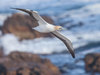
The Cape gannet (Morus capensis) originally Sula capensis, is a large seabird of the gannet family, Sulidae.
(Wikipedia)
 C
C
Derby's Woolly Opossum
(Caluromys derbianus)
Info
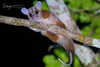
Derby's woolly opossum (Caluromys derbianus), or the Central American woolly opossum, is an opossum found in deciduous and moist evergreen forests of Central America, from southern Mexico to western Ecuador and Colombia. It was first described by English naturalist George Robert Waterhouse, and named in honor of Edward Smith-Stanley, 13th Earl of Derby. Derby's woolly opossum is the largest in its genus, with a total length of 60 to 70 centimetres (24 to 28 in) and weight...
(Wikipedia)
 C
C
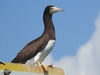
Eastern Pacific Red-footed Booby
(Sula sula ssp. websteri)
Info
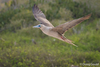
No Wikipedia page for this taxon. Start One Now!
 CC
CC
 CC
CC
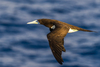
Atlantic Brown Booby
(Sula leucogaster ssp. leucogaster)
Info
No Wikipedia page for this taxon. Start One Now!
 CC
CC
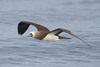
Forster's Brown Booby
(Sula leucogaster ssp. plotus)
Info
No Wikipedia page for this taxon. Start One Now!
 C
C
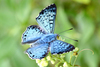
Brewster's Booby
(Sula brewsteri ssp. brewsteri)
Info
No Wikipedia page for this taxon. Start One Now!
 CC
CC
Blue Lasaia
(Lasaia sula)
Info
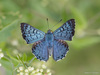
Lasaia sula, the blue metalmark, is a species of butterfly in the family Riodinidae that is native to North America. It ranges from the Lower Rio Grande Valley of Texas in the United States south to Honduras and inhabits subtropical forests, forest edges, and agricultural areas.
(Wikipedia)
 C
C
Himalayan Hemlock
(Tsuga dumosa)
Info
Tsuga dumosa, commonly called the Himalayan hemlock or in Chinese, Yunnan tieshan (simplified Chinese: 云南铁杉; traditional Chinese: 雲南鐵杉; pinyin: Yúnnán tiěshān), is a species of conifer native to the eastern Himalayas. It occurs in parts of Nepal, India,(Bhutan), Burma, Vietnam, Tibet, and China. Within its native range the tree is used for construction as well as for furniture. In Europe and North America, it is occasionally encountered as an ornamental species
(Wikipedia)
 CC
CC
Indo-Pacific Red-footed Booby
(Sula sula ssp. rubripes)
Info
No Wikipedia page for this taxon. Start One Now!
 CC
CC
Sun Lark
(Galerida modesta)
Info
The sun lark (Galerida modesta) or Nigerian sun lark is a species of lark in the family Alaudidae. It inhabits a broad horizontal area south of the Sahel, ranging from Guinea to South Sudan. Its natural habitats are dry savannah and subtropical or tropical dry lowland grassland.
(Wikipedia)