Species Search
Taxonomic Groups
Show active and inactive taxa
Other Animals
(10)
Mollusks
(17)
Plants
(75)
Fungi
(1)
Birds
(8)
Amphibians
(4)
Reptiles
(7)
Mammals
(12)
Arachnids
(1)
Insects
(42)
 C
C
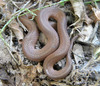
Earthsnakes
(Genus Virginia)
Info
Virginia is a genus of small, terrestrial, colubrid snakes, native to the United States. They are commonly referred to as earth snakes.
(Wikipedia)
 CC
CC
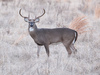
White-tailed Deer
(Odocoileus virginianus)
Info
The white-tailed deer (Odocoileus virginianus), also known as the whitetail or Virginia deer, is a medium-sized deer native to the United States, Canada, Mexico, Central America, and South America as far south as Peru and Bolivia. It has also been introduced to New Zealand, Cuba, Jamaica, Hispaniola, Puerto Rico, Bahamas, Lesser Antilles, and some countries in Europe, such as Finland, the Czech Republic, and Serbia. In the Americas, it is the most widely distributed wi
(Wikipedia)
 CC
CC
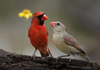
Northern Cardinal
(Cardinalis cardinalis)
Info
The northern cardinal (Cardinalis cardinalis) is a North American bird in the genus Cardinalis; it is also known colloquially as the redbird or common cardinal. It can be found in southern Canada, through the eastern United States from Maine to Texas and south through Mexico. Its habitat includes woodlands, gardens, shrublands, wetlands.
(Wikipedia)
 CC
CC
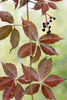
Virginia Creepers
(Genus Parthenocissus)
Info
Parthenocissus /ˌpɑːrθɪnoʊˈsɪsəs/, is a genus of tendril climbing plants in the grape family, Vitaceae. It contains about 12 species native to the Himalayas, eastern Asia and North America. Several are grown for ornamental use, notably P. henryana, P. quinquefolia and P. tricuspidata.
(Wikipedia)
 CC
CC
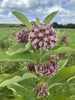
Common Milkweed
(Asclepias syriaca)
Info
Asclepias syriaca, commonly called common milkweed, butterfly flower, silkweed, silky swallow-wort, and Virginia silkweed, is a species of flowering plant. It is in the genus Asclepias, the milkweeds. This species is native to southern Canada and of much of the conterminous eastern U.S., east of the Rocky Mountains, excluding the drier parts of the prairies. It grows in sandy soils and other kinds of soils in sunny areas. It was one of the e
(Wikipedia)
 CC
CC
Virginia Creeper
(Parthenocissus quinquefolia)
Info
Parthenocissus quinquefolia, known as Virginia creeper, Victoria creeper, five-leaved ivy, or five-finger, is a species of flowering plant in the grape family, Vitaceae. It is native to eastern and central North America, from southeastern Canada and the eastern United States west to Manitoba and Utah, and south to eastern Mexico and Guatemala.
(Wikipedia)
 CC
CC
Eastern Carpenter Bee
(Xylocopa virginica)
Info
Xylocopa virginica, more commonly known as the eastern carpenter bee, extends through the Eastern United States and into Canada. They nest in various types of wood and eat pollen and nectar. The eastern carpenter bee is similar to most other bee species in that it does not have a queen; in Xylocopa virginica, dominant females are responsible for reproduction, foraging, and nest construction, though they may sometimes have help from their daughters. Xylocopa virginic
(Wikipedia)
 CC
CC
Eastern Redcedar
(Juniperus virginiana)
Info
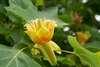
Juniperus virginiana — its common names include red cedar, eastern redcedar, Virginian juniper, eastern juniper, red juniper, pencil cedar, and aromatic cedar — is a species of juniper native to eastern North America from southeastern Canada to the Gulf of Mexico and east of the Great Plains. Further west it is replaced by the related Juniperus scopulorum (Rocky Mountain juniper) and to the southwest by Juniperus ashei (
(Wikipedia)
 CC
CC
American Tuliptree
(Liriodendron tulipifera)
Info
Liriodendron tulipifera—known as the tulip tree, American tulip tree, tuliptree, tulip poplar, whitewood, fiddletree, and yellow-poplar—is the Western Hemisphere representative of the two-species genus Liriodendron, and the tallest eastern hardwood. It is native to eastern North America from Southern Ontario and Illinois eastward to southeastern Massachusetts and Rhode Island, and south to central Florida and Louisiana. It can
(Wikipedia)
 CC
CC
Chokecherry
(Prunus virginiana)
Info
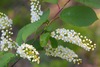
Prunus virginiana, commonly called bitter-berry, chokecherry, Virginia bird cherry, and western chokecherry (also black chokecherry for P. virginiana var. demissa), is a species of bird cherry (Prunus subgenus Padus) native to North America. The natural historic range of P. virginiana includes most of Canada (including Northwest Territories, but excluding Yukon, Nunavut, and Labrador), most of the United States (i
(Wikipedia)
 C
C
Virginia Springbeauty
(Claytonia virginica)
Info
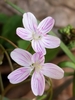
Claytonia virginica, the Virginia springbeauty, eastern spring beauty, grass-flower or fairy spud, is an herbaceous perennial in the family Montiaceae. Its native range is eastern North America. Its scientific name honors Colonial Virginia botanist John Clayton (1694–1773).
(Wikipedia)
 CC
CC
Great Horned Owl
(Bubo virginianus)
Info
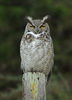
The great horned owl (Bubo virginianus), also known as the tiger owl (originally derived from early naturalists' description as the "winged tiger" or "tiger of the air") or the hoot owl, is a large owl native to the Americas. It is an extremely adaptable bird with a vast range and is the most widely distributed true owl in the Americas. Its primary diet is rabbits and hares, rats and mice and voles, although it freely hunts...
(Wikipedia)
 CC
CC
Staghorn Sumac
(Rhus typhina)
Info
Rhus typhina, the staghorn sumac, is a species of flowering plant in the family Anacardiaceae, native to eastern North America. It is primarily found in southeastern Canada, the northeastern and midwestern United States and the Appalachian Mountains, but is widely cultivated as an ornamental throughout the temperate world.
(Wikipedia)
 C
C
Honey Locust
(Gleditsia triacanthos)
Info
The honey locust (Gleditsia triacanthos), also known as the thorny locust, is a deciduous tree in the Fabaceae family, native to central North America where it is mostly found in the moist soil of river valleys. Honey locust is highly adaptable to different environments, has been introduced worldwide, and is an aggressive invasive species.
(Wikipedia)
 CC
CC
American Trumpet Vine
(Campsis radicans)
Info
Campsis radicans (trumpet vine or trumpet creeper, also known in North America as cow itch vine or hummingbird vine), is a species of flowering plant of the family Bignoniaceae, native to the eastern United States and naturalized in parts of the western United States as well as in Ontario, parts of Europe, and scattered locations in Latin America. Growing to 10 m (33 ft), it is a vigorous, deciduous woody vine, notable for its showy trumpet-shaped flowers
(Wikipedia)
 CC
CC
Virginia Opossum
(Didelphis virginiana)
Info
The Virginia opossum (Didelphis virginiana), commonly known as the North American opossum, is a marsupial found in North America. It is the only marsupial found north of Mexico. In the United States, it is typically referred to simply as a possum. It is a solitary and nocturnal animal about the size of a domestic cat. It is a successful opportunist. It is familiar to many North Americans as it is often seen near towns, rummaging through...
(Wikipedia)
 CC
CC
Virginia Strawberry
(Fragaria virginiana)
Info
The Virginia strawberry, wild strawberry, or common strawberry (Fragaria virginiana) is one of two species of wild strawberry that were hybridized to create the modern domesticated garden strawberry. Its natural range is confined to North America, in the United States (including Alaska) and Canada, although a popular variety called "Little Scarlet" is grown only in Great Britain, having been imported from the United States in the early 1900s.
(Wikipedia)
 CC
CC
Cut-leaved Toothwort
(Cardamine concatenata)
Info
Cardamine concatenata, the cutleaf toothwort, crow's toes, pepper root or purple-flowered toothwort, is a flowering plant in Brassicaceae. It owes its name to the tooth-like appearance of its rhizome. It is a perennial plant woodland wildflower native to eastern North America. It is considered a spring ephemeral and blooms in March, April, and/or May.
(Wikipedia)
 CC
CC
Virginia Bluebells
(Mertensia virginica)
Info
Mertensia virginica (common names Virginia bluebells, Virginia cowslip, lungwort oysterleaf, Roanoke bells) is a spring ephemeral plant with bell-shaped sky-blue flowers, native to eastern North America.
(Wikipedia)
 CC
CC
Southern Live Oak
(Quercus virginiana)
Info
Quercus virginiana, also known as the southern live oak, is an evergreen oak tree native to the southeastern United States. Though many other species are loosely called live oak, the southern live oak is particularly iconic of the Old South. Many very large and old specimens of live oak can be found today in the deep southern United States.
(Wikipedia)
 CC
CC
Virginia Pepperweed
(Lepidium virginicum)
Info
Lepidium virginicum, also known as least pepperwort, Virginia pepperweed or peppergrass, is an annual or biennial plant in the Brassicaceae or mustard family. It is native to much of North America, including most of the United States and Mexico and southern regions of Canada, as well as most of Central America. It can be found elsewhere as an introduced species.
(Wikipedia)
 CC
CC
Virginia Waterleaf
(Hydrophyllum virginianum)
Info
The Virginia waterleaf or eastern waterleaf (Hydrophyllum virginianum, often misspelled as virginicum) is an herbaceous perennial plant native to Eastern North America. The plant sometimes spreads by rhizomes to form large colonies in wooded areas. It can also spread by seeds. The seedling usually appear early to mid-spring. Flowers are blue, white, or purple, appearing in mid to late spring. Flowers exposed to sunlight bleach rapidly. Often the newer leaves are
(Wikipedia)
 CC
CC
Thicket Creeper
(Parthenocissus inserta)
Info
Parthenocissus vitacea (syn. P. inserta), also known as thicket creeper, false Virginia creeper, woodbine, or grape woodbine, is a woody vine native to North America, in southeastern Canada (west to southern Manitoba) and a large area of the United States, from Maine west to Montana and south to New Jersey and Missouri in the east, and Texas to Arizona in the west. It is present in California, but it may be an introduced species that far...
(Wikipedia)
 CC
CC
Virgin's-Bower
(Clematis virginiana)
Info
Clematis virginiana (also known as devil's darning needles, devil's hair, love vine, traveller's joy, virgin's bower, Virginia virgin's bower, wild hops, and woodbine; syn. Clematis virginiana L. var. missouriensis (Rydb.) Palmer & Steyermark ) is a vine of the Ranunculaceae (Buttercup Family) native to the United States and Canada from Newfoundland to southern Manitoba down to the Gulf of Mexico. The rational
(Wikipedia)