Species Search
Taxonomic Groups
Show active and inactive taxa
Other Animals
(85,548)
Mollusks
(61,994)
Plants
(348,954)
Fungi
(73,802)
Chromista
(11,595)
Birds
(35,700)
Amphibians
(10,007)
Reptiles
(16,956)
Mammals
(13,606)
Ray-Finned Fishes
(42,450)
Arachnids
(81,244)
Insects
(643,161)
 CC
CC
Life
(Life)
Info
Life, also known as biota, refers to matter that has biological processes, such as signaling and self-sustaining processes. It is defined descriptively by the capacity for homeostasis, organisation, metabolism, growth, adaptation, response to stimuli, and reproduction. All life over time eventually reaches a state of death, and none is immortal. Many philosophical definitions of living systems have been proposed, such as self-organizing systems. Defining life is further complicated
(Wikipedia)
 CC
CC
Animals
(Kingdom Animalia)
Info
Animals are eukaryotic, multicellular organisms that form the biological kingdom Animalia. With few exceptions, animals are motile (able to move), heterotrophic (consume organic material), reproduce sexually, and their embryonic development includes a blastula stage. The body plan of the animal derives from this blastula, differentiating specialized tissues and organs as it develops; this plan eventually becomes fixed, although some undergo metamorphosis at some stage in their lives
(Wikipedia)
 C
C
Plants
(Kingdom Plantae)
Info
Plants are predominantly photosynthetic eukaryotes of the kingdom Plantae. Historically, the plant kingdom encompassed all living things that were not animals, and included algae and fungi; however, all current definitions of Plantae exclude the fungi and some algae, as well as the prokaryotes (the archaea and bacteria). By one definition, plants form the clade Viridiplantae (Latin name for "green plants") which is sister of the Glaucophyta, and consists of the green algae and Embry
(Wikipedia)
 CC
CC
Vascular Plants
(Phylum Tracheophyta)
Info
Vascular plants (from Latin vasculum 'duct'), also called tracheophytes (/trəˈkiː.əˌfaɪts/) or collectively Tracheophyta (from Ancient Greek τραχεῖα ἀρτηρία (trakheîa artēría) 'windpipe', and φυτά (phutá) 'plants'), form a large group of land plants (c. 300,000 accepted known species) that have lignified tissues (the xylem) for conducting water and minerals throughout the plant. They also have a specialized non-lignif
(Wikipedia)
 CC
CC
Flowering Plants
(Subphylum Angiospermae)
Info
Flowering plants are plants that bear flowers and fruits, and form the clade Angiospermae (/ˌændʒiəˈspɜːrmiː/), commonly called angiosperms. The term "angiosperm" is derived from the Greek words angeion ('container, vessel') and sperma ('seed'), and refers to those plants that produce their seeds enclosed within a fruit. They are by far the most diverse group of land plants with 64 orders, 416 families, approximately 13,000 known genera and 300,000 known species
(Wikipedia)
 C
C
Dicots
(Class Magnoliopsida)
Info
Magnoliopsida is a valid botanical name for a class of flowering plants. By definition the class will include the family Magnoliaceae, but its circumscription can otherwise vary, being more inclusive or less inclusive depending upon the classification system being discussed. A Bangladesh Journal of Plant Taxonomy called “Preliminary Taxonomic Study on Homestead Flora of Four Districts of Bangladesh: Magnoliopsida” describes the Magnoliopsida species as a class of flowering plants also know
(Wikipedia)
 C
C
Arthropods
(Phylum Arthropoda)
Info
An arthropod (from Greek ἄρθρον arthron, "joint" and πούς pous, "foot") is an invertebrate animal having an exoskeleton (external skeleton), a segmented body, and paired jointed appendages. Arthropods form the phylum Euarthropoda, which includes insects, arachnids, myriapods, and crustaceans. The term Arthropoda as originally proposed refers to a proposed grouping of Euarthropods and the phylum Onychophora. Arthropods are characterized by their jointed limbs and
(Wikipedia)
 CC
CC
Hexapods
(Subphylum Hexapoda)
Info
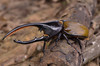
The subphylum Hexapoda (from the Greek for six legs) constitutes the largest number of species of arthropods and includes the insects as well as three much smaller groups of wingless arthropods: Collembola, Protura, and Diplura (all of these were once considered insects). The Collembola (or springtails) are very abundant in terrestrial environments. Hexapods are named for their most distinctive feature: a consolidated thorax with three pairs of legs. Most other arthropods hav
(Wikipedia)
 CC
CC
Insects
(Class Insecta)
Info
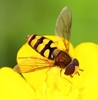
Insects or Insecta (from Latin insectum, a calque of Greek ἔντομον , "cut into sections") are by far the largest group of hexapod invertebrates within the arthropod phylum. Definitions and circumscriptions vary; in one approach insects comprise a class within the Phylum Arthropoda. As the term is used here, it is synonymous with Ectognatha.
(Wikipedia)
 CC
CC
Winged and Once-winged Insects
(Subclass Pterygota)
Info
The Pterygota are a subclass of insects that includes the winged insects. It also includes insect orders that are secondarily wingless (that is, insect groups whose ancestors once had wings but that have lost them as a result of subsequent evolution).
(Wikipedia)
 CC
CC
Chordates
(Phylum Chordata)
Info
A chordate is an animal belonging to the phylum Chordata; chordates possess a notochord, a hollow dorsal nerve cord, pharyngeal slits, an endostyle, and a post-anal tail, metameric segmentation, and a circulatory system, for at least some period of their life cycle. Chordates are deuterostomes, as during the embryo development stage the anus forms before the mouth. They are also bilaterally symmetric coelomates. In the case of vertebrate chordates, the notochord is usually replaced
(Wikipedia)
 CC
CC
Vertebrates
(Subphylum Vertebrata)
Info
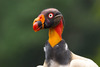
Vertebrates /ˈvɜːrtɪbrɪts/ comprise all species of animals within the subphylum Vertebrata /-eɪ/ (chordates with backbones). Vertebrates represent the overwhelming majority of the phylum Chordata, with currently about 66,000 species described. Vertebrates include the jawless fish and the jawed vertebrates, which include the cartilaginous fish (sharks, rays, and ratfish) and the bony fish.
(Wikipedia)
 CC
CC
Birds
(Class Aves)
Info
Birds (Aves) are a group of endothermic vertebrates, characterised by feathers, toothless beaked jaws, the laying of hard-shelled eggs, a high metabolic rate, a four-chambered heart, and a strong yet lightweight skeleton. Birds live worldwide and range in size from the 5 cm (2 in) bee hummingbird to the 2.75 m (9 ft) ostrich. They rank as the class of tetrapods with the most living species, at approximately ten thousand, with more than half of these being passerines, sometimes known
(Wikipedia)
 CC
CC
Butterflies and Moths
(Order Lepidoptera)
Info
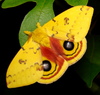
Lepidoptera (/ˌlɛpɪˈdɒptərə/ lep-i-DOP-tər-ə) is an order of insects that includes butterflies and moths (both are called lepidopterans). About 180,000 species of the Lepidoptera are described, in 126 families and 46 superfamilies, 10% of the total described species of living organisms. It is one of the most widespread and widely recognizable insect orders in the world. The Lepidoptera show many variations of the basic body structure t
(Wikipedia)
 CC
CC
Perching Birds
(Order Passeriformes)
Info
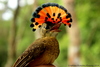
A passerine is any bird of the order Passeriformes, which includes more than half of all bird species. Passerines are distinguished from other orders of Aves by the arrangement of their toes, three pointing forward and one back, which facilitates perching.
(Wikipedia)
 CC
CC
Monocots
(Class Liliopsida)
Info
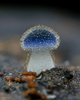
Liliopsida Batsch (synonym: Liliatae) is a botanical name for the class containing the family Liliaceae (or Lily Family). It is considered synonymous (or nearly synonymous) with the name monocotyledon. Publication of the name is credited to Scopoli (in 1760): see author citation (botany). This name is formed by replacing the termination -aceae in the name Liliaceae by the termination -opsida (Art 16 of the ICBN).
(Wikipedia)
 CC
CC
Fungi Including Lichens
(Kingdom Fungi)
Info
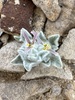
A fungus (plural: fungi or funguses) is any member of the group of eukaryotic organisms that includes microorganisms such as yeasts and molds, as well as the more familiar mushrooms. These organisms are classified as a kingdom, Fungi, which is separate from the other eukaryotic life kingdoms of plants and animals.
(Wikipedia)
 CC
CC
Sunflowers, Bellflowers, Fanflowers, and Allies
(Order Asterales)
Info
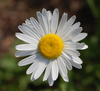
Asterales (/ˌæstəˈreɪliːz/) is an order of dicotyledonous flowering plants that includes the large family Asteraceae (or Compositae) known for composite flowers made of florets, and ten families related to the Asteraceae. While asterids in general are characterized by fused petals, composite flowers consisting of many florets create the false appearance of separate petals (as found in the rosids).
(Wikipedia)
 CC
CC
Sunflowers, Daisies, Asters, and Allies
(Family Asteraceae)
Info
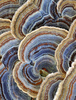
The family Asteraceae, alternatively Compositae, consists of over 32,000 known species of flowering plants in over 1,900 genera within the order Asterales. Commonly referred to as the aster, daisy, composite, or sunflower family, Compositae were first described in the year 1740. The number of species in Asteraceae is rivaled only by the Orchidaceae, and which is the larger family is unclear as the quantity of extant species in each family is unknown.
(Wikipedia)
 CC
CC
Basidiomycete Fungi
(Phylum Basidiomycota)
Info
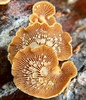
Basidiomycota (/bəˌsɪdi.oʊmaɪˈkoʊtə/) is one of two large divisions that, together with the Ascomycota, constitute the subkingdom Dikarya (often referred to as the "higher fungi") within the kingdom Fungi.
(Wikipedia)
 CC
CC
Higher Basidiomycetes
(Subphylum Agaricomycotina)
Info
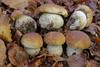
The subdivision Agaricomycotina, also known as the hymenomycetes, is one of three taxa of the fungal division Basidiomycota (fungi bearing spores on basidia). The Agaricomycotina contain some 20,000 species, and about 98% of these are in the class Agaricomycetes, which comprises most of the fungi known as mushrooms, including the bracket fungi and puffballs. Species in the Agaricomycotina that are not Agaricomycetes include the jelly fungi, certain "yeasts", ear fungi, and others; these ar
(Wikipedia)
 CC
CC
Mushrooms, Bracket Fungi, Puffballs, and Allies
(Class Agaricomycetes)
Info
The Agaricomycetes are a class of fungi in the division Basidiomycota. The taxon is roughly identical to that defined for the Homobasidiomycetes (alternatively called holobasidiomycetes) by Hibbett & Thorn, with the inclusion of Auriculariales and Sebacinales. It includes not only mushroom-forming fungi, but also most species placed in the deprecated taxa Gasteromycetes and Homobasidiomycetes. Within the subdivision Agaricomycotina, which already excludes the smut and rust fungi
(Wikipedia)
 CC
CC
Butterflies
(Superfamily Papilionoidea)
Info
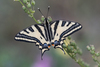
The superfamily Papilionoidea (from the genus Papilio, meaning "butterfly") contains all the butterflies except for the moth-like Hedyloidea.
(Wikipedia)
 CC
CC
Beetles
(Order Coleoptera)
Info
Beetles are a group of insects that form the order Coleoptera, in the superorder Endopterygota. Their front pair of wings is hardened into wing-cases, elytra, distinguishing them from most other insects. The Coleoptera, with about 400,000 species, is the largest of all orders, constituting almost 40% of described insects and 25% of all known animal life-forms; new species are discovered frequently. The largest of all families, the Curculionidae (weevils) with some 70,000 member spec
(Wikipedia)