Eupatorium rotundifolium and friends
Anyone who has taken the time to look more closely at Eupatorium knows that this genus can be very diverse and variable. In particular, the E. rotundifolium complex is quite confusing and often misidentified here on iNat. Rightfully so, as the group includes many instances of polyploidy and hybridization. This is my attempt at giving fellow iNatters a guide to better understand E. rotundifolium and related species.
...................................................................................................................................................................................................................................................
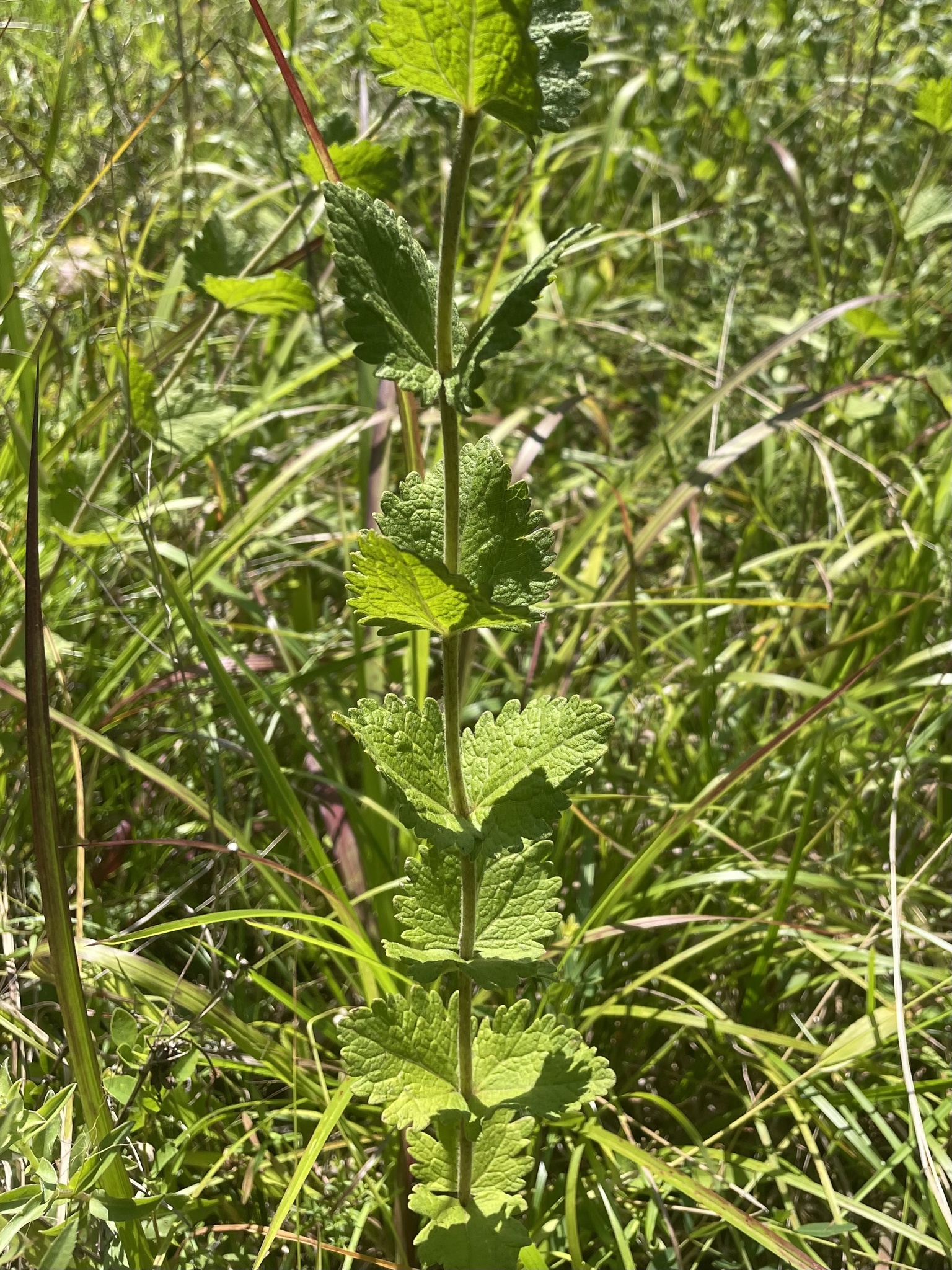
Let’s start off with the most widespread species and diploid progenitor of the other species in the group: E. rotundifolium! This species exists mostly as polyploid apomicts across the majority of its range, but the plants around northern FL/southern GA are sexual and diploid, thus presumably one of the parents of each of the other species in the complex.
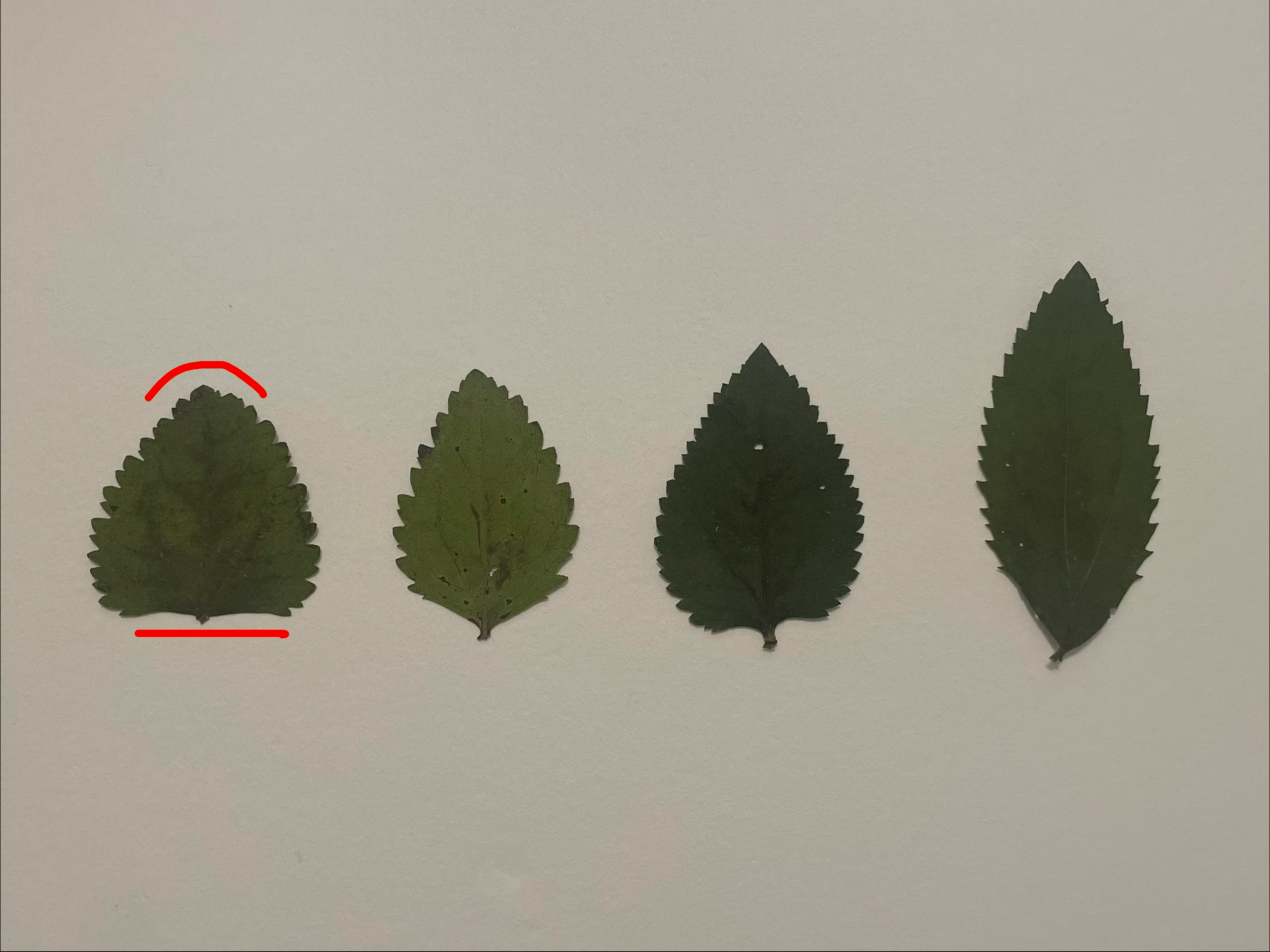
The leaf bases are usually obviously truncate; you can almost trace a straight line along the base of the leaves. The tip of the leaf is also quite rounded, as are the teeth (or serrations) along the leaf edges. The 3 main veins of the leaf separate at the base of the leaf.
...................................................................................................................................................................................................................................................
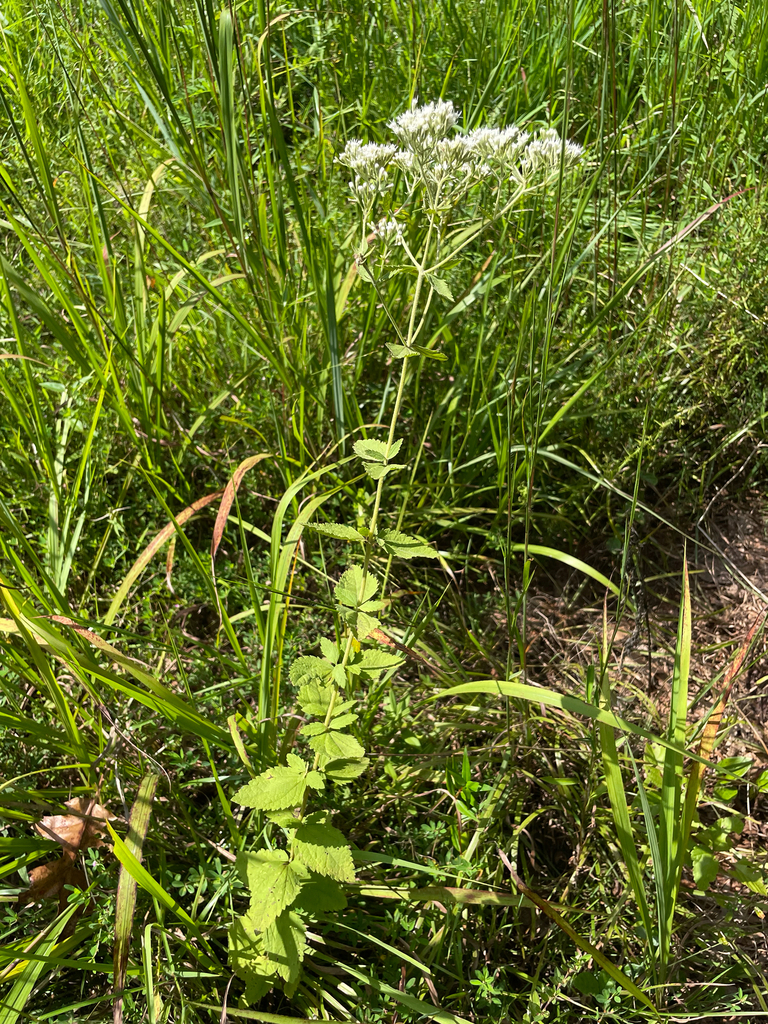
Next, we’ll look at E. scabridum. This is a species of hybrid origin, sometimes a sterile hybrid and sometimes fertile, thought to have as its parents E. rotundifolium and E. semiserratum. It is widespread, though not as frequent as its parents.
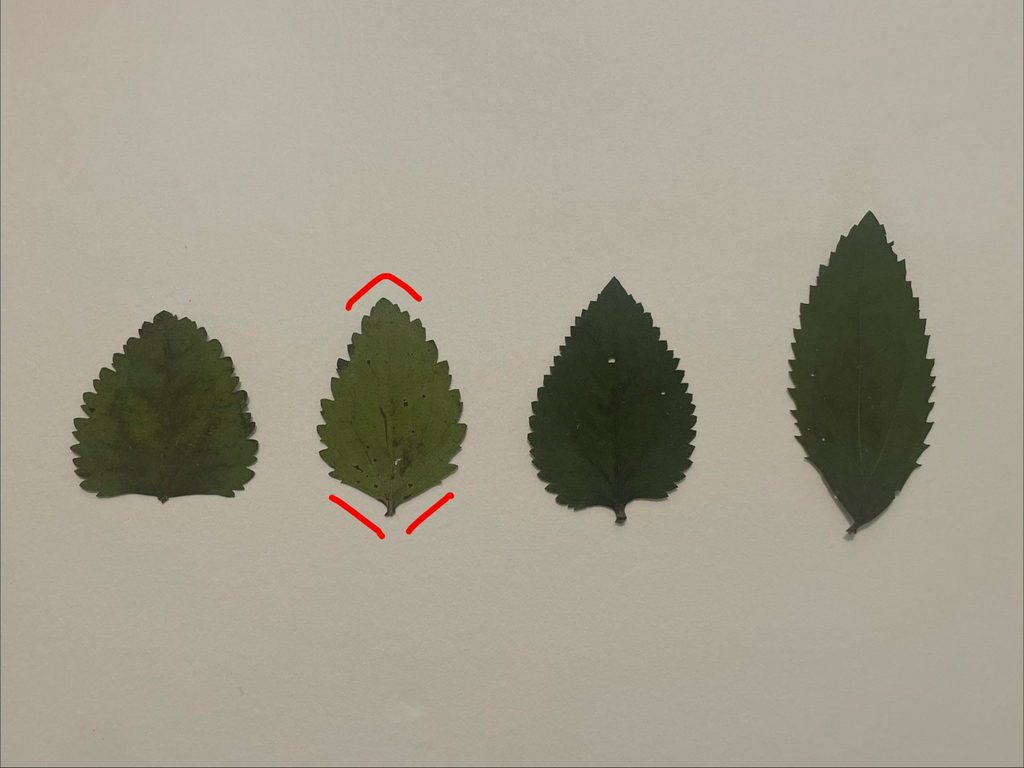
The leaf bases are broadly cuneate, forming a sort of wide V shape at the base. The E. rotundifolium parentage is apparent in the rounded serrations along the edges, although these are somewhat sharper than in the parent. The leaf tip is also sharper, and the leaf has a narrower outline. The 3 main veins of the leaf separate a bit above the base of the leaf. Importantly, this species has axillary fascicles, which are small bundles of leaves present at the leaf-stem junction.
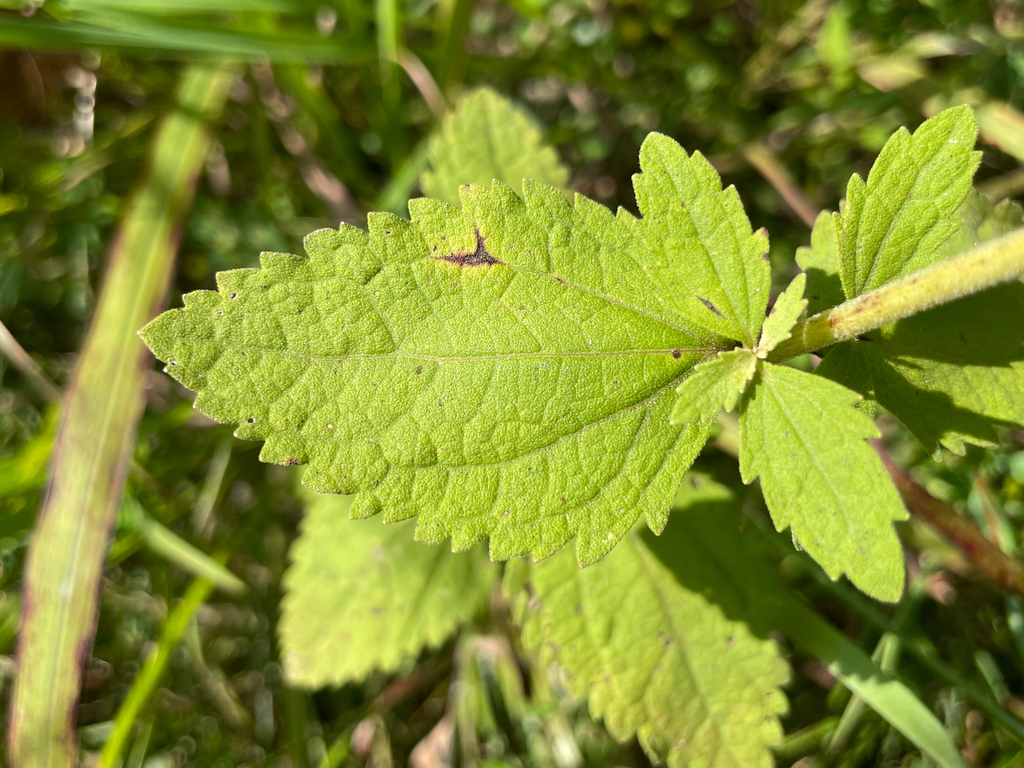
I had trouble finding type material for E. scabridum, but this link will take you to a page with a specimen of E. scabridum (next to a specimen of E. pubescens) from the Elliott collection. Stephen Elliot described E. scabridum. https://www.charlestonmuseum.org/research/collection/eupatorium-rotundifolium-var-ovatum/A02C6F60-B582-4B88-80A8-282514100220
...................................................................................................................................................................................................................................................
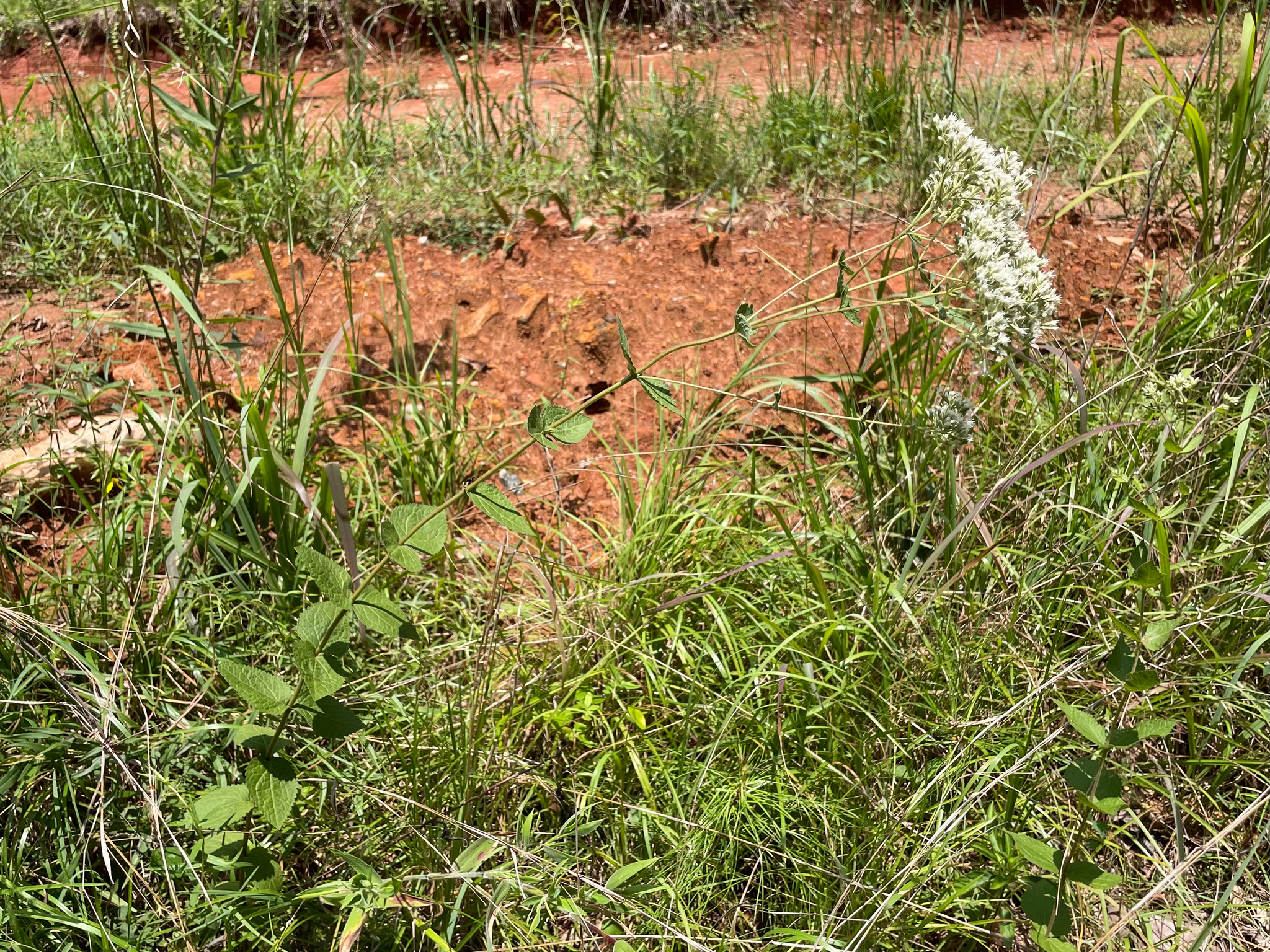
E. pubescens is also a hybrid species. It is thought to have originated from E. rotundifolium and E. sessilifolium, but now has self-sustaining populations. It was formerly known as E. rotundifolium var. ovatum.
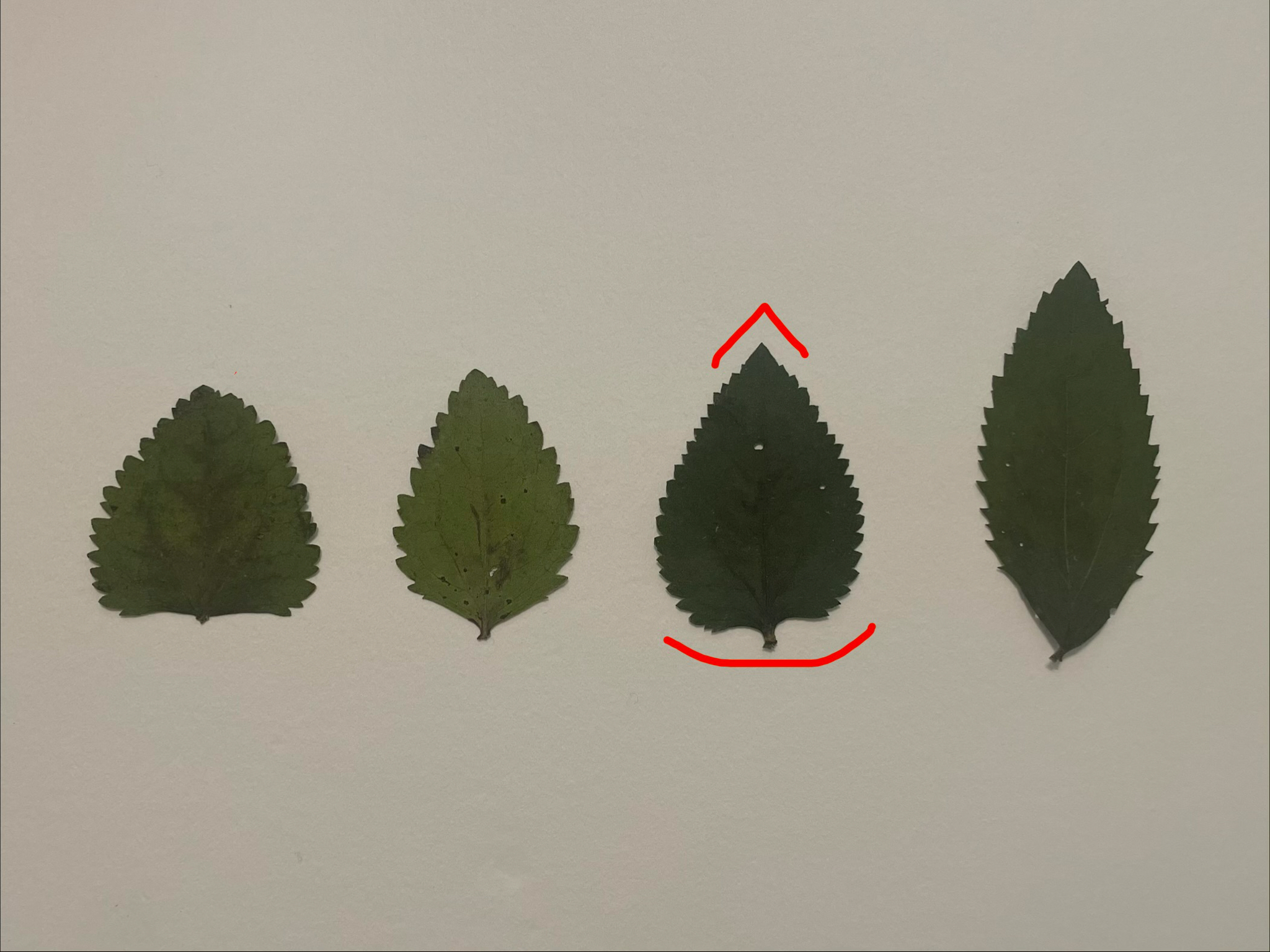
The leaf bases are broadly rounded. The serrations along the leaf edges are quite neatly organized and smaller than in the other species. I’ve found that this tends to make this plants leaves look entire when seen from a distance. The tip of the leaf is notably pointed. The 3 main veins of the leaf separate a bit above the base of the leaf. There are no axillary fascicles present here.
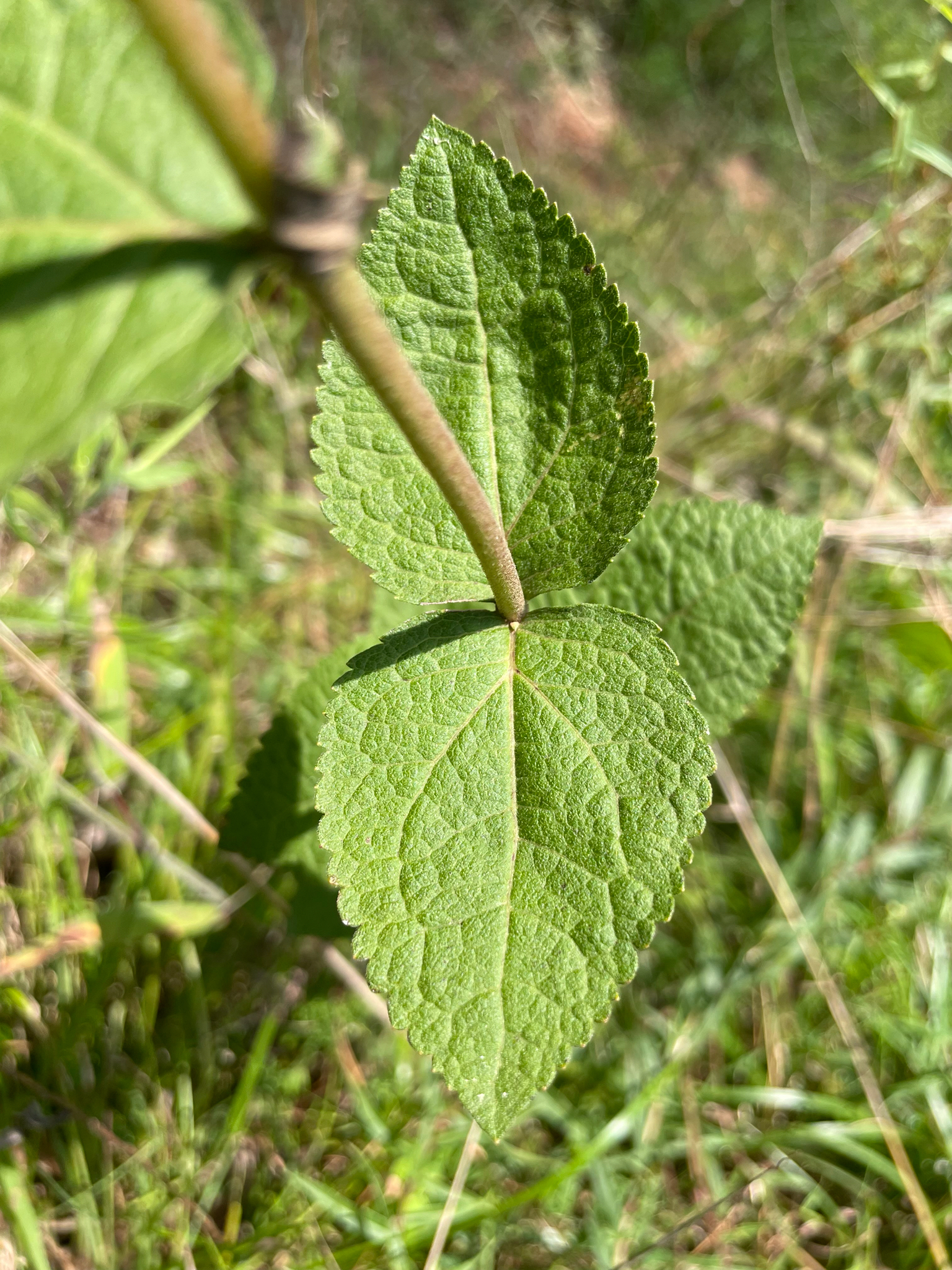
Attached below is the type sheet for E. pubescens.
...................................................................................................................................................................................................................................................
E. cordigerum is a species I haven’t seen yet, supposedly a hybrid of E. rotundifolium and E. perfoliatum. From the type sheet attached above, it seems that the leaves are longer and more rugose than in any of the other species listed here. Keys also say that the leaves are clasping, but E. pubescens can also look like it has clasping leaves sometimes.
...................................................................................................................................................................................................................................................
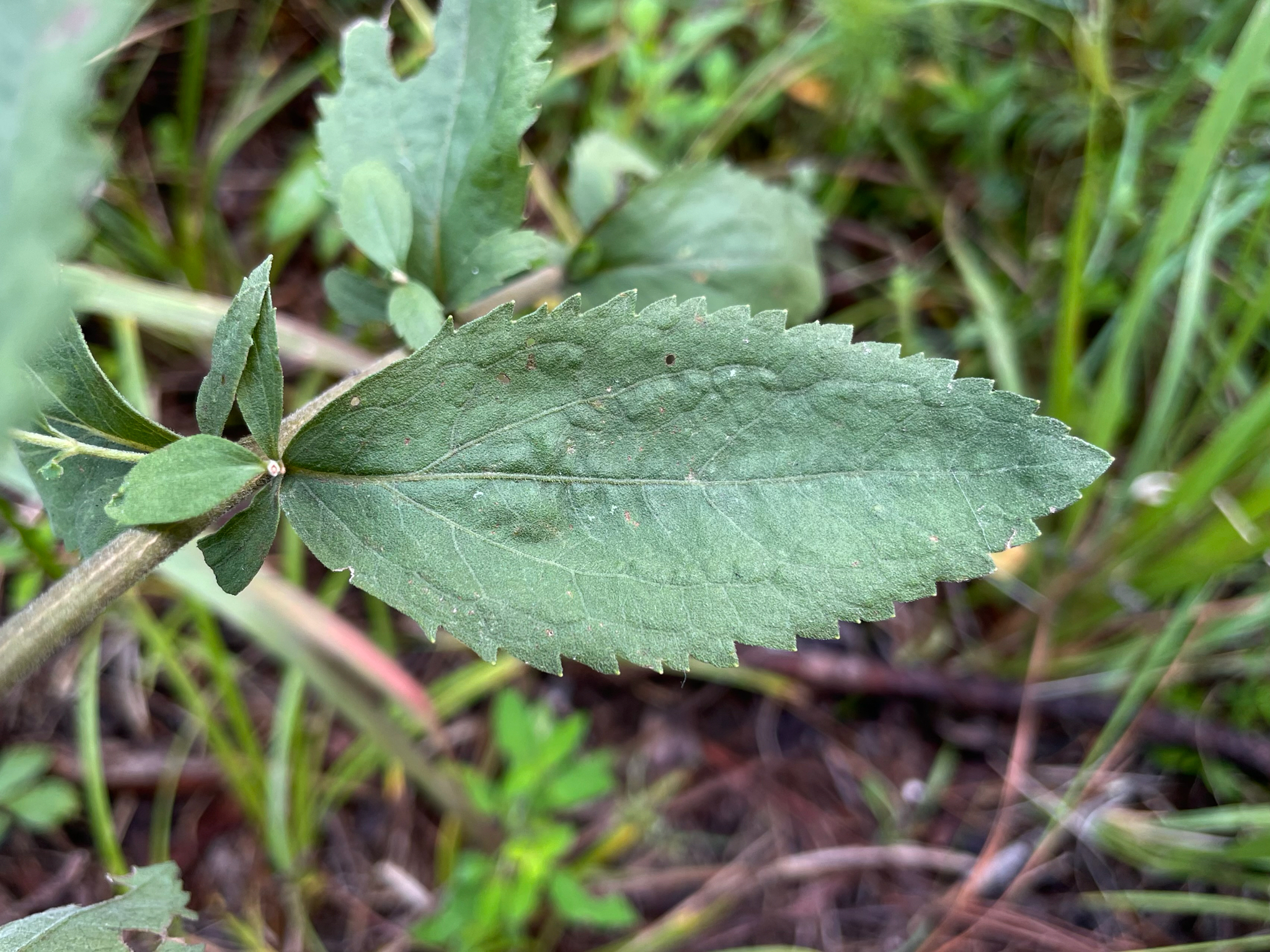
Finally, I’ll end off with a mysterious entity that I’m not even sure descends from E. rotundifolium. I’m including it here because it can key to E. pubescens. It was first noticed by my friend @piedmontplants, who found it in several spots in Alabama. @danielrohrabaugh and I subsequently found it at two more locations in Georgia. It has a resemblance to E. semiserratum, from which it may well be descended, but has short to nonexistent petioles and serrations that extend further down the leaf. It also has prominent axillary fascicles.