June 28, 2026

Comparing Ladybugs in North America

This guide focuses on how ladybug species of similar appearance are separated and covers those occurring in the US (Lower 48, Alaska), Canada, and Greenland. Here, one main species is presented with those that are similar being listed below. The features that allow them to be told apart are described. Note that the species being compared usually overlap in distribution and are only included if it is reasonable they could be mistaken for the main species. Entries are divided into three levels of difficulties:

🟢 - Easy: Separating the species is based on relatively consistent features and requires little practice or experience to distinguish successfully. The species can be identified from photos and often don’t need to be considered when identifying.

🟡 - Medium: Separating species relies on more variable features and requires some practice to identify tell apart. The species is usually identifiable from photos, though dissection may be needed in some cases.

🔴 - Hard: Separating species uses subtle, variable, and/or overlapping features or frequently requires specialized methods such as genitalia, DNA, or chromosomes to separate successfully. The species is often not identifiable from photos.


Adalia bipunctata

  • 🟡Adalia decempunctata - Mesepimera white or yellow-ish, frons usually more white, legs orange to brown. Various differences in pattern. Known only from the Avalon Peninsula, Newfoundland.
  • 🟡Mulsantina picta - Head with three white spots, pronotum with more spots.
  • 🟡Anisosticta bitriangularis - Body more elongated, pronotal spots more blocky.
  • 🟡Harmonia axyridis - Body more rounded, elytron typically with kneel near the apex, frons usually more white.
  • 🟡Cycloneda spp. - Body more rounded, pronotum without white basal spots.
  • 🟡Exochomus spp. - Pronotum and head without white markings, elytral margins flared out.
  • 🟢Hippodamia variegata - Pronotum with white outer margins, often with two white spots.
  • 🟢Coccinella trifasciata - Elytron with smoother black bands, pronotum black with white anterior margin.
  • 🟢Coccinella septempunctata - Elytron with spot formula ½:1:1:1, pronotum with square white spots on anterior corners.

Adalia decempunctata

  • 🟡Adalia bipunctata - Mesepimera usually black, frons usually mostly black with two white spots, legs black. Various differences in pattern.
  • 🟡Harmonia axyridis - Body more rounded, frons with more pronounced black notches, elytron with spot formula ½:2:3:3:1.
  • 🟡Propylea quatuordecimpunctata - More yellow overall, in dark forms, yellow basal spots not kidney-shaped.
  • 🟢Hippodamia variegata - Pronotum with white outer margins, often with two white spots.

Anatis labiculata

  • 🟡Anatis mali - Pronotum seemingly more tan, elytral spots with pronounced halos.
  • 🟡Anatis rathvoni - Body more kite-shaped with lateral margin of elytron flared. Elytron usually without spots near the scutellum.
  • 🟡Olla v-nigrum - Pronotum more white with more defined black ‘M’, elytron with spot pattern 4:3:1, the centremost spot is V-shaped.
  • 🟢Harmonia axyridis - Pronotum with more defined black ‘M’, elytra bright red/orange, elytron with spot pattern ½:2:3:3:1.

Anatis lecontei

  • 🟢Cycloneda spp. - Elytra without black outer margin, pronotum with white margins.

Anatis mali

  • 🟡Anatis labiculata - Pronotum seemingly more white, elytron ashy grey or dark brown, the latter without haloed spots.
  • 🟡Anatis rathvoni - Body more kite-shaped with lateral margin of elytron flared. Elytron usually without spots near the scutellum.
  • 🟢Harmonia axyridis - Pronotum with more defined black ‘M’, elytra bright red/orange, elytral spots without halos.

Anisosticta bitriangularis

  • 🟡Anisosticta borealis - Head mostly black, elytron with heavier spots, mesepimeron darkened or black. More northerly range.
  • 🟢Hippodamia/Ceratomegilla spp. - Elytron usually red or orange, pronotum mostly black.
  • 🟢Psyllobora spp. - Body much rounder, suture usually unmarked at elytral base.
  • 🟢Propylea quatuordecimpunctata - Body much rounder, colouration yellow, elytral spots generally more square.

Anisosticta borealis

  • 🟡Anisosticta bitriangularis - Frons pale, elytron usually with weaker spots, lateral margin of abdomen and mesepimeron pale. More southerly range.
  • 🟢Hippodamia/Ceratomegilla spp. - Elytron usually red or orange, pronotum mostly black.
  • 🟢Psyllobora spp. - Body much rounder, suture usually unmarked at elytral base.

Calvia quatuordecimguttata

  • 🟡Chilocorus spp. - Elyton with flared margins, elytral spot deeper red, not heart- or U-shaped.
  • 🟡Neoharmonia venusta - (ssp. venusta): elytra with V-shaped marking on suture, four spots on pronotum. Darker forms with orange-pink spot touching elytral margin.
  • 🟢Harmonia axyridis - Pronotum usually with large white portions, dark forms with redder elytral spots.
  • 🟢Coleomegilla maculata - Body much more elongated, elytral apical spot divided along suture.
  • 🟢Naemia seriata - Body much more elongated, colour more peachy.

Aphidecta obliterata

  • 🟢Mulsantina picta (spotless) - Pronotum with more spots, suture not darkened.
  • 🟢Hippodamia moesta - Pronotum with white spots on anterior corners, elytral base black.
  • 🟢Adalia spp. - Body less elongated, pronotal spots rounder.
  • 🟢Harmonia axyridis - Body much rounder, elytron usually with kneel near the apex.

Cheilomenes sexmaculata

  • 🟢Harmonia axyridis - Pronotum with white spots reaching interior margin, elytron not red or orange.

Ceratomegilla ulkei

  • 🟡Hippodamia - Tarsal claw cleft, pronotum never with only lateral margins white, in dark forms, elytral margins mostly black.

Coccinella alta

  • 🟢Coccinella monticola - Suture without black stripe.
  • 🟢Coccinella novemnotata - Pronotum with anterior white margin, elytron with spots, not bands.
  • 🟢Adalia bipunctata (banded) - Pronotum with white spot reaching interior margin.

Coccinella californica

  • 🟡Coccinella novemnotata - Pronotum with white band on anterior margin.
  • 🟡Coccinella trifasciata - Pronotum with white band on anterior margin, suture without black stripe.
  • 🟡Coccinella septempunctata - Only rarely spotless, suture without black stripe.
  • 🟡Coccinella hieroglyphica - Suture without black stripe.
  • 🟢Coccinella undecimpunctata - Body flat and elongated, suture without black stripe.
  • 🟢Cycloneda spp. - Body rounder, pronotum with white margins, suture without black stripe.
  • 🟢Hippodamia - Body flat and elongated.

Coccinella difficilis

  • 🟡Coccinella septempunctata - Elytra with rounder, evenly-sized spots.
  • 🟡Coccinella monticola - First band made of two spots which are more in line with each other; the smaller spot is not off set.

Coccinella fulgida

  • 🔴Coccinella monticola - Pronotum with ventral white spot on anterior angle large, elytra with two spots making first black band more aligned, not creating noticeable angle when merged. Distribution extends much further south. To separate this species, dissection may be required.
  • 🟡Coccinella hieroglyphica (ssp. humboldtiensis) - Pronotum with ventral white spot on anterior angle large, elytra with yellow rings around spots.
  • 🟡Coccinella difficilis - Averages larger overall, body more convex. Little-to-no overlap in distribution.
  • 🟡Coccinella transversoguttata - Elytra usually with transverse black bar or black spots on humeral callus, usually lacks lateral spots.

Coccinella hieroglyphica

  • 🟡Coccinella trifasciata - Pronotum with wide white anterior margin, elytra usually with rounded basal band.
  • 🟡Coccinella californica - Suture with black stripe.
  • 🟢Hippodamia moesta - Body flat and elongated, pronotum often with slanted white lines.
  • 🟢Adalia bipunctata (banded) - Pronotum with white spot reaching the interior margin.

Coccinella monticola

  • 🔴Coccinella fulgida - Pronotum with ventral white spot on anterior angle small, elytra with two spots making first black band less aligned, creating noticeable angle when merged. Distribution more northerly. To separate this species, dissection may be required.
  • 🟡Coccinella difficilis - Pattern less consistent, with anterior markings typically separated, and while posterior markings combined forming a wide bar. Side spot in the anterior row very tiny compared to adjacent spot. Anterior bar may develop tapering towards the outer sides. Primarily Great Plains climate distribution.
  • 🟡Coccinella transversoguttata - Elytra usually with transverse black bar or black spots on humeral callus, usually lacks lateral spots.

Coccinella novemnotata

  • 🟡Coccinella californica - Pronotum without white band on anterior margin.
  • 🟡Coccinella prolongata - Pronotum with pointed white spots, elytra more pink, suture pale.

Coccinella prolongata

  • 🟡Coccinella novemnotata - Suture with black stripe, elytra less pink.
  • 🟡Coccinella septempunctata/C. difficilis - Prontoum with smaller, less pointed white spots, elytra more orange or red.

Coccinella septempunctata

  • 🟡Coccinella difficilis/C.monticola (light) - Elytral spots not even in size; lateral spot tiny, posterior spot large and kidney-shaped.
  • 🟡Coccinella novemnotata/C. californica (spotted) - Suture with black stripe.
  • 🟡Coccinella transversoguttata - Elytron usually with black bar or black spots on humeral callus; scutellum spot less rounded, other spots transverse.
  • 🟡Coccinella prolongata - Pronotum with pointed white spots, elytra more pink.
  • 🟢Coccinella undecimpunctata - Body flat and elongated, elytron typically with more spots.
  • 🟢Hippodamia spp. - Body flat, elongated, sometimes with 7 spots, but not evenly distributed across the elytron.
  • 🟢Harmonia axyridis - Pronotum with white spots reaching interior margin.

Coccinella transversoguttata

  • 🟡Coccinella trifasciata - Elytra with basal black band shapely, often with pale outline, pronotum with anterior white margin.
  • 🟡Coccinella septempunctata - Elytra with rounder spots, larger scutellum spot.
  • 🟡Coccinella monticola - Elytral spots more elongated.
  • 🟢Hippodamia spp. - Body flat and elongated.

Coccinella trifasciata

  • 🟡Coccinella transversoguttata - Elytral with straight basal band without pale outline, pronotum with anterior margin black.
  • 🟡Coccinella californica - Suture with black stripe, pronotum with anterior margin black.
  • 🟡Coccinella hieroglyphica - Pronotum with anterior margin black or with only narrowly white.
  • 🟢Adalia bipunctata - Pronotum with white spot reaching interior margin.

Coccinella undecimpunctata

  • 🟡Hippodamia convergens/H.variegata - Pronotum with white outer margins, elytra with up to 13 spots.
  • 🟢Coccinella spp. - Body more rounded and domed.
  • 🟢Harmonia axyridis - Body rounder, pronotum with white spot reaching interior margin.

Coelophora inaequalis

  • 🟢Harmonia dimidiata - Pronotum with more limited black markings, elytral spots rounded, suture without black stripe. Known only from Orlando, Florida.
  • 🟢Neoharmonia venusta - Body more elongated, suture and outer elytral margins pale.
  • 🟢Harmonia axyridis - Pronotum white, elytral apex without black spot.
  • 🟢Cycloneda spp. - Pronotum with white margins and two white spots.
  • 🟢Exochomus spp. - Pronotum more black, elytra with outer margins pale.

Coelophora biplagiata

  • 🟡Harmonia axyridis - Pronotum with white spots reaching interior margin, suture without black stripe.
  • 🟢Neoharmonia venusta - Pronotum pink-orange, suture without black stripe.

Coleomegilla maculata

  • 🟡Naemia seriata - Pronotum with merged spots, elytral apical spot not divided.
  • 🟢Calvia quatuordecimguttata - Pink form: body rounded, elytral apical spot not divided.
  • 🟢Hippodamia spp. - Pronotum black and white, elytra not pink.

Cycloneda munda

  • 🟡Cycloneda polita - Elytron often red. No known overlap in distribution.
  • 🟡Cycloneda sanguinea - Body rounder, pronotum with isolated and rounded white spots, margins of elytron dark.
  • 🟡Mulsantina luteodorsa - Pronotum with elongated with stripe in centre.
  • 🟡Cycloneda emarginata - Pronotum with isolated and teardrop-shape spots. Only tentatively known from southern Texas.
  • 🟡Adalia bipunctata/Mulsantina picta (spotless) - Body more elongated, pronotum often with two white basal spots.
  • 🟡Myzia pullata - Pronotum with black triangular spots within white, elytron usually with brown streaking.
  • 🟢Harmonia axyridis (spotless) - Prontoum with black ‘M’, elytron usually with kneel near the apex.
  • 🟢Hippodamia spp. (spotless) - Body more elongated and flat, white spots on pronotum slanted (in most species).

Cycloneda emarginata

  • 🟡Cycloneda sanguinea - Body and pronotal spots rounder, anterior margin partly black in females, legs variably orange.
  • 🟡Cycloneda munda - Pronotum with macaroni-shaped spots merged with white margins, elytral margin pale.
  • 🟡Hippodamia convergens (spotless) - Body even more elongated, pronotum with slanted white lines.
  • 🟢Harmonia axyridis (spotless) - Prontoum with black ‘M’, elytron usually with kneel near the apex.

Cycloneda polita

  • 🟡Cycloneda munda - Elytron always orange. No known overlap in distribution.
  • 🟡Cycloneda sanguinea - Pronotum with isolated and rounded white spots.
  • 🟡Adalia bipunctata/Mulsantina picta (spotless) (spotless) - Body more elongated, pronotum often with two white basal spots.
  • 🟢Coccinella trifasciata (spotless) - Pronotum with white anterior margin and white spots on anterior corners.
  • 🟢Harmonia axyridis (spotless) - Prontoum with black ‘M’, elytron usually with kneel near the apex.
  • 🟢Hippodamia spp. (spotless) - Body more elongated and flat, white spots on pronotum slanted (in most species).
  • 🟢Coccinella novemnotata/C. Californica (spotless) - Pronotum with white anterior corners, suture black.

Cycloneda sanguinea

  • 🟡Cycloneda munda/polita - Pronotum with white macaroni-shaped spots, usually merged to white margins. Some specimens of C. polita from Utah very difficult to separate.
  • 🟡Cycloneda emarginata - Body more elongated, pronotum with teardrop-shape spots, white margins never interrupted, legs black in both sexes. Only tentatively known from southern Texas.
  • 🟡Adalia bipunctata/Mulsantina picta (spotless) (spotless) - Body more elongated, pronotum often with two white basal spots.
  • 🟢Hippodamia spp. (spotless) - Body more elongated and flat, white spots on pronotum slanted (in most species).
  • 🟢Exochomus spp (spotless) - Pronotum without white markings.
  • 🟢Harmonia axyridis (spotless) - Prontoum with black ‘M’, elytron usually with kneel near the apex.
  • 🟢Neoharmonia venusta (spotless) - Pronotum pink-orange.
  • 🟢Hippodamia spp. (spotless) - Body more elongated and flat, white spots on pronotum slanted (in most species).
  • 🟢Anatis lecontei - Pronotum with yellow stripes, elytra with black margins.
  • 🟢Coelophora inaequalis (spotless) - Pronotum with orange markings, suture and elytral margins black.
  • 🟢Coccinella novemnotata/C. Californica (spotless) - Pronotum with white anterior corners, suture black.

Harmonia axyridis

  • 🟡Harmonia quadripunctata - Body more elongated, pronotum with more spots, elytron usually with pale streaking. Only scarcely known from eastern North America.
  • 🟡Olla v-nigrum - Light form: elytra grey, spot formula 4:3:1, the centremost spot is V-shaped. Dark form: pronotum with less extensive white markings, red spot more triangular or jagged.
  • 🟡Adalia decempunctata - Body more elongated, frons with black notches shallower. Known only from the Avalon Peninsula, Newfoundland.
  • 🟡Adalia bipunctata - Body more elongated, frons black with two white spots.
  • 🟢Epilachna/Subcoccinella spp. - Body less glossy and covered in fine hairs, pronotum not white.
  • 🟢Cycloneda spp. - Pronotum with rounded or macaroni-shaped white spots.
  • 🟢Exochomus quadripustulatus - Pronotum black, humeral spots comma-shaped.
  • 🟢Chilocorus spp. - Pronotum completely black, elytral spot not O- or U-shaped.
  • 🟢Hippodamia spp. - Body more elongated, pronotum not with black ‘M’, never more than 13 spots.
  • 🟢Coccinella septempunctata - Pronotum white spots not extending to interior margin.

Harmonia dimidiata

  • 🟢Harmonia axyridis - Pronotum white, apex without black spot.
  • 🟢Coelophora inaequalis - Suture and elytral margins black, elytral spots irregularly-shaped.

Harmonia quadripunctata

  • 🟡Harmonia axyridis - Body more rounded, pronotum with fewer spots, elytra without pale streaking.
  • 🟢Mulsantina picta - Elytra without pale streaking, elytra with latter-like pattern, not rounded spots.

Hippodamia americana

  • 🟡Hippodamia arctica - Pronotum with white basal spot, elytra with more extensive black markings.
  • 🟡Hippodamia apicalis - Pronotum usually with white basal spot, suture without black stripe.
  • 🟡Hippodamia parenthesis - Pronotum with white basal spot, suture without black stripe.

Hippodamia apicalis

  • 🔴Hippodamia expurgata - Externally identical, but with some difference in intensity of elytral markings; apical spot lacking in light forms.
  • 🟡Hippodamia parenthesis/lunatomaculata - Elytral apex without black spot.
  • 🟡Hippodamia arctica - Elytra with more extensive black markings.
  • 🟢Adalia bipunctata (dark) - Elytra with red spot on humeral callus.

Hippodamia arctica

  • 🟡Hippodamia americana - Pronotum without white basal spot, elytra with less extensive black markings.
  • 🟡Hippodamia apicalis - Dark forms; red area of elytron not longitudinal or extend to elytral base.
  • 🟡Ceratomegilla ulkei - Tarsal claw not cleft, pronotum with anterior margin black.

Hippodamia caseyi

  • 🟡Hippodamia quinquesignata/H. glacialis - Without the combination of: pronotum with black notches on lateral margins, elongated T-shaped scutellum spot
  • 🟡Hippodamia moesta - Black elytral markings usually heavier.
  • 🟡Hippodamia oregonensis - Pronotum without notches on lateral margins, usually lacking slanted white discal spots, elytra with more angular markings.
  • 🟡Hippodamia convergens/H. variegata - Pronotum without black notches on lateral margins, elytral spots usually weaker, rarely merged.
  • 🟢Hippodamia parenthesis/H. lunatomaculata/H. apicalis/H. expurgata - Pronotum with white basal spot, elytron usually with parenthesis marking.

Hippodamia convergens

  • 🟡Hippodamia quinquesignata - Pattern usually distinct, but some forms extremely similar to H. convergens, probably requiring dissection.
  • 🟡Hippodamia sinuata (ssp. crotchi) - Elytra with elongated scutellar spot, without sub-sctuellar spots, other spots more rectangular.
  • 🟡Hippodamia glacialis (ssp. glacialis) - Elytra without sub-scutellar spots, lower spots usually merged.
  • 🟡Hippodamia variegata - Pronotum with rounded white spots, legs variably orange.
  • 🟢Cycloneda spp. - Body more rounded, pronotum with rounded or macaroni-shaped white spots.

Hippodamia expurgata

  • 🔴Hippodamia apicalis - Externally identical, but with some difference in intensity of elytral markings; dark form from southern California seemingly unique.
  • 🟡Hippodamia parenthesis - Elytron without black apical spot, elytral markings usually well-defined.
  • 🟡Hippodamia lunatomaculata - Elytron without black apical spot. Very little overlap in distribution.

Hippodamia falcigera

  • 🟢Hippodamia sinuata (ssp. sinuata) - Pronotum with slanted white lines. No overlap in distribution.
  • 🟢Paranaemia vittigera - Pronotum with two distinct black spots, elytron with stripes connecting at the apex.
  • 🟢Macronaemia episcopalis - Body more narrow, pronotum with two distinct black spots.

Hippodamia glacialis

  • 🔴Hippodamia quinquesignata - Externally identical to subspecies H. g. lecontei, but with some differences in pattern; pronotum with distinct white slanted markings.
  • 🟡Hippodamia convergens - Elytra with usually with spots isolated, merged spots are rare.
  • 🟡Hippodamia moesta - Elytral background colour usually paler, elytral markings usually heavier.
  • 🟡Hippodamia caseyi - With the combination of: pronotum with black notches on lateral margins, elongated T-shaped scutellum spot
  • 🟡Hippodamia oregonensis - Pronotum usually lacking white discal spots, elytra with more angular markings.

Hippodamia lunatomaculata

  • 🔴Hippodamia parenthesis - Tooth of tarsal claw not closely oppressed, less variable in pronunciation of pronotal and elytral markings, southern specimens (ssp. lunatomaculata) very lightly marked. Dissection may be needed to distinguish H. parenthesis from northern lunatomaculata (ssp. dobzhanskyi).
  • 🟡Hippodamia apicalis/H. expurgata - Elytra with black apical spot.
  • 🟡Hippodamia quinquesignata (ssp. ambigua) - Pronotum without white basal spot.
  • 🟢Hippodamia sinuata (ssp. spuria) - Pronotum with slanted white lines.

Hippodamia moesta

  • 🟡Hippodamia quinquesignata/H. glacialis - Elytral background colour usually lighter, elytra usually with less heavy markings. There is overlap in patterning and some specimens may require dissection. Hippodamia moesta politissima is externally identical to Hippodamia quinquesignata ambigua and requires dissection to identify.
  • 🟡Hippodamia oregonensis - Pronotum without notches on lateral margins, usually lacking slanted white discal spots, elytra with more angular markings.
  • 🟢Aphidecta obliterata (dark) - Pronotum without white spots on anterior corners, elytral base often pale.

Hippodamia oregonensis

  • 🟡Hippodamia spp. - Elytral markings less angular, in many species; pronotum with white margin interrupted or reduced.

Hippodamia parenthesis

  • 🔴Hippodamia lunatomaculata - Tooth of tarsal claw closely oppressed, more variable in pronunciation of pronotal and elytral markings, spotless more common. Dissection may be needed to identify northern specimens (ssp. dobzhanskyi).
  • 🟡Hippodamia apicalis/H. expurgata - Elytron usually with black spots on the apex.
  • 🟡Hippodamia arctica - Black elytral markings heavier, suture with black stripe.
  • 🟢Hippodamia sinuata (ssp. spuria) - Pronotum with slanted white lines.

Hippodamia quindecimmaculata

  • 🟡Hippodamia convergens - Elytra with weaker markings, sub-sctuellar spots small, rounded.
  • 🟡Hippodamia sinuata (ssp. crotchi) - Elytra with spots merged vertically, not horizontally, sub-sctuellar spots absent
  • 🟡Hippodamia glacialis - Sub-sctuellar spots absent

Hippodamia quinquesignata

  • 🔴Hippodamia glacialis (ssp. lecontei) - Externally identical, but with some differences in pattern; pronotum without distinct white slanted markings.
  • 🟡Hippodamia moesta - Subspecies H. m. bowditchi with elytral background colour often paler with markings generally heavier. There is overlap in pattern, making dissection necessary to identify the species. Forms of subspecies ambigua bearing slanted white markings on pronotum require dissection to to separate from subspecies H. m. politissima.
  • 🟡Hippodamia convergens - Elytral spots usually isolated, pronotum with white margins uninterrupted. Some forms probably require dissection to identify the species.
  • 🟡Hippodamia caseyi - With the combination of: pronotum with black notches on lateral margins, elongated T-shaped scutellum spot.
  • 🟡Hippodamia oregonensis - Pronotum without notches on lateral margins, usually lacking slanted white discal spots, elytra
  • 🟢Coccinella spp. - Most species with body more rounded and domed.

Hippodamia sinuata

  • 🟡Hippodamia convergens - Elytra with sub-sctuellar spots, other spots rounder overall. Spotlessness much more common.
  • 🟡Hippodamia fulgida - Pronotum with white basal spot.
  • 🟡Hippodamia variegata - Pronotum usually with rounded white spots, elytral spots rounder overall, legs variably orange.
  • 🟢Hippodamia parenthesis/lunatomaculata Pronotum with white basal spot.
  • 🟢Paranaemia vittigera - Pronotum with two distinct black spots, elytral stripes merge near apex.
  • 🟢Macronaemia episcopalis - Body more narrow, pronotum with two distinct black spots.

Hippodamia tredecimpunctata

  • 🟡Hippodamia washingtoni - Elytra with scutellar spot T-shaped, legs black. Reduction or absence of elytral spots more common.
  • 🟢Hippodamia convergens/H.variegata - Pronotum usually with discal area marked, elytra with 13 spots often not equal in size.
  • 🟢Harmonia axyridis - Body more rounded, pronotum with black M or trapezoid, elytron typically with kneel near the apex.

Hippodamia variegata

  • 🟡Hippodamia convergens - Pronotum with slanted white markings, elytra often with all 13 spots or completely spotless (both forms less common in H. variegata), legs black.
  • 🟡Hippodamia caseyi - Pronotum with white lateral margin with black notch, elytral spots heavier, often merged.
  • 🟢Coccinella septempunctata - Body more rounded and domed, elytron with 3 spots evenly distributed.

Hippodamia washingtoni

  • 🟡Hippodamia tredecimpunctata - Elytra with scutellar spot and sub-sctuellar spots isolated, legs orange. The reduction or absence of elytral spots rare.
  • 🟡Hippodamia americana - Elytra with spots merged to form longitudinal stripes, suture also with black stripe.

Macronaemia episcopalis

  • 🟡Paranaemia vittigera - Body broader, pronotal spots without narrow, intersecting stripe.
  • 🟢Hippodamia sinuata (ssp. sinuata) - Pronotum with slanted white lines.

Mulsantina cyathigera

  • 🟢Olla v-nigrum - Body rounder, elytron with spot formula 4:3:1.

Mulsantina hudsonica

  • 🟡Mulsantina picta - Pronotum without black dash near anterior margin, elytra with markings usually meeting on suture, suture itself without black stripe.

Mulsantina luteodorsa

  • 🟡Cycloneda munda - Pronotum with median white stripe much shorter and without vague kite shape.
  • 🟢Cycloneda sanguinea - Pronotum with isolated white spots, elytra often red.
  • 🟢Harmonia axyridis (spotless) - Prontoum with black ‘M’, elytron usually with kneel near the apex.

Mulsantina picta

  • 🟡Mulsantina quinquelineata - Pronotum with fewer markings, elytral markings paler, metasternum yellowish or reddish brown (except in Colorado and Utah). Dissection may be needed to distinguish some specimens to the species.
  • 🟡Mulsantina hudsonica - Pronotum with black dash near anterior margin, elytral marking not meeting on suture, suture itself black.
  • 🟡Adalia bipunctata - Spotless form: pronotum with fewer markings, frons with two white spots. Three rowed form: large spot on humeral callus.
  • 🟡Aphidecta obliterata - Pronotum with fewer markings, suture often darkened.
  • 🟢Harmonia axyridis (spotless) - Body rounder, prontoum with fewer markings, elytron usually with kneel near the apex.
  • 🟢Cycloneda spp. - Body more rounded, pronotum with rounded or macaroni-shaped white spots.

Mulsantina quinquelineata

  • 🟡Mulsantina picta - Pronotum is more extensive markings, elytral markings darker, metasternum dark brown or black. Dissection may be needed to distinguish some specimens to the species.

Myzia interrupta

  • 🟡Myzia subvittata - Usually darker overall, pronotum with black markings.

Myzia pullata

  • 🟡Myzia subvittata - White area of pronotum without black spot.
  • 🟢Cycloneda spp. - Pronotum usually without isolated black area, elytra without brown streaking.
  • 🟢Harmonia axyridis (spotless) - Pronotum with black ‘M’, elytra orange or red, without brown streaking.

Myzia subvittata

  • 🟡Myzia pullata - White area of pronotum with black spot.
  • 🟢Cycloneda spp. - Pronotum usually without isolated black area, elytra without brown streaking.
  • 🟢Harmonia axyridis (spotless) - Pronotum with black ‘M’, elytra orange or red, without brown streaking.

Naemia seriata

  • 🟡Coleomegilla maculata - Pronotum with two isolated spots, elytra with apical spot divided along suture.
  • 🟢Calvia quatuordecimguttata - Pink form: Body rounded, pronotum with two isolated spots.
  • 🟢Hippodamia spp. - Pronotum white, contrasting the elytra.
  • 🟢Neoharmonia venusta - Body rounder, elytra often with V-shaped marking along suture.

Neoharmonia marginalis

  • 🟢Cycloneda sanguinea - Pronotum black and white, elytral margin pale.
  • 🟢Harmonia axyridis - Pronotum black and white, elytral margin pale.

Neoharmonia venusta

  • 🟡Harmonia axyridis - Pronotum white, elytron with spot formula ½:2:3:3:1, elytron often with kneel near apex.
  • 🟢Calvia quatuordecimguttata - Pink form: pronotum with two isolated spots.
  • 🟢Olla v-nigrum - Pronotum white, elytron spot formula 4:3:1.

Olla v-nigrum

  • 🟡Psyllobora plagiata - Elytron with first row of two spots.
  • 🟢Mulsantina cyathigera - Body more elongated, elytron with spot pattern 1:3:2.
  • 🟢Neoharmonia venusta - (Subspecies ampla) Pronotum red.
  • 🟢Harmonia axyridis - Elytra red or orange with spot formula ½:2:3:3:1.

Paranaemia vittigera

  • 🟢Macronaemia episcopalis - Body more narrow, pronotal spots with narrow, intersecting stripe.
  • 🟢Hippodamia falcigera - Pronotum largely black, elytra with sickle-shaped lateral stripes.
  • 🟢Hippodamia sinuata (ssp. sinuata) - Pronotum with slanted white lines, elytra with stripes not connecting at apex.

Propylea quatuordecimpunctata

  • 🟢Psyllobora vigintimaculata - Elytra with rounder spots, parts of elytron tan.
  • 🟢Anisosticta spp. - Body more elongated, elytra tan.

Psyllobora borealis

  • 🟡Psyllobora vigintimaculata - Body narrower, median lateral often spot large, apical spots often merged with spots above, elytra. Western specimens with extremely large elytral markings.
  • 🟡Psyllobora renifer - Elytral spots strongly merged and appear more organic, apical spots usually weak.

Psyllobora nana

  • 🟡Psyllobora schwarzi - Suture with wider black stripe, elytral spots more square.
  • 🟢Psyllobora parvinotata - Suture without black stripe or kite-shaped sutural spots.
  • 🟢Psyllobora vigintimaculata - Suture without black stripe or kite-shaped sutural spots.

Psyllobora parvinotata

  • 🟡Psyllobora vigintimaculata - Pronotum not uniformly yellow or without markings, elytral spots larger, merged, elytron with yellow patch. Specimens of P. parvinotata with heavy spots require dissection to identify.
  • 🟢Psyllobora nana/P. schwarzi - Suture with black stripe. Both species known only from southeastern Florida.

Psyllobora plagiata

  • 🟢Psyllobora vigintimaculata/P. renifer - Elytral spots more extensive.
  • 🟢Mulsantina mucyathigera - Elytron with spot pattern 1:3:2.
  • 🟢Olla v-nigrum - Body rounder, elytron with spot formula 4:3:1.

Psyllobora renifer

  • 🟡Psyllobora vigintimaculata - Elytral spots more geometric, median lateral spot well-defined, apical spots stronger.
  • 🟡Psyllobora borealis - Elytral spots more geometric, median lateral spot isolated.

Psyllobora schwarzi

  • 🟡Psyllobora nana - Suture with narrower black stripe and two kite-shaped spots, other elytral spots more rounded.
  • 🟢Psyllobora vigintimaculata/P. Parvinotata - Suture without black stripe.

Psyllobora vigintimaculata

  • 🟡Psyllobora parvinotata - Pronotum sometimes uniformly yellow and without markings, elytral spot usually small, isolated, elytron without yellow patches(?). Restricted to US golf states, widespread in Florida. Specimens with heavy spots require dissection to identify.
  • 🟡Psyllobora borealis - Body broader, median lateral spot small, apical spots strongly separated from spots above. Restricted to the western US and Canada.
  • 🟡Psyllobora renifer - Elytral spots strongly merged and appear more organic, apical spots usually weak.
  • 🟢Propylea quatuordecimpunctata - Colouration more yellow, elytral spots more square, suture usually with black stripe.
Posted on June 28, 2026 05:44 PM by that_bug_guy | 4 comments | Leave a comment

December 4, 2023

Guides to Lady Beetles (Coccinellidae) of the World

Lady Beetles, Ladybugs, or Ladybirds are a diverse and iconic group of beetles making up the family Coccinellidae. Over 6000 species are known globally and are renowned for their striking patterning and colouring. With so many unique forms, it is no surprise that these beetles have become the subject of much study throughout the generations, with research continuing to this day!

I became infatuated with these little critters over the summer and tried to find as much information as I could on them. During my research, something became incredibly clear, all these sites, PDFs, and research papers were all over the place! So, I decided to compile these resources into one easy-to-access location, this journal post. Consider this your one-stop-stop for everything lady beetle!

This will be an ongoing project and I hope to get community input and feedback on it. If you have an accessible resource you'd like to contribute, please leave a comment below or message me privately. I'll see if I can add it here.

And of course, a big thank you to @silversea_starsong for his feedback and expertise and to @borisb for additional suggestions! This post wouldn't have been possible without them!


What is a Lady Beetle?

While defining this family under a single umbrella is difficult, most species generally share a small set of features. One such example is their body structure, having convex elytra and a flat underside, together forming a dome. The pronotum covers a portion of the head and the antennae are short, usually no longer than the head is wide. They are also club-shaped.

There is overlap with other groups of beetles however, so the best way to understand what is and isn’t a lady beetle is to familiarise yourself with the different species.


Principles of Identification

Lady Beetle identification in the field often relies on a few simple principles.

A) Variability
Lady beetles have distinctive patterns, but the extent of such patterns can vary. These extents may be either, 'lighter', with smaller and sometimes missing spots or 'darker', with larger and sometimes merged spots. The most extreme examples in certain species have the ladybug without any spots or completely black! However, the overall pattern itself retains the same basic "blueprint", the location and position of the spots are fixed. Genetic variation in pigmentation and other factors create natural variation.

In many species, the variation seen on the elytra (the hardened wing covers) is more drastic than that seen on the pronotum (plate on the thorax).

Figure a) lighter and darker morphs of Harmonia axyridis.

B) Morphology

To identify a ladybug, you will sometimes need to turn to its morphology; the way it's structured. The body shape and portions of ladybugs are incredibly diverse, even within the same genus. The body can be flat, domed, or widened laterally for example.

Morphology is especially important when identifying smaller species that don't bear unique patterning. In which case, things like punctures in the elytra and pronotum or the extent of fine hairs on the exoskeleton are needed to make confident identifications. Ladybugs like these can be difficult to distinguish, particularly from photos.

Below are the basic parts of a ladybug:

Figure b) parts of a lady beetle, Coccinella septempunctata.

C) Life Cycle
The life cycle of lady beetles can be divided into four stages; egg, larva, pupa, and finally adult. As with adults, the larval and pupal stage may be identified by their appearance through a mixture of pattern and morphology. However, information on characteristic features of these life stages remain unknown for many species.

After a lady beetle emerges from the pupa, it enters the teneral stage, a short period when its body is soft, lightly coloured, and mostly unpatterned. Any damage sustained to the beetle during these first hours can result in permanent bruising and deformities. This is visible on the elytra as discolouration or scratches which can be mistaken for actual patterning. However, they are irregular and are not mirrored on each elytron (singular elytra).

Figure c) the life cycle of Cheilomenes sexmaculata.

D) Food and Host Plants
Most lady beetles are predatory and take advantage of local infestations of soft-bodied insects like aphids, scale insects, and mealybugs. These infestations are sporadic and concentrated on specific plants. As such, the relationship between plants and most lady beetles comes down to whether these soft-bodied prey items are present. In other words, lady beetles associate with their prey species rather than the plant itself. Some groups feed on mildew and fungi while others are herbivorous, feeding on specific host plants.

Eggs are laid on preferred host plants so knowing the relation between the lady beetle and plant species could strengthen larval and pupal identification.


Getting Started

If you're just beginning your Lady Beetle identification journey, there are many resources to help get you started. The Lost Ladybug project for instance, is an initiative to collect distribution data on lady beetles. It offers easy-to-understand information on identification, finding lady beetles, ecology, and more. I'd recommend taking a look at these articles:
How to Find, Collect, and Photograph Ladybugs
Ladybug Learning
Identification Tools

Also available is the Ladybug Identification Guide from Discover Life. Just fill in a few boxes about the appearance of the beetle and press one of the 'search' buttons on the right. A few suggested species will then appear on the left with more information. The more category boxes you fill in, the more precise the suggestions will be.

Consider joining the Ladybird Beetles of the World project here on iNaturalist. It's a great way to meet identifiers and share your observations.


A Word of Advice

Identification from external features is not always possible as some species look the same as others. In these cases, the specimen is examined under a microscope and characteristics such as the male genitalia are used to determine the species. This is because the structure of the genitalia is unique to each species and does not vary within them.

This is the limitation of photo identification. When you encounter this situation on iNaturalist, use a more broad ID, like one to the genus, tribe, subfamily, etc.


References

Giorgi, A. and Vandenberg, N. (2009, 9 November). Coccinellidae. Lady beetles, Ladybird beetles, Ladybugs. The Tree of Life Web Project
http://tolweb.org/Coccinellidae/9170/2009.11.09

Bartlett, T. (2004, 16 February). Family Coccinellidae - Lady Beetles. BugGuide.
https://bugguide.net/node/view/179

All About Ladybugs. The Lost Ladybug Project.
http://www.lostladybug.org/files/9%20LLP%20All%20About%20LadybugsPDF.pdf

Schuh. M. (2022). Lady beetles. The University of Minnesota Extension.
https://extension.umn.edu/beneficial-insects/lady-beetles

Kawakami. Y. and Yamazaki. K. (2015, January) Increase in dark morphs and decrease in size during a range extension of Cheilomenes sexmaculata (Coleoptera: Coccinellidae). European Journal of Entomology.
https://www.researchgate.net/publication/276249939


General Guides

Notice: Resources are in English unless mentioned otherwise. Taxonomy (especially in older articles) may be outdated.

North America

BugGuide - Family Coccinellidae - Lady Beetles

  • Parameters: Species of America North of Mexico.
  • Information: Identification, range, habitat, lifestyle, remarks, and more. Uses photographs and illustrations.
  • Navigation: Scroll through different genera or use 'search'. Most information on a species page is found under 'info'.
  • Type: Website, actively worked on.
  • Notes: Includes forum discussions.

The Coccinellidae (Coleoptera) of America North of Mexico

  • Parameters: Species of America North of Mexico.
  • Information: Identification, range, discussion, and more. Uses illustrations exclusively.
  • Navigation: Table of contents or use 'search inside' to find scientific names.
  • Type: Scientific journal, published 1985, accessible as an ebook.
  • Notes: BugGuide includes much of the same information and is more accessible.

Lady Beetles of the Northwest Territories

  • Parameters: Species of the Northwest Territories.
  • Information: General information, identification, habitat, diet, and distribution. Uses photographs and illustrations.
  • Navigation: See index.
  • Type: Field guide, published 2018. In English and French.

Key to lady beetles (Coleoptera: Coccinellidae) of Saskatchewan

  • Parameters: Species of Saskatchewan.
  • Information: General information, identification, habitat, diet, and distribution.
  • Navigation: See legend at the end.
  • Type: Research paper, published 2013.

Coleoptera Coccinellidae - Gallery

  • Parameters: Select species of North America.
  • Information: Uses photographs, pinned specimens.
  • Navigation: Use 'view genera gallery' or 'view dorsal gallery'.
  • Type: Website.
  • Notes: Pinned specimens often appear darkened and discoloured. This occurs postmortem.

Ladybird beetles (Coleoptera: Coccinellidae) of the Atlantic Maritime Ecozone

  • Parameters: Species of the Atlantic Maritime Ecozone in Canada
  • Information: History of species in the region including recently introduced ones.
  • Type: Scientific journal, published 2010.

The Coccinellidae (Coleoptera) of Bermuda

  • Parameters: Species of Bermuda.
  • Information: Identification, range, notes, and more. Uses illustrations exclusively.
  • Navigation: Table of contents or use 'search inside' to find scientific names.
  • Type: Scientific journal, published 1990, accessible as an ebook.

La familia Coccinellidae (Coleoptera: Cucujoidea) y su potencial como agentes de control biológico de Melanaphis sacchari (Zehtner) (Hemiptera: Aphididae)

  • Parameters: Predators of Melanaphis sacchari
  • Information: Identification, distribution, and confusion species. Used photos.
  • Navigation: See table of contents.
  • Type: Research paper, published 2020. In Spanish and English.

Lady Beetles of Puerto Rico (Coleoptera: Coccinellidae)

  • Parameters: Species of Puerto Rico.
  • Information: Identification, distribution, notes, and more. Uses photos.
  • Type Scientific journal, published 2021.

Etude préliminaire des Coccinelles des Petites Antilles : Chilocorini et Coccinellini (Coleoptera, Coccinellidae)

  • Parameters: Species in the tripes Chilocorini and Coccinellini of the Lesser Antilles.
  • Information: Checklist with notes. Photos included at the end.
  • Type: Research paper, published 2012. Mostly in French.

South America

Coccinellidea de Argentina

  • Parameters: Species of South America.
  • Information: Identification, range, notes, and more. Uses photographs.
  • Navigation: Species split by country they occur and by subfamily. Press on flags to view different countries.
  • Type: Website, actively worked on; see 'news' section. In Spanish.

Coccinellaidea

  • Parameters: Species of Brazil.
  • Information: Labeled photos and general information on lady beetles.
  • Navigation: “Galeria” takes you to specimen photos.
  • Type: Website

Europe

Coccinellidae - Ladybirds - NatureSpot

  • Parameters: Species of Leicestershire and Rutland, UK.
  • Information: Identification, habitat, life history, and more. Uses photographs.
  • Navigation: Pressing on a photo takes you to the species page.
  • Type: Website.

Käfer Europas - Coccinellidae

  • Parameters: Species of Europe.
  • Information: Identification, distribution, habitat, and more. Uses photographs, figures, and/or illustrations.
  • Navigation: Species divided by subfamily. Species pages can be accessed by pressing on their name highlighted in blue. Pressing and holding on images magnifies them.
  • Type: Website, regularly updated. In German.

Insects Pictures

  • Parameters: Species of Czechia.
  • Information: Labeled photos.
  • Navigation: Press genus name to view species included.
  • Type: Website, actively updated.

Marihøner Coccinellidae

  • Parameters: Species of Norway.
  • Information: Identification, distribution, habitat, and confusion species. Uses photos.
  • Navigation: Select one of the five tribes and choose a species profile by pressing on it.
  • Type: Website. In Norwegian.

Variability of elytral color patterns in Coccinellidae - Kerbtier

  • Parameters: Species of Germany.
  • Information: Examples of variation in multiple species. Uses photographs.
  • Navigation: Press on name or photo of species to be taken to its section of the gallery.
  • Type: Website.

State of knowledge of the ladybird beetle (Coleoptera, Coccinellidae) fauna of Armenia and other Transcaucasian countries, including two new country records

  • Parameters: Species of Transcaucasian countries.
  • Information: Checklist with notes.
  • Type: Scientific journal, published 2024.

The Ladybird Beetles (Coleoptera, Coccinellidae) of Moscow Province

  • Parameters: Species of Moscow Province.
  • Information: Biology and distribution. Uses photographs.
  • Type: Research paper, published 2016.

семейство Coccinellidae (Божьи коровки)

  • Parameters: Species of the Moscow Region.
  • Information: Photos and collection sites.
  • Navigation: Press on photos to see species pages.
  • Type: Website, updated since 2003. In Russian.

Asia

An annotated checklist of the Coccinellidae (Insecta: Coleoptera) of Yemen

  • Parameters: Species of Yemen.
  • Information: Identification, distribution, and more. Uses illustrations.
  • Type: Research paper, published 2000.

Review of the tribe Chilocorini Mulsant from Iran (Coleoptera, Coccinellidae)

  • Parameters: Species of Iran
  • Information: Identification, distribution, prey, and more. Uses illustrations.
  • Navigation: Press on highlighted figure number to view figures.
  • Type: Research paper, published 2017.

An annotated checklist of Coccinellidae with four new records from Pakistan (Coleoptera, Coccinellidae)

  • Parameters: Species of Pakistan.
  • Information: Distribution, host plants. Uses photographs.
  • Type: Research paper, published 2018.

Subfamilies Coccinellinae and Coccidullinae (Coccinellidae: Coleoptera) with New Records from AJK, Pakistan

  • Parameters: Species of Pakistan.
  • Information: Identification, distribution, host plant, and additional remarks.
  • Type: Research paper, published 2017.

An Illustrated Guide to Lady Beetles (Coleoptera: Coccinellidae) of the Indian Subcontinent. Part 1. Tribe Coccinellini

  • Parameters: Coccinellini of India.
  • Information: Identification, distribution, habitat, notes, and more. Uses photographs, and/or illustrations.
  • Navigation: See 'treatments', species sorted by genus.
  • Type: Scientific journal, published 2023.

An illustrated guide to the lady beetles (Coleoptera: Coccinellidae) of the Indian Subcontinent. Part II. Tribe Chilocorini

  • Parameters: Chilocorini of India.
  • Information: Identification, distribution, habitat, notes, and more. Uses photographs, and/or illustrations.
  • Navigation: See 'treatments', species sorted by genus.
  • Type: Scientific journal, published 2023.

A review of the tribe Noviini (Coleoptera: Coccinellidae) of the Indian subcontinent

  • Parameters: Noviini of India.
  • Information: Identification, distribution, habitat, notes, and more. Uses photographs, and/or illustrations.
  • Navigation: See 'treatments', species sorted by genus.
  • Type: Scientific journal, published 2023.

A review of the tribe Hyperaspidini (Coleoptera: Coccinellidae) from the Indian region

  • Parameters: Hyperaspidini of India.
  • Information: Identification, distribution, habitat, notes, and more. Uses photographs, and/or illustrations.
  • Navigation: See 'treatments', species sorted by genus.
  • Type: Scientific journal, published 2022.

The Ladybird Beetles (Coleoptera: Coccinellidae) of Arunachal Pradesh, East Himalaya, India with new combinations and new country records

  • Parameters: Species in East Himalaya, India.
  • Information: Distribution. Uses photographs.
  • Type: Research paper, published 2020.
  • Notes: Includes species outside Coccinellidae too.

Common Lady Beetles of Bhutan

  • Parameters: Common species of Butan.
  • Information: Labeled photos.
  • Type: Poster, published 2016.

Coccinellidae (Coleoptera) of Mongolia

  • Parameters: Species of Mongolia.
  • Information: Identification, distribution, and habitat. Used illustrations exclusively.
  • Type: Scientific journal, published 1984.

大阪府のテントウムシの見分け方

  • Parameters: Species of Osaka.
  • Information: Identification, distribution, similar species, and more. Uses illustrations.
  • Navigation: Press 'こちら' to view a list of species. Highlighted species have a profile.
  • Type: Website. In Japanese.

春夏秋冬の昆虫写真館

  • Parameters: Species of Japan.
  • Information: Identification, distribution, seasonal occurrence, and more. Uses photographs.
  • Type: Website, published 2005. In Japanese.

Fauna Japonica - Coccinellidae (Insecta: Coleoptera)

  • Parameters: Species of Japan including the Ryukyu Islands.
  • Information: Identification, distribution, and more. Uses illustrations located at the back of the book.
  • Navigation: Index included at the beginning of the book
  • Type: Scientific journal, published 1971.

Coccinellinae and Epilachninae from North Korea (Coleoptera: Coccinellidae)

  • Parameters: Species in the subfamilies Coccinellinae and Epilachninae of North Korea.
  • Information: Distribution and notes, essentially a checklist.
  • Type: Scientific journal, published 1984.

Africa

Documenting museum records of West African Coccinellidae (Coleoptera) in Benin and Senegal

  • Parameters: Species of west Africa.
  • Information: Species names, distribution, and more. No photos or illustrations included, functions more as a checklist.
  • Navigation: Pressing on species names may bring up other articles on that species.
  • Type: Research paper, published 2020.

Namibia Biodiversity Database - Family Coccinellidae in Namibia

  • Parameters: Species of Namibia.
  • Information: Checklist of species, includes distribution data. Uses photos.
  • Navigation: Click on a subfamily and continue until you arrive at a species profile.
  • Type: Website, published 2012.

Oceania

Ladybird Beetles of the AustraLo-pacific Region

  • Parameters: Species of the Pacific.
  • Information: Identification, distribution, remarks, and more. No illustrations or photographs in the preview.
  • Navigation: See 'contents' or type into the 'search' bar.
  • Type: Book, published 2020. Accessible through a preview.

Ladybirds of Australia

  • Parameters: Species of Australia.
  • Information: Many species profiles unfinished. In it's current state, acts best as a chestlist and an image gallery.
  • Navigation: See 'tribes & genera', 'species', and 'search'. 'Compare' allows you to compare photos of different species by selecting their name.
  • Type: Website, last updated 2007.

Review Of The Australian Epilachninae (Coleoptera: Coccinellidae)

  • Parameters: Epilachninae of Australia.
  • Information: Identification, variation, distribution, remarks, and more. Used illustrations.
  • Type: Research paper, published 1993.

Specific Guides

Included are guides on specific species or genera. As with the general guides, the taxonomies used may be outdated or different to what’s currently being used on iNaturalist.

Cheilomenes

Increase in dark morphs and decrease in size during a range extension of Cheilomenes sexmaculata (Coleoptera: Coccinellidae)

  • Parameters: Species Cheilomenes sexmaculata.
  • Information: Relation between morph, size, and elevation.
  • Type: Scientific journal, published 2015.

Chilocorus

Chilocorus infernalis Mulsant

  • Parameters: Species Chilocorus infernalis.
  • Information: Identification, distribution, and more.
  • Type: Website.

Coccinella

Coccinella algerica Kovář, 1977: A New Species to the Fauna of Mainland Europe, and a Key to the Coccinella Linnaeus, 1758 of Iberia, the Maghreb and the Canary Islands (Coleoptera, Coccinellidae)

  • Parameters: Species Coccinella algerica.
  • Information: Identification, distribution, confusion species, and more. Uses photos.
  • Type: Scientific journal, published 1977.

Revision of the Palaearctic species of the Coccinella transversoguttata species group with notes on some other species of the genus (Coleoptera: Coccinellidae)

  • Parameters: Species Group Coccinella transversoguttata.
  • Information: Identification, distribution, confusion species, and more. Uses illustrations.
  • Type: Scientific journal, published 2005.

O występowaniu Coccinella saucerotti lutshniki Dobrzh. w Polsce (Coleoptera, Coccinellidae

  • Parameters: Species Coccinella saucerotti lutshniki.
  • Information: Identification, distribution, and confusion species. Uses illustrations.
  • Type: Scientific journal, published 1957. In Polish.

The Status of Coccinella septempunctata L. and its Varieties divaricata Oliv. and confusa Wied.

  • Parameters: Varieties Coccinella septempunctata divaricata and confusa.
  • Information: Identification, distribution, and more. Used illustrations.
  • Type: Scientific journal, published 1962.

Cycloneda

The New World Genus Cycloneda Crotch (Coleoptera: Coccinellidae: Coccinellini): Historical Review, New Diagnosis, New Generic and Specific Synonyms, and an Improved Key to North American Species

  • Parameters: Select species of the genus Cycloneda.
  • Information: Identification, distribution, remarks, and more. Uses illustrations.
  • Type: scientific paper, published 2002

Harmonia

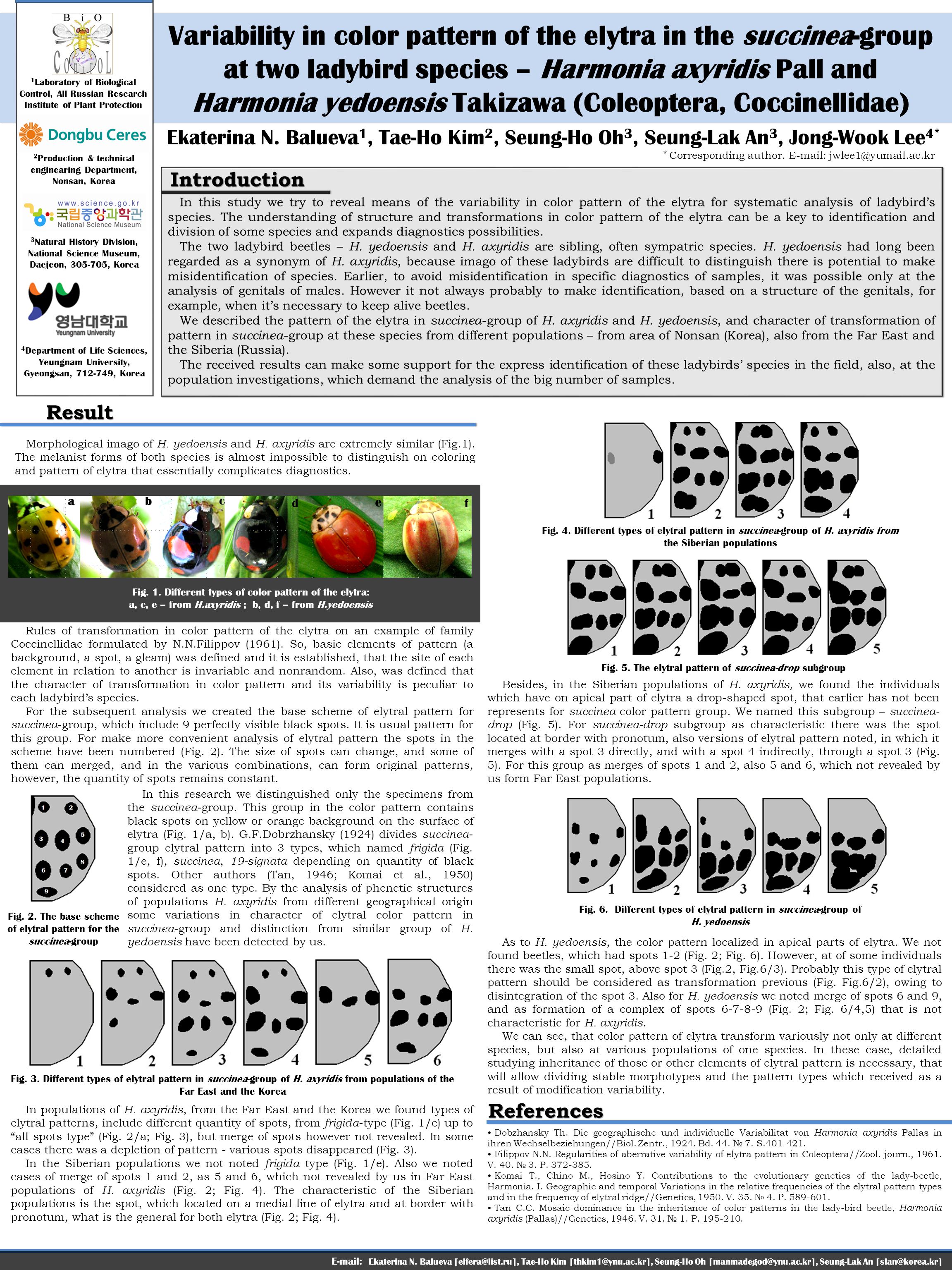
Variability in color pattern of the eyltra in the succinea-group at two ladybird species - Harmonia axyridis Pall and Harmonia yedoensis Takizawa (Coleoptera, Coccinellidae)

  • Parameters: Species Harmonia axyridis and yedoensis.
  • Information: Identification and additional notes.
  • Type: Scientific presentation.

Henosepilachna

Poorani, J., Booth, R. G., Gracy, R. Gandhi, Anuradha, C., Thanigairaj, R. & Swathi, R. S., 2021, Immature stages, host plants and natural enemies of Henosepilachna implicata (Mulsant) (Coleoptera: Coccinellidae) with DNA sequence data and a new synonym and notes on some Indian species of Epilachnini

  • Parameters: Species Henosepilachna implicata, circularis, vigintioctopunctata, pusillanima and septima.
  • Information: Identification, distribution, host plants, and more. Uses photos.
  • Navigation: See ‘figures’ for photos.
  • Type: Scientific journal, last updated 2023.

Hippodamia

Review of the New World Species of Hipppdamia Dejean (Coleoptera: Coccinellidae)

  • Parameters: Genus Hipppdamia.
  • Information: Identification, distribution, notes, and more. Used illustrations.
  • Type: Scientific journal, published 1946.

Review of the Genus Hippodamia (Coleoptera: Coccinellidae) in the Palearctic Region

  • Parameters: Hippodamia in the Palearctic Region.
  • Information: Identification, distribution, notes, and more. Uses illustrations and photos.
  • Type: Scientific journal, published 2020.

Illeis

Philippine Species of Illeis Mulsant (Coleoptera: Coccinellidae: Coccinellinae: Psylloborini)

  • Parameters: Illeis koebelei koebelei, koebelei amamiana, and luzonica.
  • Information: Identification, distribution, and more. Uses illustrations.
  • Type: Scientific journal, published 1998.

Mulsantina

Revision of the Genus Mulsantina Weise (Coleoptera: Coccinellidae)

  • Parameters: Genus Mulsantina.
  • Information: Identification, distribution, and more. Uses illustrations.
  • Type: Scientific journal, published 1985.
Posted on December 4, 2023 02:22 AM by that_bug_guy | 42 comments | Leave a comment

October 26, 2022

Mallard x Muscovy Duck - Way-out Waterfowl

Mallard x Muscovy Duck hybrids, also known as Mule Ducks or Mulards are large crossbred ducks which have been introduced throughout much of the world. These hybrids usually descend from domestic stock and are released or ‘dumped’ into the wild.

On iNaturalist, many mistake Mule Ducks for different species or vise versa. Most commonly, Mule Ducks are incorrectly labeled as one of its parent species, the Mallard and the Muscovy Duck. In this journal entry, field marks of the Mulard will be discussed. Once you understand how to identify a Mulard, you can help correct IDs.

It’s important to note that hybrid and domestic animals have a lot of variety, so be sure to find multiple field marks before making a positive ID. Not every individual will display every trait. With that said, let’s begin.

Field Marks - What to look for

Caruncles and the Bill
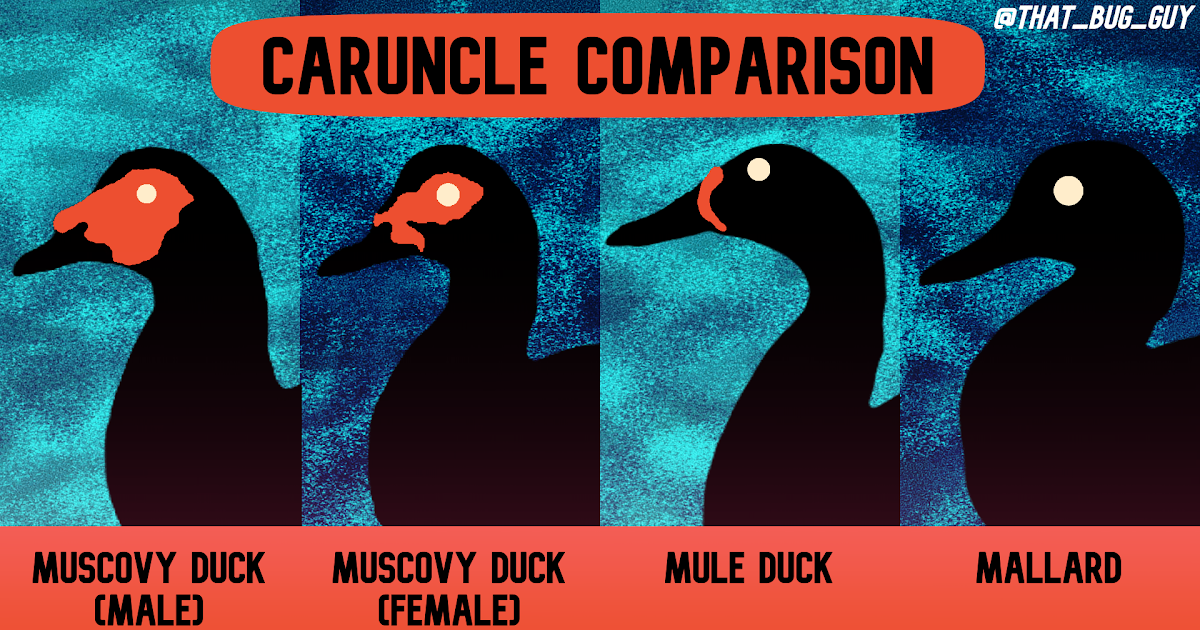
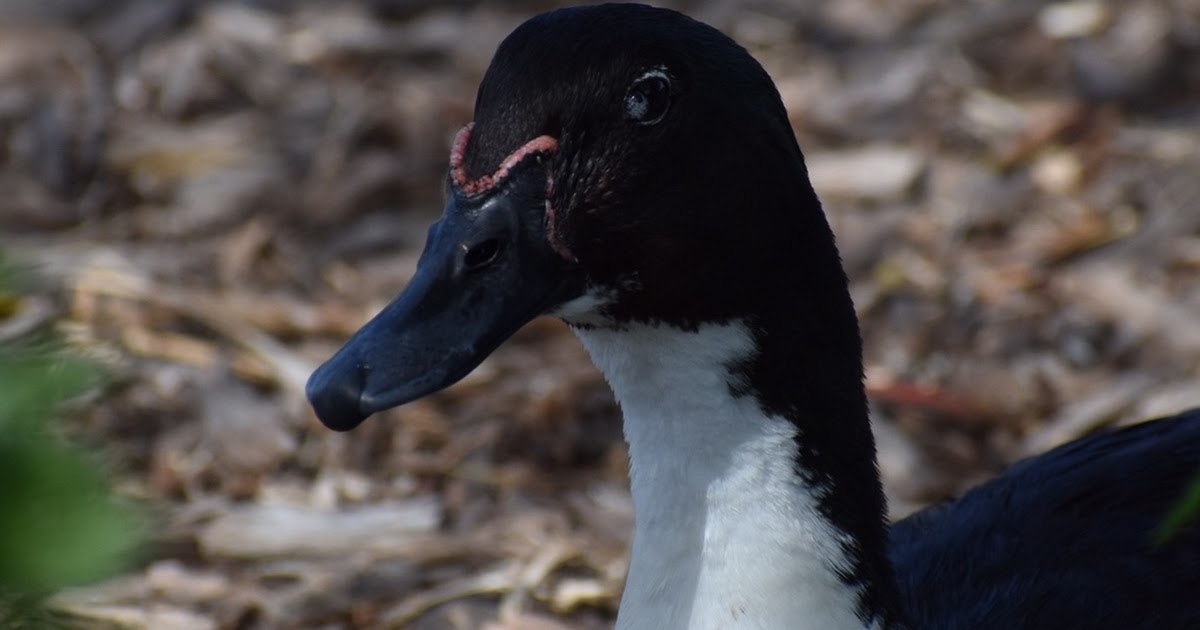
One of the parent species, the Muscovy Duck, is known for its fleshy face. The structures covering the bird’s head are called wattles or masks and are composed of caruncles. This trait is passed down to the Mule Duck but is less pronounced. The caruncles are relegated to the bill base and appear as either lumpy growths or as flat bare skin. They are red and/or black in colour.

Generally, the wattles will appear like they do in the graphic. Juvenile and low wattle Muscovies have less carnacle coverage and can be mistaken for Mule Ducks. Some Mule Duck appear to lack any caruncles. Mallards don’t have caruncles.

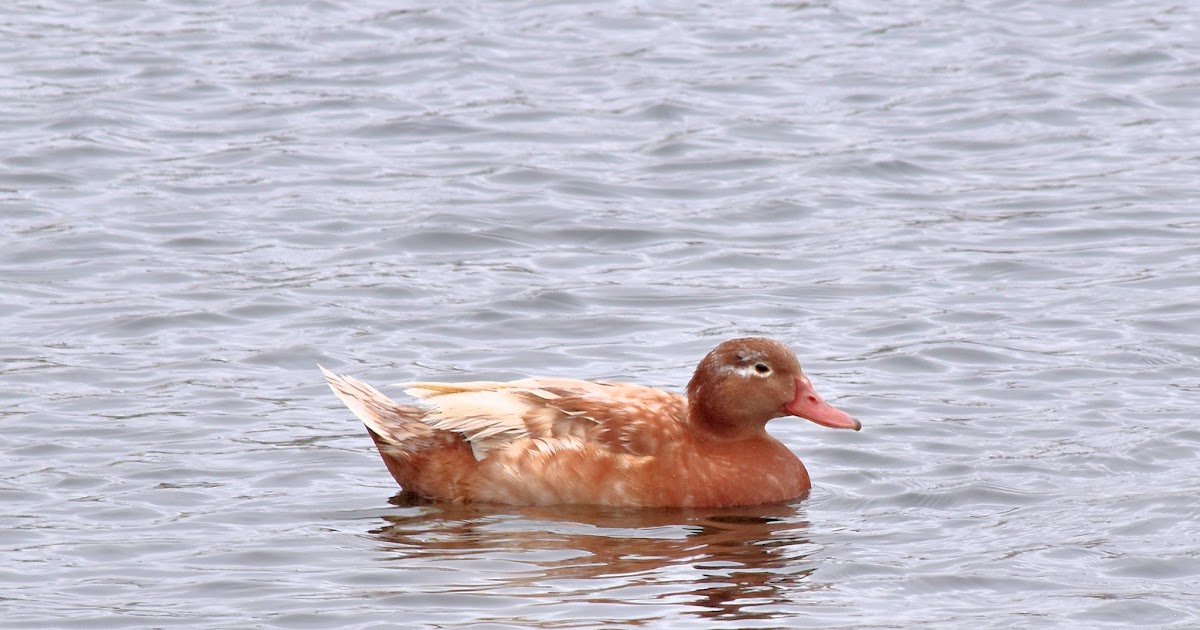
The bill of the hybrid can range in colour, from pale, to pink, to grey, to black. The bill can be a single color or have darker markings. Yellow bills aren’t characteristic of the hybrid.


Mulard with visible caruncles at the bill base. Bill is a grey tone with darker accents.

Plumage and Feathers
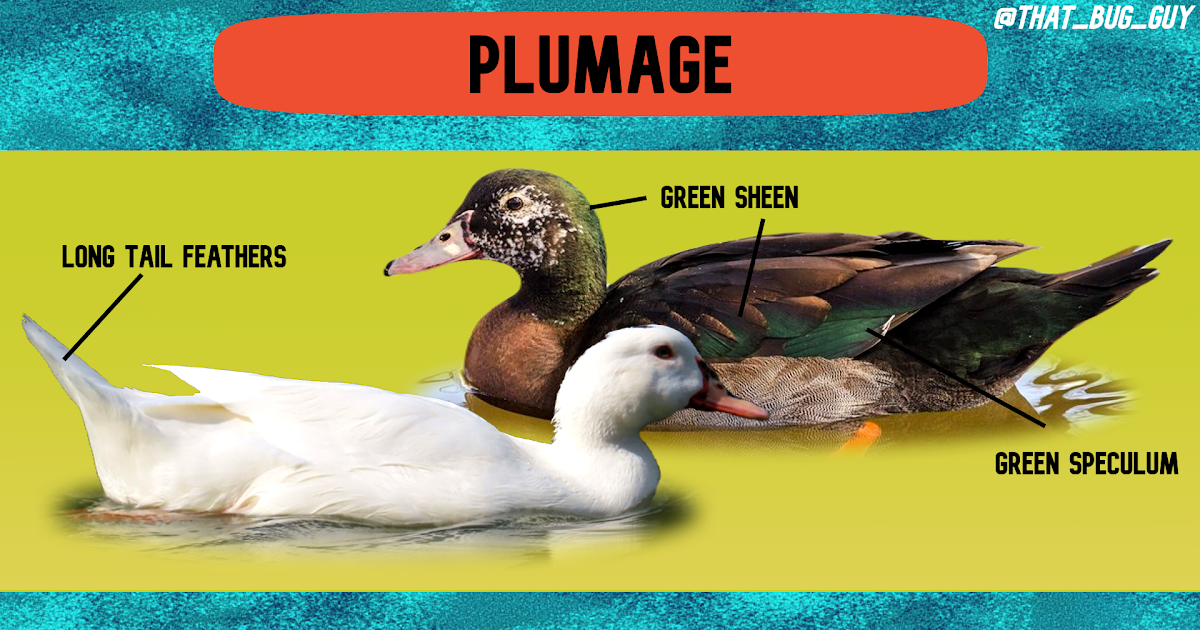
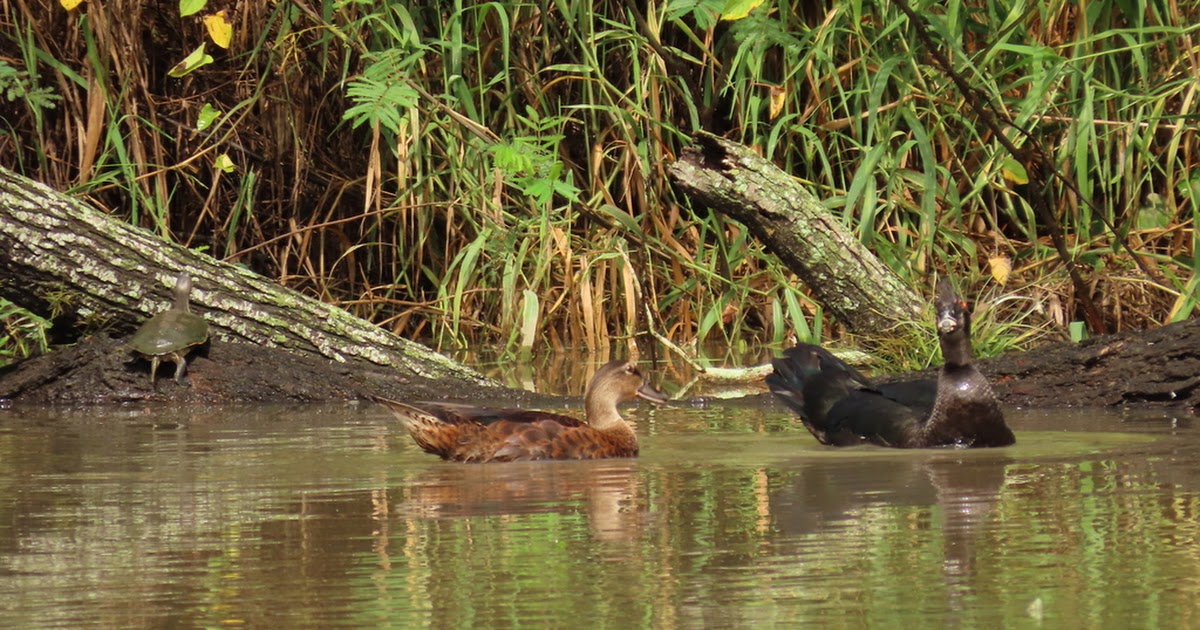
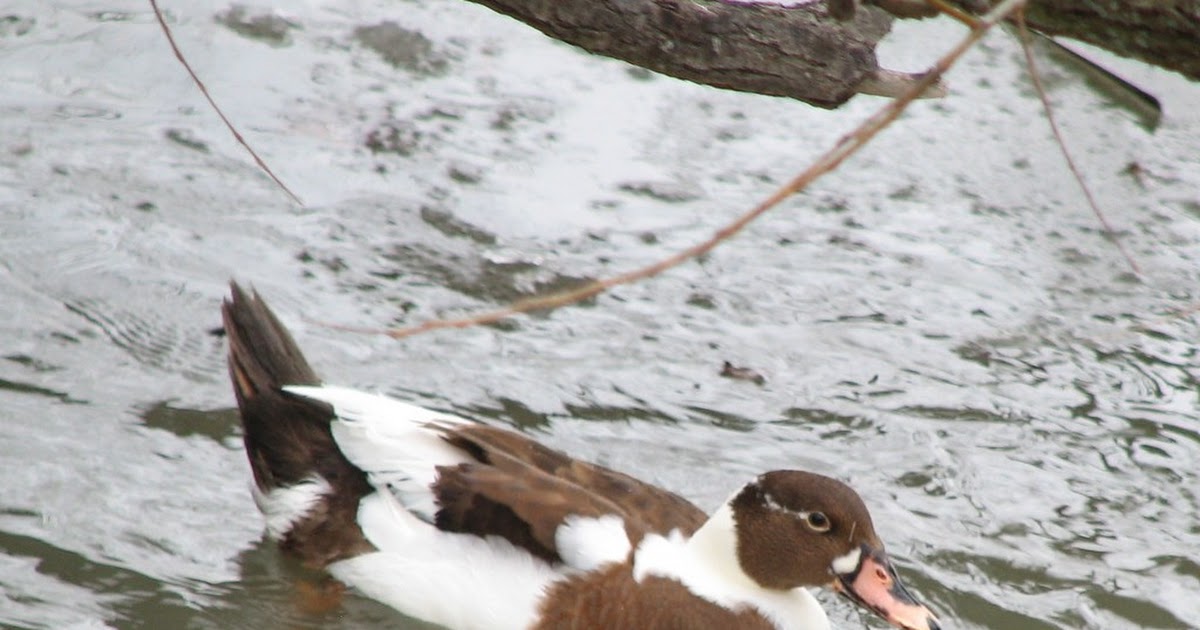
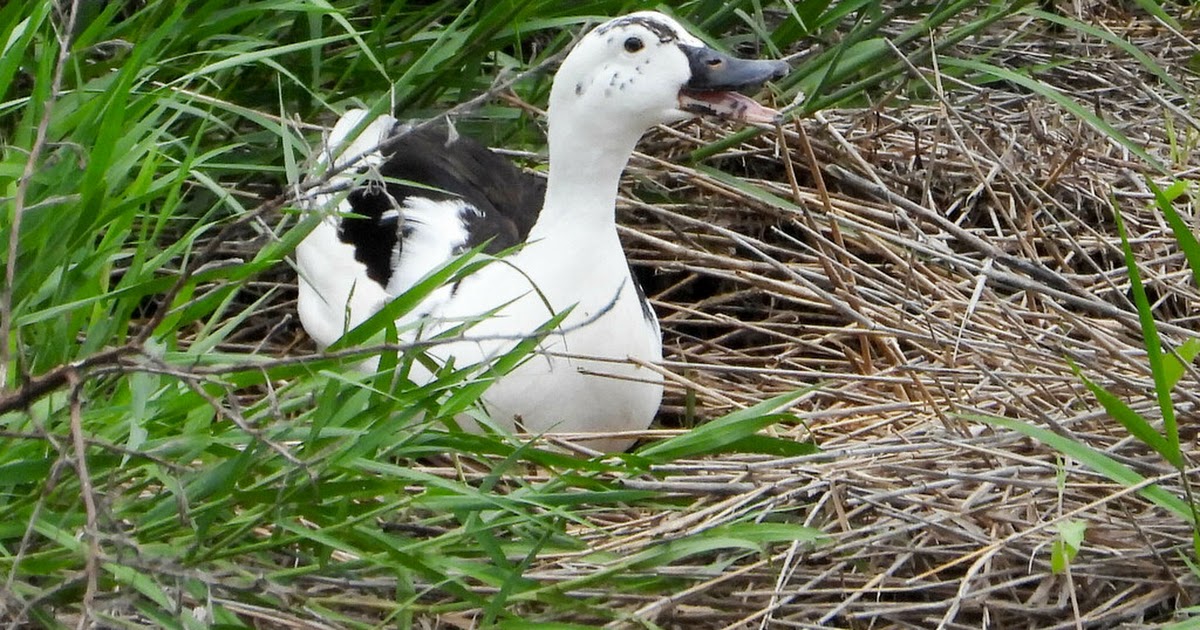
The plumage of Mulards is very variable with many colors and patterns being possible. Much of the time, their plumage is made up of blacks, whites, greys, and/or browns. Commercial Mulards have all-white plumage.

Interestingly, the green sheen from the Muscovy Duck’s feathers consistently makes an appearance, most commonly in the speculum and head, though it's not always present. It should also be noted that Mallard breeds such as the Cayuga also have a green sheen to their feathers, so avoid using this trait alone as a sure-fire way to ID a Mule Duck.

As for the structures of the feathers themselves, they seem to take after Muscovy once again. The feathers on the wings are large and ovalular while the tail feathers are long, flat, and erect (this can be especially noticeable in the water). Some Mule Ducks have even shown themselves to have a Muscovy-like crest on their head, though less prominent.

Mallard signatures, such as chestnut breasts, thick white neck rings, and heads of a separate colour from the body often occur. More female-like traits such as facial stripes too.

Body Structure
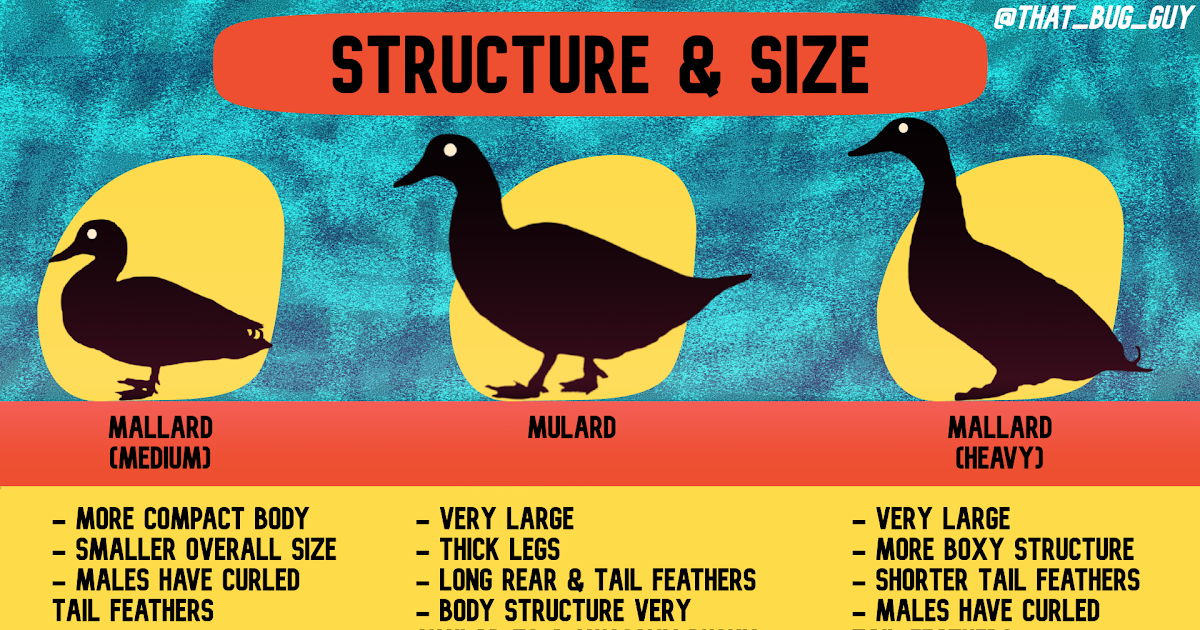
The body of the hybrid is more like a Muscovy’s, having a long rear, short thick legs, wide feet, and more pronounced claws. Most Mulards are also extremely large and bulky and males are mentioned to be larger than females.

href="https://lh5.googleusercontent.com/M6W-bLlebQFFC5hZsj2MY0u3ODO935HD6tDNX_oZ-JFiEytm5b9j7erm_N3M1jU-b7U=w2400?source=screenshot.guru">

While unconfirmed, curled tail feathers appear to be greatly reduced or even absent in Mule Ducks. In any case, this trait is much more visible in male Mallards.

Additional Information

Conception and Reproduction
A Mallard-Muscovy pairing actually has a low chance of producing a hybrid naturally, so farmers often use artificial insemination. Because of this, most Mule Ducks encountered are likely to be of domestic origin.

The hybrid of a Mallard-Muscovy pairing will be built differently depending on which parent was which species. A male Muscovy paired with a female Mallard will produce a Mule Duck while a male Mallard and female Muscovy pairing will result in a Hinny. Of the two, Mule Ducks are larger and are used in the commercial meat industry. Hinnies are smaller and the less common form of the hybrid.

Generally, Mule Ducks and Hinnies are sterile and can’t produce offspring of their own. Because of this, most, if not all Mallard x Muscovy Ducks are first-generation hybrids (F1).

Use in the Meat Industry
Mulards are bred for meat and Foie Gras production with males and females serving different purposes. Because they’re hardier, males are used to produce Foie Gras, a French delicacy which involves force-feeding the duck to expand its liver. This process is known as gavage.
Female Mulards are raised for their large breasts as their livers can’t withstand gavage.

Mule Ducks in the meat industry are pure white so once the body is plucked of feathers, no black marks are left on the meat.

Gallery


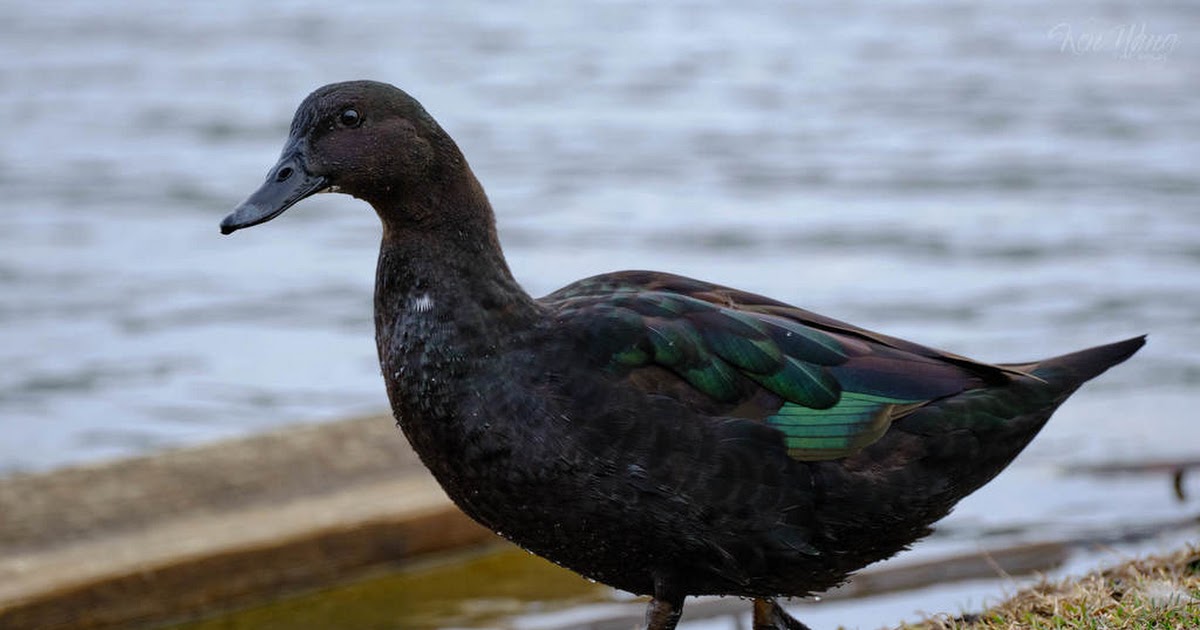
A very dark Mule Duck. Note the green sheen on the wing feathers, long tail feathers, and its overall shape. No visible caruncles however.


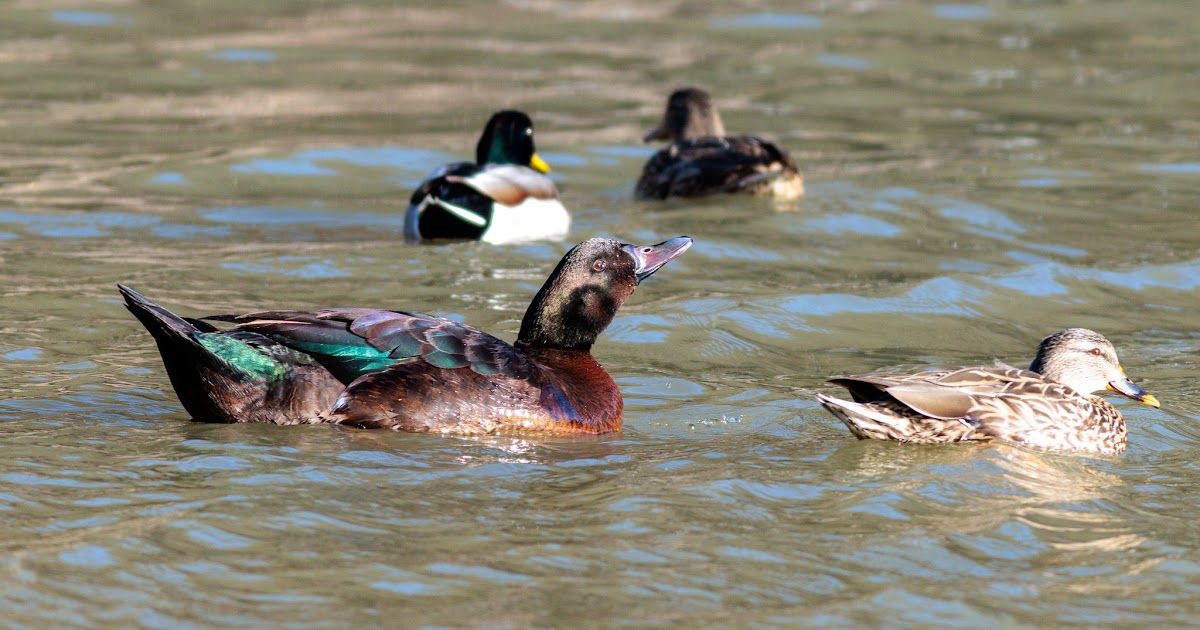
Size comparison between Mulard and wild Mallard.


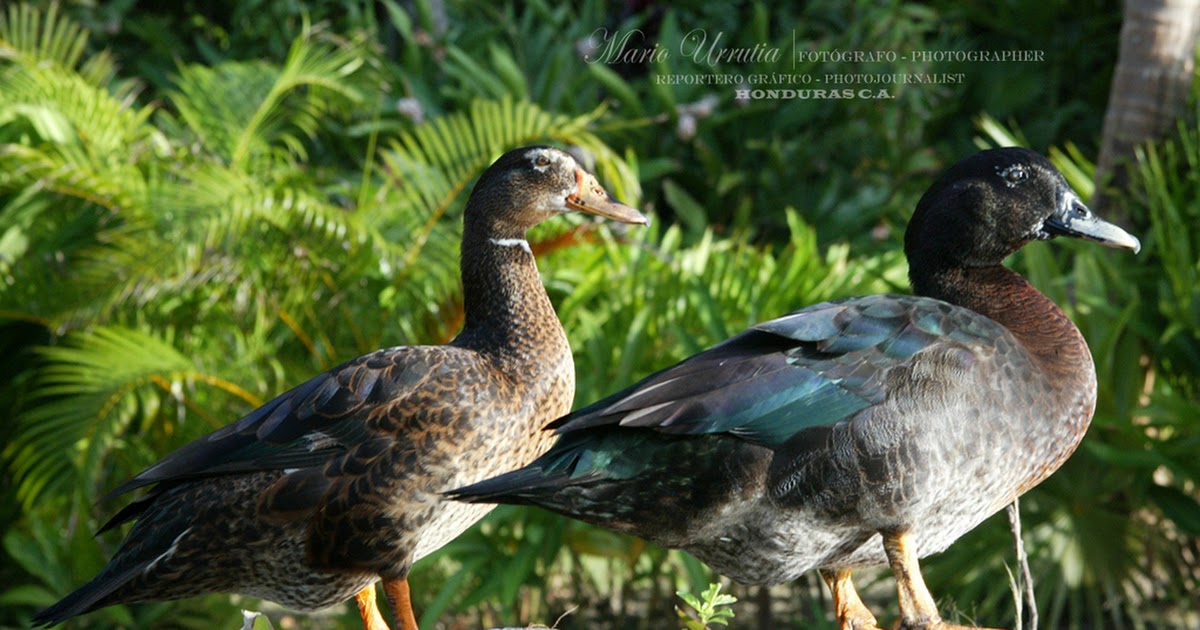
Two Mulards, possibly a male and female pair. The observer mentioned that they flew. They have orange legs.


A male Muscovy Duck and (possible) female Mule Duck are seen courting together. Both appear to be wild-types.


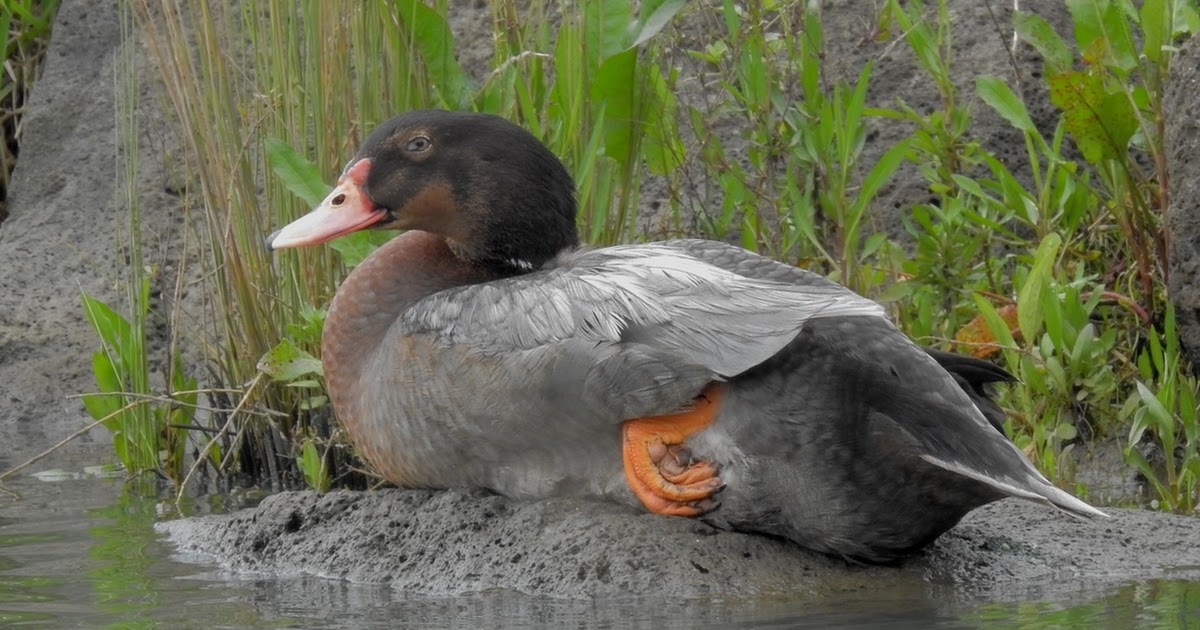
A female Mulard, nicknamed Maynard, was able to construct a nest by a pond. She is noted to be very friendly and regularly interacts with the pond’s other inhabitants.

View all of iNaturalist’s RG Mule Duck observations. Again, please don’t spam IDs.
https://inaturalist.ca/observations/identify?reviewed=any&quality_grade=research&taxon_id=326092&place_id=any

ID Sum-up
Mule Ducks are defined by caruncles at the bill base, a pink bill, and long tail feathers. Other features such as green wing feathers and a Muscovy-like body shape can also be used but with more caution.

Note that certain domestic Mallards and Muscovies can resemble Mule Ducks.

Credits
Thank you to @liliumtbn and @rlhardin for reviewing this journal post and suggesting edits. My gratitude also goes out to the identifiers of this hybrid as well.

Photo Credits
A big thanks goes out to those who contributed photos to this journal. Photos are credited in the order they appear. (Please don’t spam IDs)

@chalon9. “Mallard × Muscovy Duck”, April 5, 2021.
https://inaturalist.ca/observations/73082973

@westernpawildlife. “Mallard × Muscovy Duck”, February 27, 2022.
https://inaturalist.ca/observations/107701735

@merlu. “Mallard × Muscovy Duck”, August 11, 2020.
https://inaturalist.ca/observations/56170476

@jessica_peruzzo. “Mallard × Muscovy Duck”, April 1, 2018.
https://inaturalist.ca/observations/18453134

@americanmamushi. “Mallard × Muscovy Duck”, March 2022.
https://inaturalist.ca/observations/108023140

@mariourrutia. “Mallard × Muscovy Duck”, April 8, 2003.
https://inaturalist.ca/observations/67549416

@annalanigan. “Mallard × Muscovy Duck”, October 20, 2020.
https://inaturalist.ca/observations/63380263

@oliverkomar. “Mallard × Muscovy Duck”, October 4, 2020.
https://inaturalist.ca/observations/61750949

@pinemartyn. “ “Mallard × Muscovy Duck”, December 10, 2017.
https://inaturalist.ca/observations/9179413

@terranova. “Mallard × Muscovy Duck”, Feb 5, 2022,
https://inaturalist.ca/observations/106338578

@lizholland. “Mallard × Muscovy Duck”, June 20, 2022.
https://inaturalist.ca/observations/126496548

Sources
Animal Equality. “What is Foie Gras?”, Animal Equality, February 8, 2022, accessed July 22, 2022.
https://animalequality.org/blog/2022/02/08/what-is-foie-gras/

Zero G Ducks. “Mulius - A Duck / Muscovy Hybrid”, Youtube, February 3, 2022, accessed August 10, 2022.
https://www.youtube.com/watch?v=M1ysK7BoL9s

Poultry Industry. “Ducks World”, Engormix, December 14, 2017, accessed July 19, 2022.
https://en.engormix.com/poultry-industry/articles/ducks-world-t41031.htm

Cornell University. “Domestic Ducks”, Cornell University, 2016, accessed October 14, 2022
https://www.vet.cornell.edu/animal-health-diagnostic-center/programs/duck-research-lab/domestic-ducks

Dave Appleton. “Muscovy Duck x Mallard”, Bird Hybrids, March 7, 2014, accessed May 22, 2022.
http://birdhybrids.blogspot.com/2014/03/muscovy-duck-x-mallard.html

Ducks and Clucks. “All About Caruncles” Duck and Clucks, January 4, 2013, accessed June 29, 2022.
https://ducksandclucks.com/blog/2013/01/04/all-about-caruncles/

Dr. Ed Hoffmann. “Mule Duck | aka Mullard, Barbary Duck”, Feathersite, December 1993, accessed January 2022.
http://www.feathersite.com/Poultry/Ducks/Musc/Mule.html

R. H. Rigdon and Charles Mott. “Testis in the Sterile Hybrid Duck" | A Histologic and Histochemical Study”, Department of Pathology, University of Texas Medical Branch, 1965, accessed Jul 14, 2022.
https://journals.sagepub.com/doi/pdf/10.1177/030098586500200603

Posted on October 26, 2022 12:18 AM by that_bug_guy | 6 comments | Leave a comment

Archives