A great number of seashell species are posted to iNaturalist as fragments and many of them can be identified to species. Learning how to identify fragments forces one to look at tiny details that are usually not worth analyzing when other indicators are present. This can be a fun way to challenge your ID skills! Unfortunately, it didn’t make it to the list of new annotations, but that’s okay, ...more ↓
A great number of seashell species are posted to iNaturalist as fragments and many of them can be identified to species. Learning how to identify fragments forces one to look at tiny details that are usually not worth analyzing when other indicators are present. This can be a fun way to challenge your ID skills! Unfortunately, it didn’t make it to the list of new annotations, but that’s okay, that’s why we have projects!
Definitions (please tell me if you think they need improvement)
All categories: There should be little to no tissue left in the fragment (for the sake of being a shell). Freshwater mollusks are welcome even though they’re not“sea” shells but just shells.
Bivalve shells: at least 50% of the shell is missing (50% of one of the two valves)
Snail shells: the shell lacks a complete or undamaged spiral. I’d like to lump operculum in here.
Limpet & Slippersnail shells: at least 50% is missing.
Chiton shells: isolated plate
Tusk shells: not much longer than wide
Sand dollar & sea urchin shells: at least 50% is missing. I’m lumping in teeth and spines here.
Crab & barnacle shells: single limb or isolated carapace (again, almost no tissue present aside from ligaments)
Not counted:
Coral and bryozoans: are colonial so don’t really have distinct fragments
Here’s a similar project aiming to capture the internal morphology of gastropods. less ↑

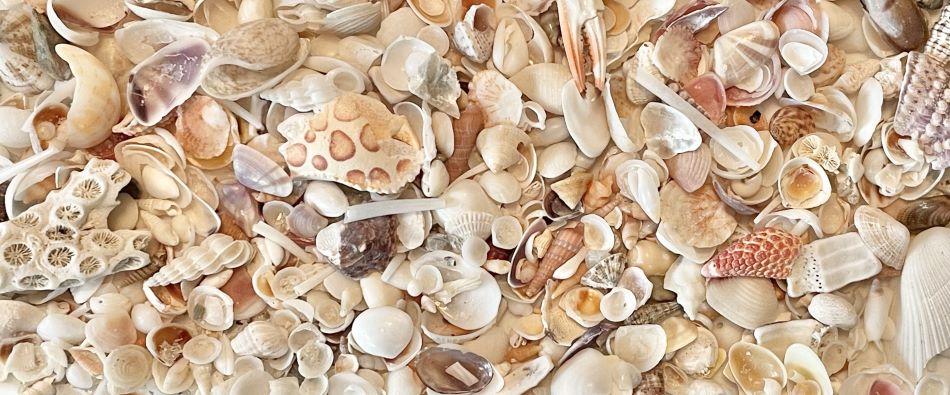
 Seashell Fragments


 bonesigh
created this project on April 2, 2024
bonesigh
created this project on April 2, 2024