Species Search
 C
C
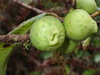
Figs
(Genus Ficus)
Info
Ficus (/ˈfaɪkəs/ or /ˈfiːkəs/) is a genus of about 850 species of woody trees, shrubs, vines, epiphytes and hemiepiphytes in the family Moraceae. Collectively known as fig trees or figs, they are native throughout the tropics with a few species extending into the semi-warm temperate zone. The common fig (F. carica) is a temperate species native to southwest Asia and the Mediterranean region (from Afghanistan to Portugal), which has been widely cultivated from an
(Wikipedia)
 CC
CC
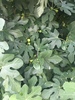
Subgenus Ficus
Info
Ficus (/ˈfaɪkəs/ or /ˈfiːkəs/) is a genus of about 850 species of woody trees, shrubs, vines, epiphytes and hemiepiphytes in the family Moraceae. Collectively known as fig trees or figs, they are native throughout the tropics with a few species extending into the semi-warm temperate zone. The common fig (F. carica) is a temperate species native to southwest Asia and the Mediterranean region (from Afghanistan to Portugal), which has been widely cultivated from an
(Wikipedia)
 CC
CC
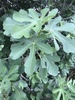
Common Fig
(Ficus carica)
Info
Ficus carica is an Asian species of flowering plant in the mulberry family, known as the common fig (or just the fig). It is the source of the fruit also called the fig, and as such is an important crop in those areas where it is grown commercially. Native to the Middle East and western Asia, it has been sought out and cultivated since ancient times, and is now widely grown throughout the world, both for...
(Wikipedia)
 CC
CC
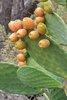
Indian Fig Opuntia
(Opuntia ficus-indica)
Info
Opuntia ficus-indica is a species of cactus that has long been a domesticated crop plant important in agricultural economies throughout arid and semiarid parts of the world. It is thought probably to have originated in Mexico. Some of the common English names for the plant and its fruit are Indian fig opuntia, Barbary fig, cactus pear, spineless cactus, and prickly pear, although this last name has also been applied to other less common Opuntia<
(Wikipedia)
 CC
CC
Chinese Banyan
(Ficus microcarpa)
Info
Ficus microcarpa, also known as Chinese banyan, Malayan banyan, Taiwan banyan, Indian laurel, curtain fig, or gajumaru (ガジュマル), is a tree native in the range from China through Nepal, Bhutan, Sikkim, India, Sri Lanka, Taiwan, the Malay Archipelago, New Guinea, Australia, the Ryukyu Islands, and New Caledonia. It is widely planted as a shade tree and frequently misidentified as F. retusa or as F. nitida (F. benjamina).
(Wikipedia)
 CC
CC
Weeping Fig
(Ficus benjamina)
Info
Ficus benjamina, commonly known as weeping fig, benjamin fig or Ficus tree, and often sold in stores as just ficus, is a species of flowering plant in the family Moraceae, native to Asia and Australia. It is the official tree of Bangkok. The species is also naturalized in the West Indies and in the States of Florida and Arizona in the United States.
(Wikipedia)
 C
C
Climbing Fig
(Ficus pumila)
Info
Ficus pumila (creeping fig or climbing fig) is a species of flowering plant in the mulberry family, native to East Asia (China, Japan, Vietnam) and naturalized in parts of the southeastern and south-central United States. The etymology of the species name corresponds to the Latin word pumilus meaning dwarf, and refers to the very small leaves of the plant.
(Wikipedia)
 C
C
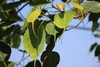
Rubber Plant
(Ficus elastica)
Info
Ficus elastica, the rubber fig, rubber bush, rubber tree, rubber plant, or Indian rubber bush, Indian rubber tree, is a species of plant in the fig genus, native to east India, Nepal, Bhutan, Burma, China (Yunnan), Malaysia, and Indonesia. It has become naturalized in Sri Lanka, the West Indies, and the US State of Florida.
(Wikipedia)
 CC
CC
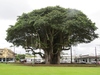
Sacred Fig
(Ficus religiosa)
Info
Ficus religiosa or sacred fig is a species of fig native to the Indian subcontinent, and Indochina. It belongs to the Moraceae, the fig or mulberry family. It is also known as the bodhi tree, pippala tree, peepul tree, peepal tree or ashwattha tree (in India and Nepal).
(Wikipedia)
 CC
CC
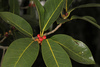
Indian Banyan
(Ficus benghalensis)
Info
Ficus benghalensis, commonly known as the banyan, banyan fig and Indian banyan, is a tree native to the Indian Subcontinent. Specimens in India are among the largest trees in the world by canopy coverage.
(Wikipedia)
 CC
CC
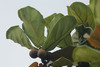
Florida Strangler Fig
(Ficus aurea)
Info
Ficus aurea, commonly known as the Florida strangler fig (or simply strangler fig), golden fig, or higuerón, is a tree in the family Moraceae that is native to the U.S. state of Florida, the northern and western Caribbean, southern Mexico and Central America south to Panama. The specific epithet aurea was applied by English botanist Thomas Nuttall who described the species in 1846.
(Wikipedia)
 CC
CC
Fiddle-leaf Fig
(Ficus lyrata)
Info
Ficus lyrata, commonly known as the fiddle-leaf fig, is a species of flowering plant in the mulberry and fig family Moraceae. It is native to western Africa, from Cameroon west to Sierra Leone, where it grows in lowland tropical rainforest.
(Wikipedia)
 CC
CC
Japanese Superb Fig
(Ficus subpisocarpa)
Info
Ficus subpisocarpa (called 笔管榕 in China and 雀榕 in Taiwan) is a species of small deciduous tree native to Japan, China, Taiwan and southeast Asia to the Moluccas (Ceram). Two subspecies are recognised. Terrestrial or hemiepiphytic, it reaches a height of 7 m (23 ft). Ants predominantly of the genus Crematogaster have been recorded living in stem cavities. Ficus subpisocarpa is pollinated by Platyscapa ishiiana (Agaonidae).
(Wikipedia)
 CC
CC
Hauili Fig Tree
(Ficus septica)
Info
Ficus septica (called Hauli tree in the Philippines, 棱果榕 in China and Taiwan) is a shrub or tree of the family Moraceae living at low altitudes from Northeast India to North Australia (Queensland), and throughout Malesia. It lives on the edge of the vegetation, often in degraded environments. The seeds of this species are dispersed by numerous species, including fruit bats (Megachiroptera) when present.
(Wikipedia)
 CC
CC
Moreton Bay Fig
(Ficus macrophylla)
Info
Ficus macrophylla, commonly known as the Moreton Bay fig or Australian banyan, is a large evergreen banyan tree of the family Moraceae native to eastern Australia, from the Wide Bay–Burnett region in the north to the Illawarra in New South Wales, as well as Lord Howe Island. Its common name is derived from Moreton Bay in Queensland, Australia. It is best known for its imposing buttress roots. As Ficus macrophylla is a strangler fig, seed germination...
(Wikipedia)
 CC
CC
Opposite Leaf Fig
(Ficus hispida)
Info
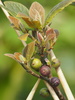
Ficus hispida is a small but well distributed species of tropical fig tree. It occurs in many parts of Asia and as far south east as Australia. There is a large variety of local common names. Like a number of ficus, the leaves are sandpapery to touch. An unusual feature is the figs which hang on long stems. In Australia the fruit are eaten by cassowaries and double-eyed fig parrots.
(Wikipedia)
 CC
CC
Japanese Fig
(Ficus erecta)
Info
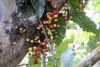
Ficus erecta (syn. Ficus beecheyana), the Japanese fig, is a species of flowering plant in the family Moraceae. It is found in the eastern Himalayas, Assam, Bangladesh, Vietnam, southern China, Taiwan, Jeju Island of South Korea, the Ryukyu Islands, and Japan. A deciduous (or semideciduous) shrub or small tree from 2 to 7 m (7 to 23 ft) in height, it is found alongside streams. Said to be dioecious, it has small fruit that are 1.0 to 2.5 cm...
(Wikipedia)
 CC
CC
Cluster Fig
(Ficus racemosa)
Info
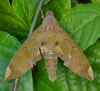
Ficus racemosa (syn. Ficus glomerata Roxb.) is a species of plant in the family Moraceae. Popularly known as the cluster fig tree, Indian fig tree or goolar (gular) fig, this is native to Australia, Malaysia, Southeast Asia and the Indian subcontinent. It is unusual in that its figs grow on or close to the tree trunk, termed cauliflory. In India, the tree and its fruit are called gular in the north and atti in the south....
(Wikipedia)
 CC
CC
Fig Sphinx
(Pachylia ficus)
Info
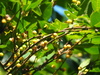
Pachylia ficus, known as the fig sphinx, is a moth of the family Sphingidae. It lives from the northern tip of South America in Uruguay through Central America to the southern tip of the United States straying into Arizona and Texas.
(Wikipedia)
 CC
CC
King's Fig
(Ficus ampelos)
Info
Ficus ampelos is a species of fig in the family Moraceae, native to Bangladesh, the Nicobar Islands, Malesia, Papuasia, Taiwan, and the Ryukyu Islands. A small evergreen tree, it is usually found in broad-leafed evergreen forests at around 600 m (2,000 ft) in elevation.
(Wikipedia)
 CC
CC
Figwood
(Ficus virgata)
Info
Ficus virgata, commonly known as figwood, is a tree in the family Moraceae, native to areas of Southeast Asia and the western Pacific. It grows as a strangler on other trees, eventually smothering and killing its host.
(Wikipedia)
 CC
CC
Port Jackson Fig
(Ficus rubiginosa)
Info
Ficus rubiginosa, commonly known as the rusty fig or Port Jackson fig (damun in the Dharug language), is a species of flowering plant native to eastern Australia in the genus Ficus. Beginning as a seedling that grows on other plants (hemiepiphyte) or rocks (lithophyte), F. rubiginosa matures into a tree 30 m (100 ft) high and nearly as wide with a yellow-brown buttressed trunk. The leaves are oval and glossy green and measure from 4 to 19.3 cm (1 1
(Wikipedia)
 CC
CC
Common Red-stem Fig
(Ficus variegata)
Info
Ficus variegata is a well distributed species of tropical fig tree. It occurs in many parts of Asia, islands of the Pacific and as far south east as Australia. There is a large variety of local common names including common red stem fig, green fruited fig and variegated fig. A non strangling fig which may reach 30 metres in height. The tree is evergreen when young but becomes briefly deciduous as it grows older. In Australia
(Wikipedia)
 CC
CC
Creek Sandpaper Fig
(Ficus coronata)
Info
Ficus coronata, commonly known as the sandpaper fig or creek sandpaper fig, is a species of fig tree, native to Australia. It is found along the east coast from Mackay in Central Queensland, through New South Wales and just into Victoria near Mallacoota. It grows along river banks and gullies in rainforest and open forest. Its common name is derived from its rough sandpapery leaves, which it shares with the other sandpaper figs.
(Wikipedia)