
How to photograph crayfish for iNaturalist
How to photograph crayfish for inaturalist
In order for crayfish to be adequately identified, it is helpful to provide
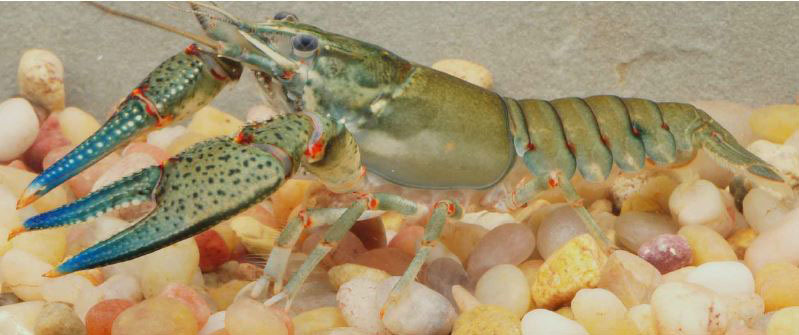
a variety of views of the crayfish. Dorsal and lateral views should be
always provided:
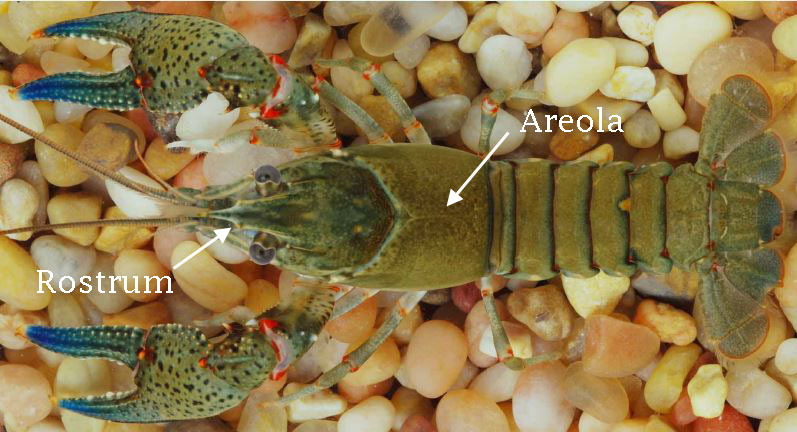
In the dorsal view, make sure both the areola and rostrum are
visible:
Lateral view:
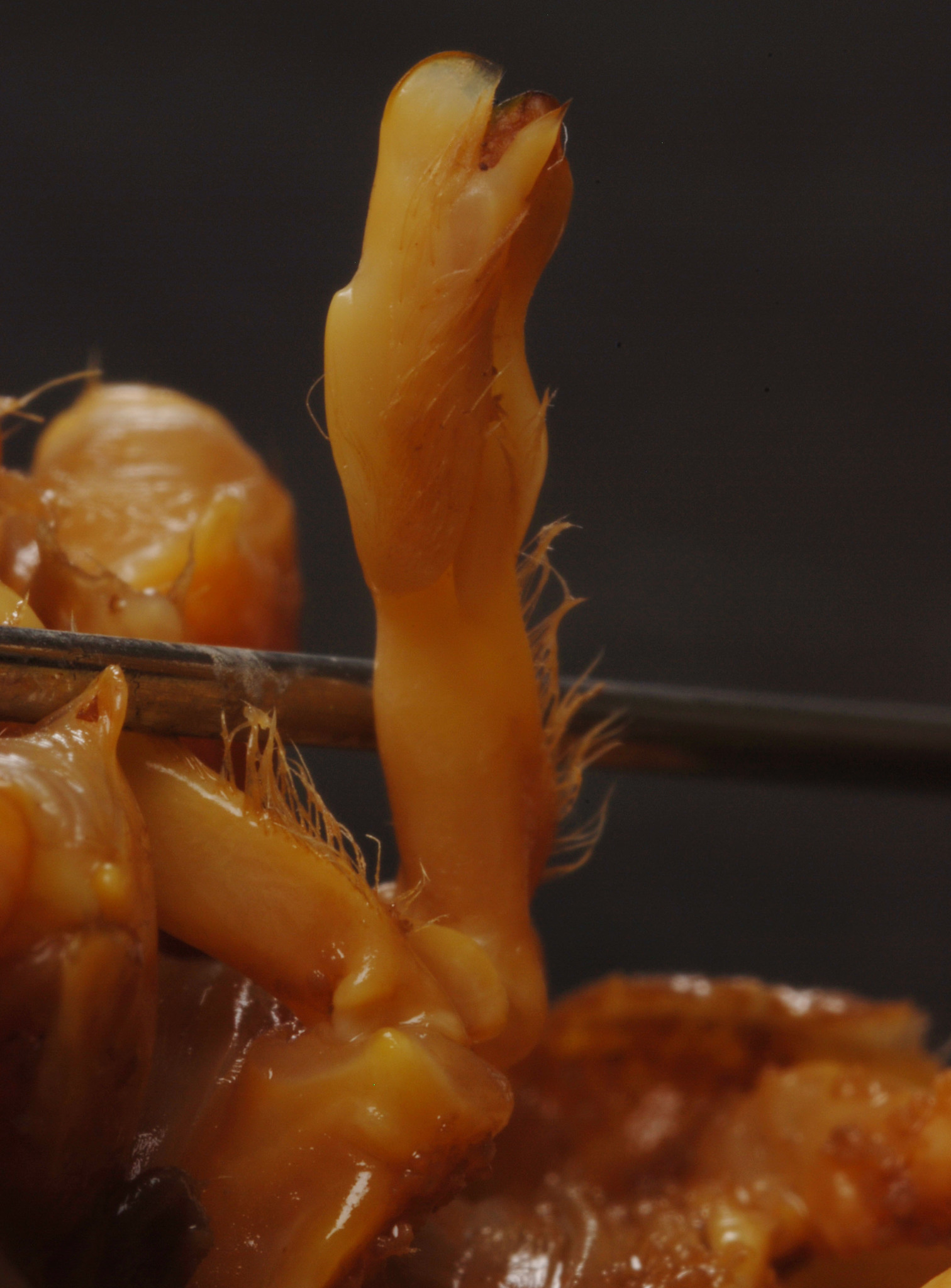
Of utmost importance for many species are photos of the gonopod (for
males) or annulus ventralis (for females).
The following image shows the ventral view of an adult male crayfish.
The gonopods are its reproductive organs. They are normally tucked
between the walking legs.
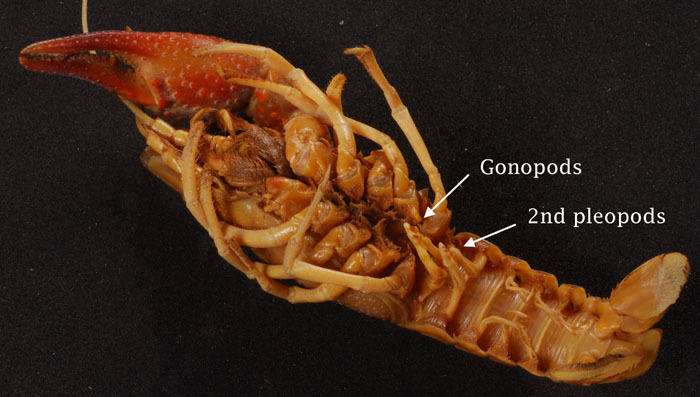
It will often be necessary to pry one into
view with a toothpick or probe. The most useful views are from a
lateral or mesial aspect.
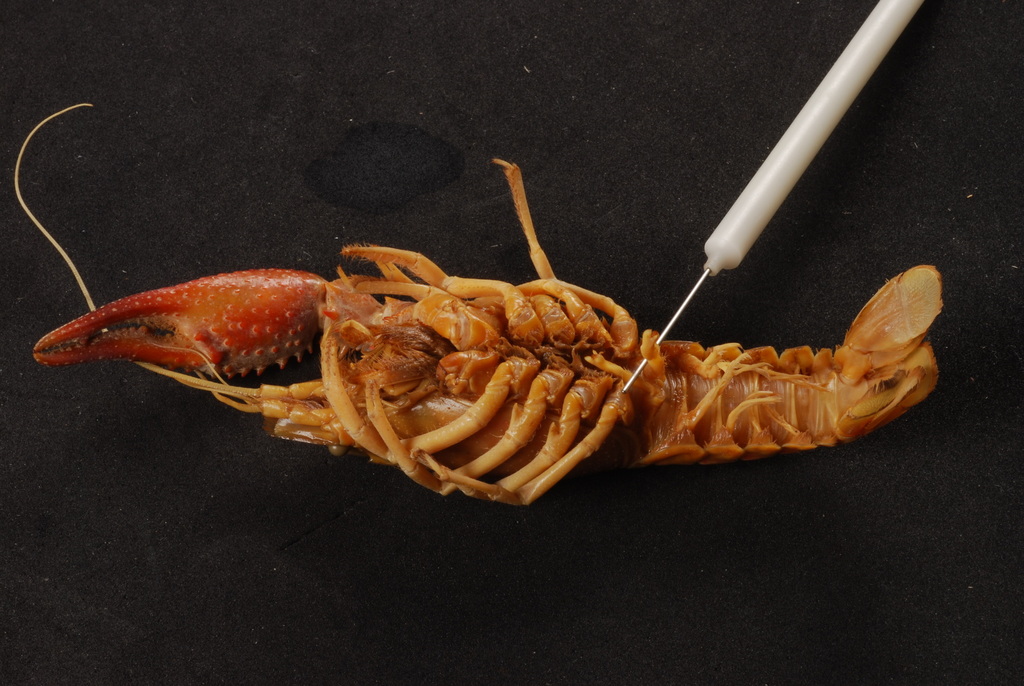
Try to get a closeup view clearly showing the features at the tip:
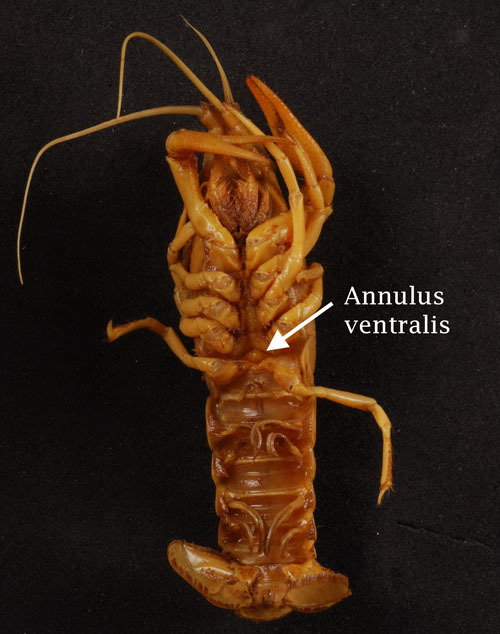
The following is an image of the ventral side of a female. A closeup
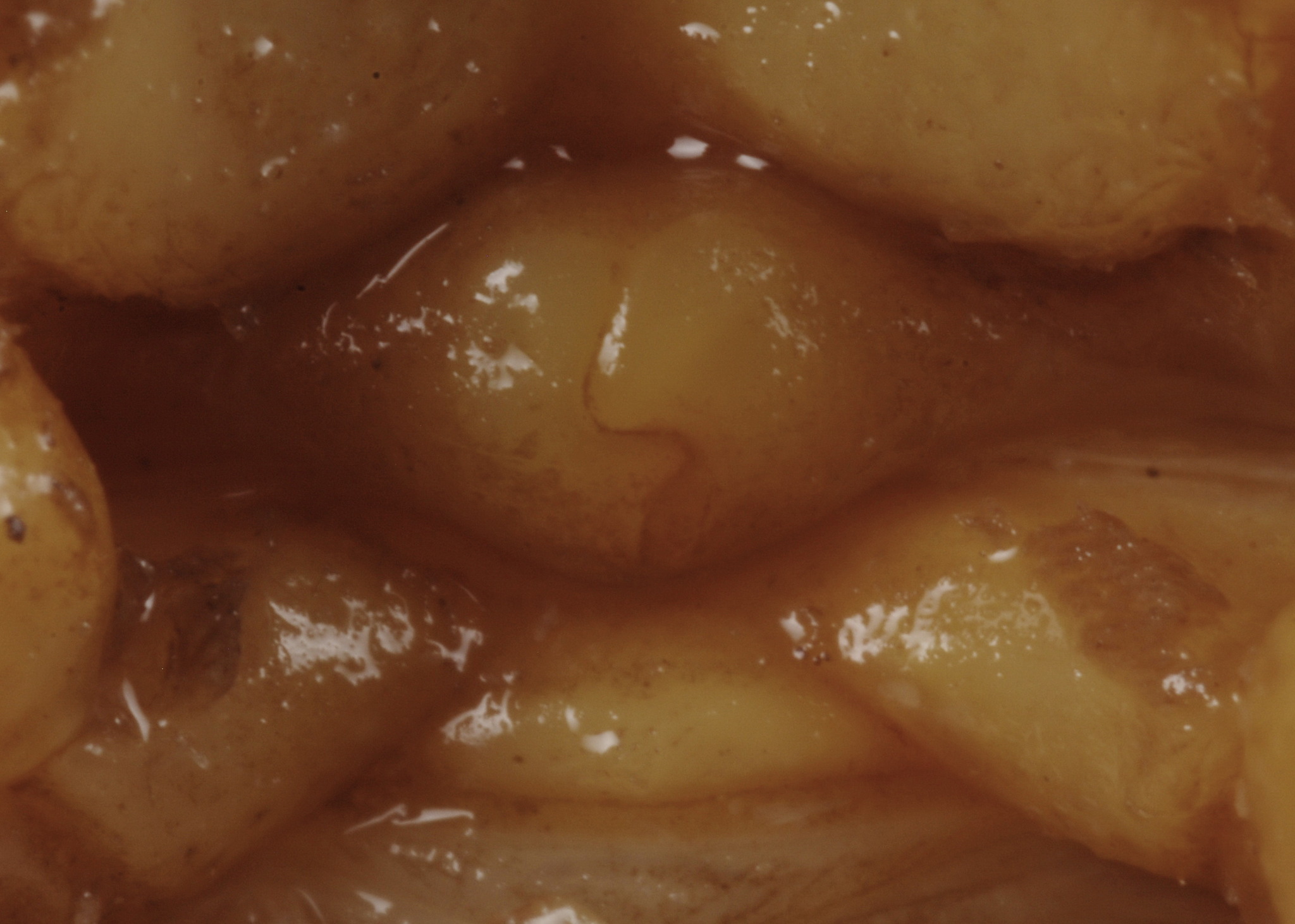
photo of annulus ventralis is very helpful (small round feature between
the last two pairs of walking legs).
Try to get a clear closeup of the annulus ventralis and surrounding area
as follows.
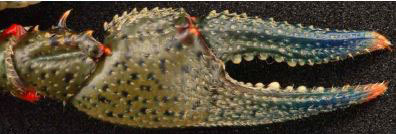
Additional views that may be helpful for identification include:
The chela (claw)
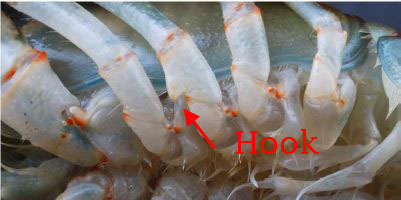
Any hooks present in adult males
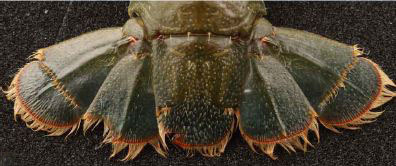
The tail fan






Comments
Added this to the "more info" section on the right side of the taxon page>About tab!
https://www.inaturalist.org/taxa/47783-Astacoidea
Ah, good idea! Didn't think about that.
Excellent journal entry, Dan. I’ve bookmarked this to copy and paste on observations that need some assistance for their crayfish observations! Thanks for putting this together!
Very nice. Good information. Thanks.
Thank you for the excellent education on identification of crayfish. Carol R.
good info....thanks
This is great. Thanks for creating this.
Excellent! I've been meaning to create something like this as it is very useful.
Hope to be able to use this excellent guide when I come across another crayfish. Thanks.
excellent post Dan. I wish there were more than 2 easy to identify species in CA so I could start observing crayfish this way - time for a field trip to the southeast
@loarie -- you're welcome to Texas ANYTIME!!! :)
GREAT, thank you
thank you
Great information, @dan_johnson. You seem to have a way of getting the crawfish to hold still for photos of the gonopod or annulus ventralis. Is it called "cooking"? ;-)
I'll keep this in mind!
Good to know.
This is cool!
wonderful! thanx so much for this handy reference.
"getting the crawfish to hold still for photos"
Bring home, put them in the refrigerator for a few hours or so, photograph, return to and release at the point of capture.
Very cool, thanks!
@eleggua, that's a great suggestion, but the crawfish in the photos I mentioned have definitely been steamed or boiled.
Very helpful!
Helpful!!
tuff
thanks
Add a Comment