We only have a handful of sanicles in the East Bay, but they're not always easy to tell apart. Here's how I distinguish some of the ones that seem to get confused.
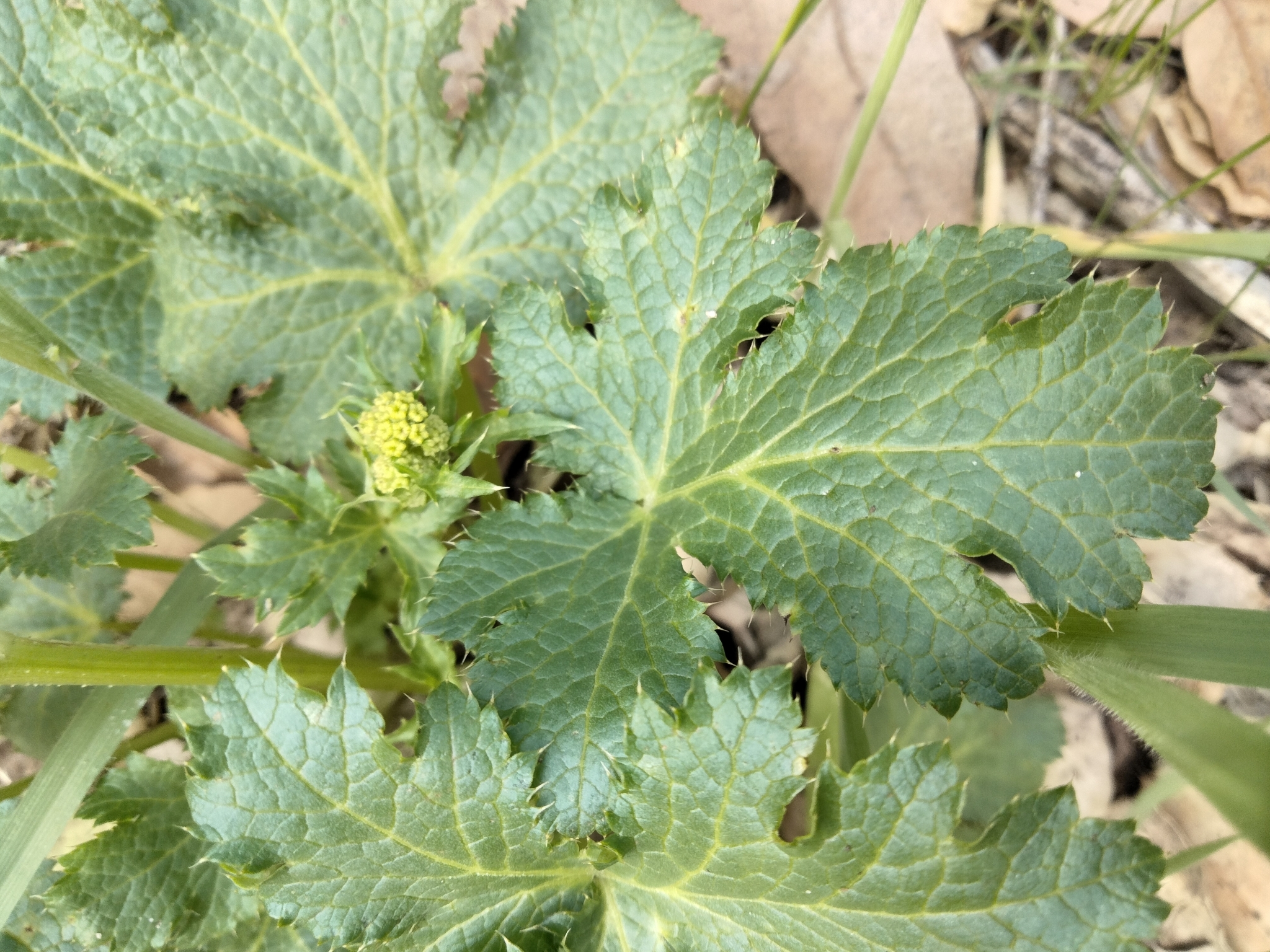
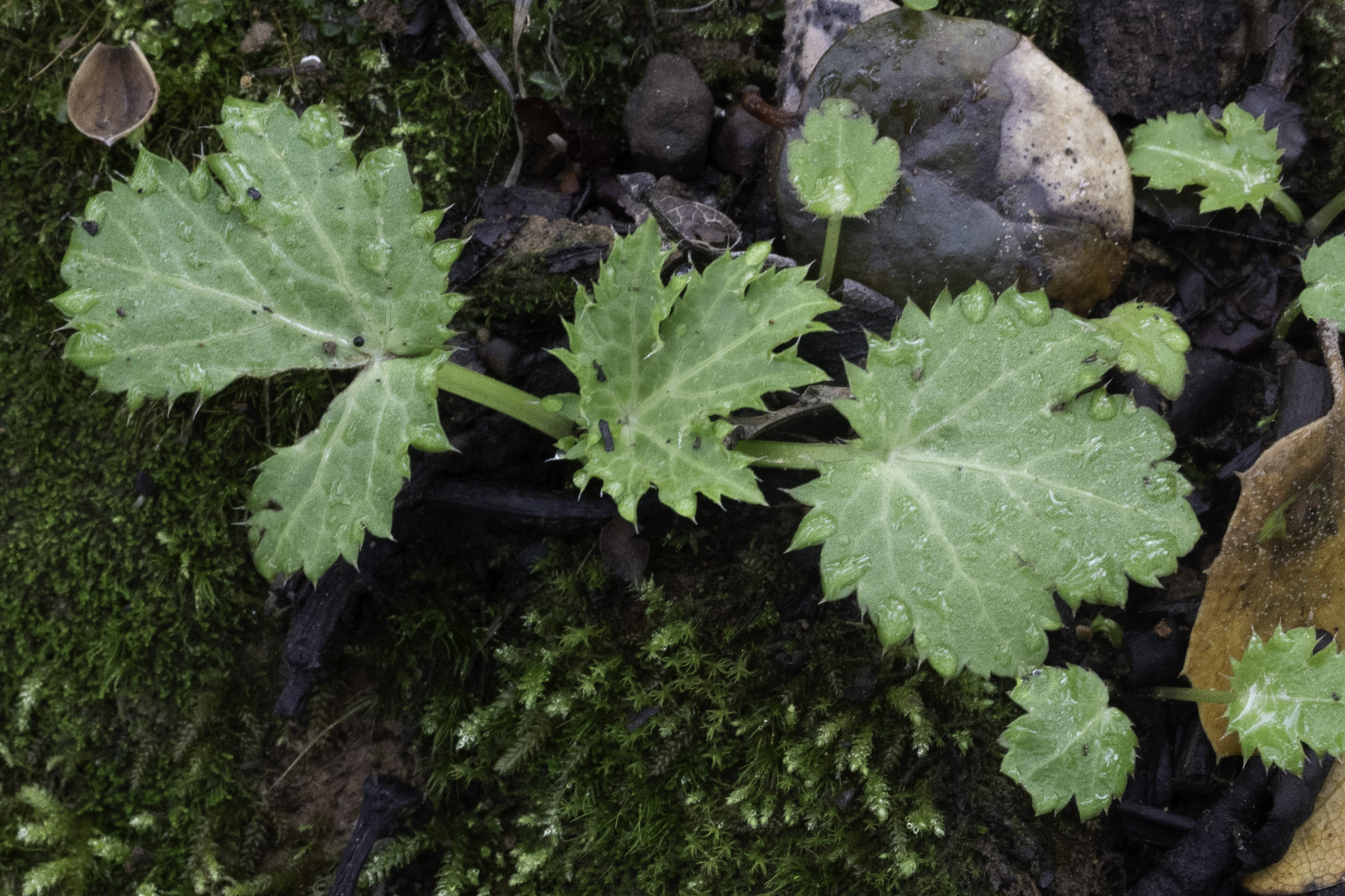
S. crassicaulis vs. S. laciniata
S. laciniata only holds on in a few spots in the East Bay Hills, so unless you're there you can pretty safely rule it out, BUT it's totally worth keeping an eye out for in case there are any unknown populations. S. crassicaulis is, of course, in almost every native forest.
|
Sanicula crassicaulis |
Sanicula laciniata |
|
leaf cross veins
|
fractal, incised, giving the leaf a crinkly appearance
 (c) Carolyn Koehn, some rights reserved (CC BY-NC)
|
faint if present at all, leaf looks smooth
 (c) Paul Barnett, some rights reserved (CC BY-NC)
|
S. bipinnata vs. S. tuberosa
|
Sanicula bipinnata |
Sanicula tuberosa |
|
leaf dissection
|
not that much, more like cilantro gone to seed
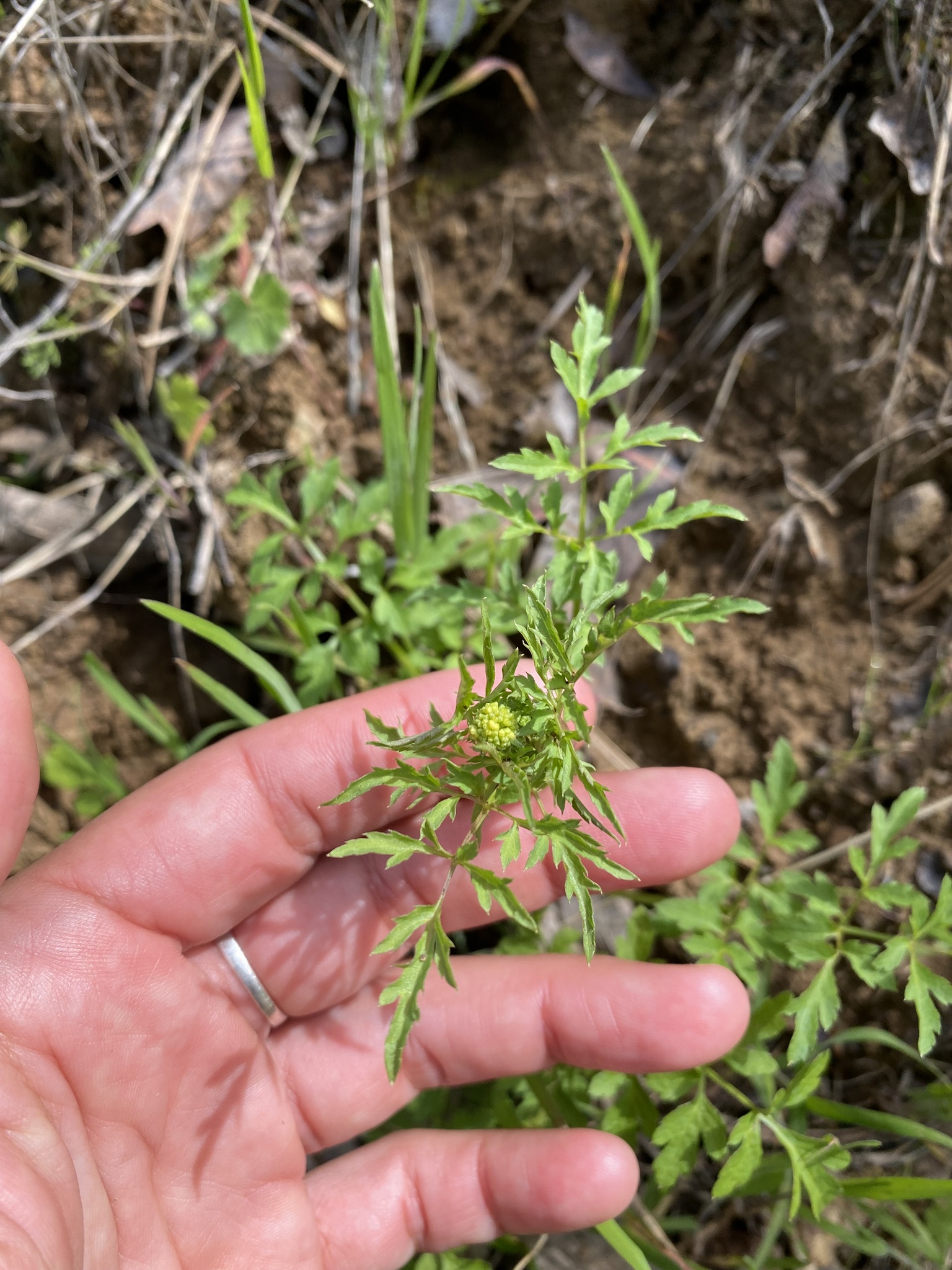 (c) queeryecology, some rights reserved (CC BY-NC)
|
very fine, closer to curly parsley
 (c) hmbernard, all rights reserved
|
S. saxatilis vs. S. tuberosa
I don't actually think these two get confused all that frequently, but they can grow in similar rocky habitat and I've gotten excited looking at a plant I thought was saxatilis but was actually tuberosa, so this is here for my own edification.
|
Sanicula saxatilis |
Sanicula tuberosa |
|
leaf width, veins
|
broad enough to see veins
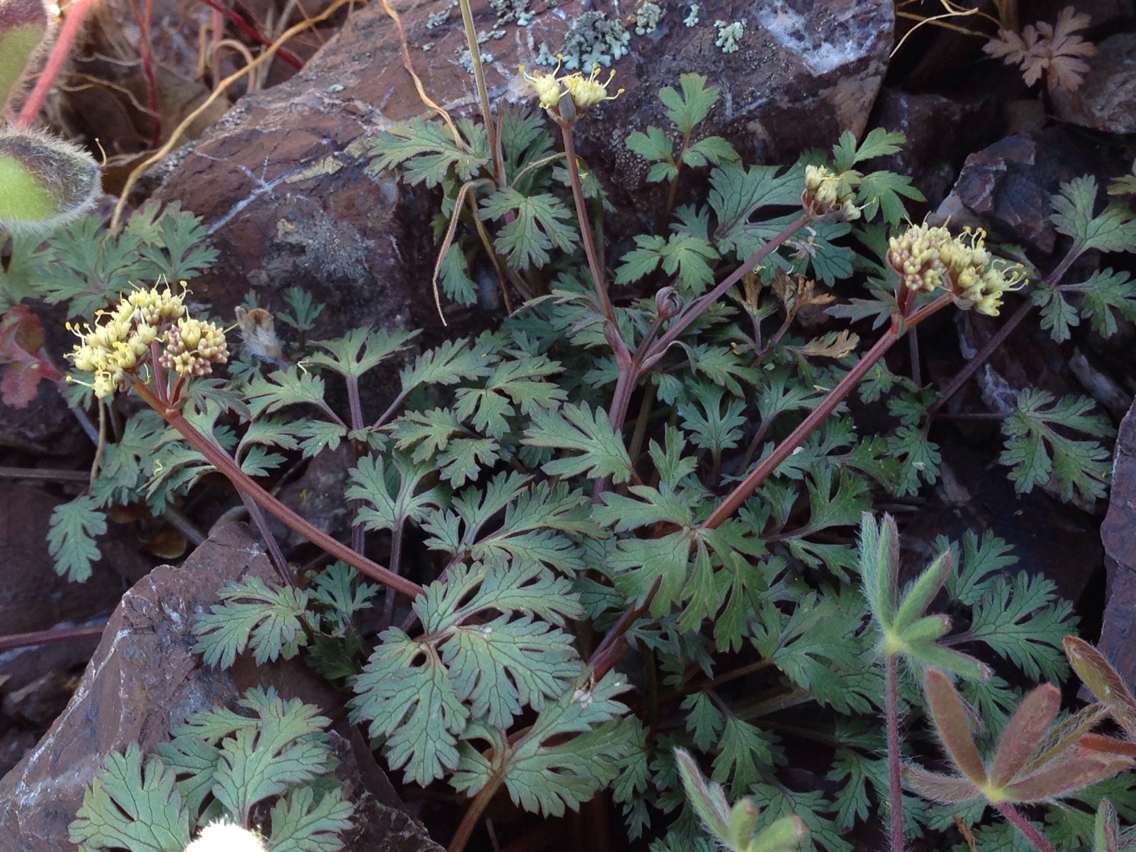 (c) Ken-ichi Ueda, some rights reserved (CC BY)
|
so narrow you won't notice veins
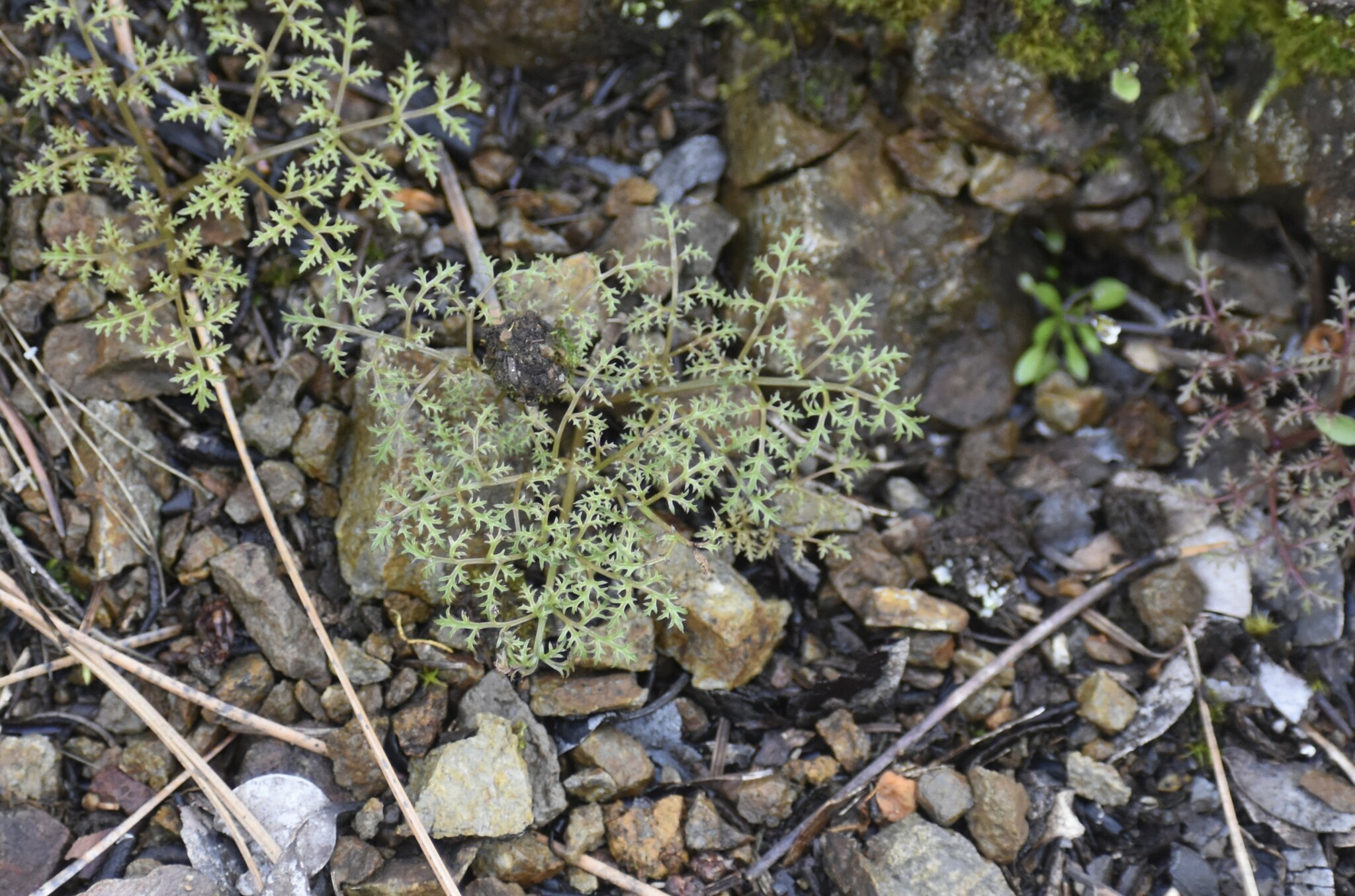 (c) Joseph D Kurtz, some rights reserved (CC BY-NC)
|
Tables made with with Distinguished